How CircuitNotion Is Building African AI That Outperforms Western Giants
AI Quick Summary
- CircuitNotion, a Rwandan AI company founded in 2024, claims 35% of Rwanda's AI market share and developed Incuti AI, an African Large Language Model.
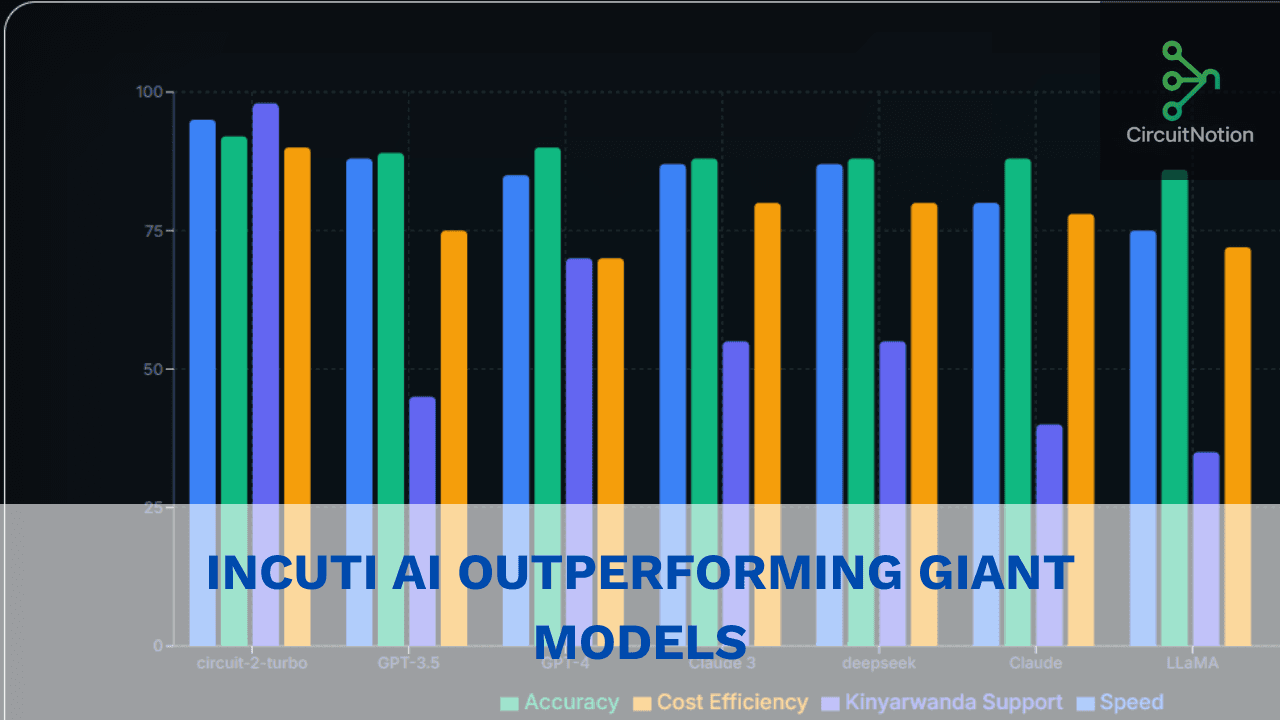
- Incuti AI specializes in African languages and contexts, outperforming general models in specific tasks, and is priced 50% lower than GPT models due to its specialized, smaller architecture.
- The company addresses significant challenges for African AI developers, including limited GPU access, high internet/power costs, data scarcity, and a "continental confidence gap."
- CircuitNotion is profitable, raised Series A funding in 2025, and aligns with Rwanda's vision to become an AI hub, while also contributing to the broader African AI movement.
- The founder, Ntirushwa Jean Marc, emphasizes building African-centric AI from Rwanda to solve local problems, ensuring Africans are builders and researchers in the global AI landscape.
As of early 2026, CircuitNotion is actively raising more funds to expand its operations across East Africa and continues to develop its African-centric AI models.
CircuitNotion, founded in 2024 by Ntirushwa Jean Marc, claims a 35 percent market share among AI companies operating in Rwanda, making it one among the top country's premier artificial intelligence infrastructure provider. Operating from Kigali, the company has built Incuti AI, described as one of the best performing Kinyarwanda chatbots.
• 35% market share among AI companies in Rwanda
• 98% accuracy in African language processing
• Served 500+ developers
• Profitable operations since launch
• Pricing 50% lower than GPT models
Incuti AI: African Language Models
Incuti AI is CircuitNotion's flagship African Large Language Model designed to understand African languages, culture, and context. According to founder Ntirushwa, the platform's models are trained specifically on African context and African languages, addressing a significant gap in global AI development.
The platform powers intelligent business assistants, AI customer support automation, voice AI for call centers, government and enterprise knowledge systems, and education tutoring systems. Incuti AI is accessible through API calls and a chat interface.
The Niche Strategy: Smaller, Specialized Models
When asked about competing with giants like OpenAI and Google, Ntirushwa explains that CircuitNotion has adopted a specialized approach rather than building general-purpose models. "Recent research showed that small AI models that are specialized in one particular niche outperform those giant models which are trained on huge data because they lack clarity," he states.

The company's model focuses specifically on Kinyarwanda and other African languages, with fewer parameters than general models. This specialization enables CircuitNotion to price its services at 50 percent of GPT model costs, as fewer parameters require less GPU power to generate tokens. Despite having fewer datasets in African languages, Ntirushwa notes these specialized models outperform general models at specific African tasks.
Facing Infrastructure and Cultural Challenges
Ntirushwa identifies five major challenges facing African AI developers: GPU server access, expensive internet infrastructure, high electrical power costs, dataset scarcity for African languages, and what he calls a "continental confidence gap."
"Africans do not believe what is made on their continent and are not believing yet that we have talents to compete on the global stage," Ntirushwa explains. He traces this reluctance to colonial history, noting that "Africans, not like any other colonized countries like China, have not really gotten over that they can compete."
What Should Change
To address this confidence gap, Ntirushwa proposes several solutions. He believes governments should play a key role in adopting and advocating for domestic products, citing the Chinese system as an example. He emphasizes teaching local AI systems and products in schools, where mindsets can be more easily changed, and genuine investment in research beyond political rhetoric.
Why Build in Rwanda
I was curious about why he chose Rwanda specifically; he explains the strategic advantage of developing AI models in Rwanda: "We are solving real African problems directly from the ground, using local context and data that global companies don't have access to. Being based here means we can build AI that understands African languages like Kinyarwanda and Swahili, supports African accents, and fits our business environments, culture, and infrastructure."
Business Model and Investment
Most startups burn cash with and build up a bigger user base, hence spending years in development, but no profits; and because of this, I asked whether CircuitNotion is profitable.
To respond, he said that CircuitNotion is profitable, he also stated, "If I'm not profiting I would have already closed. Of course profit is there." The company raised Series A funding in 2025, and is actively raising more money to expand operations to East Africa. CircuitNotion also operates an IoT monitoring platform for smart devices and connected infrastructure across Rwanda, diversifying beyond pure AI applications.
Aligning with Rwanda's AI Vision
Rwanda is investing heavily into becoming Africa's AI hub; presenting massive opportunity to companies like CircuitNotion. In 2023, Rwanda also approved The Rwanda's National Artificial Intelligence Policy focused on AI literacy, infrastructure, adoption and more
CircuitNotion's work aligns with the policy. The policy emphasizes long-term investment in human capital beginning at primary education, with school curricula adapting for the age of AI and digital technologies.
Part of Broader African AI Movement
CircuitNotion is not alone in developing African language models. Lelapa AI from South Africa launched InkubaLM, supporting Swahili, Yoruba, IsiXhosa, Hausa, and isiZulu. Additionally, French telecom Orange announced a 2025 project where OpenAI and Meta will collaborate to fine-tune Whisper and Llama models to translate regional African languages.
Without going too far, it is worth noting that, in Rwanda, there are other companies like Digital Umuganda who have models in use. We can give an example of Mbaza Chatbot that was used during COVID-19 period and is still used today.
Building Africa's AI Future
Ntirushwa expresses optimism about the future: "I'm super happy that Africans will not be the user in future but also the builder and researchers who are not left behind." By building African-centric AI infrastructure from Rwanda, CircuitNotion addresses both technical challenges and questions about technological sovereignty and cultural representation in artificial intelligence.
Next in Series: Stay tuned for our next article exploring other Rwandan companies contributing to the global AI race. Share your suggestions at our contact page.
If you enjoyed this article, follow us on WhatsApp for daily tech updates. If you have an idea, need to be featured or need to partner, reach out to us at editorial@techinika.com or use our contact page.
Don't let the story end here.
Share your thoughts, ask questions, and connect with the community.

Cishahayo Songa Achille
Chief EditorCishahayo Songa Achille is a Rwandan software engineer and tech entrepreneur focused on democratizing digital skills. He is best known as the Founder and Managing Director of Techinika, an edtech firm established in 2020 to make complex technological advances accessible to the general public and build solutions for the biggest problems.
View all articles by Cishahayo Songa Achille →Up Next
Hanga Pitchfest Announces Top 45 Startups for 2026 EditionBy Cishahayo Songa Achille • 5 min read