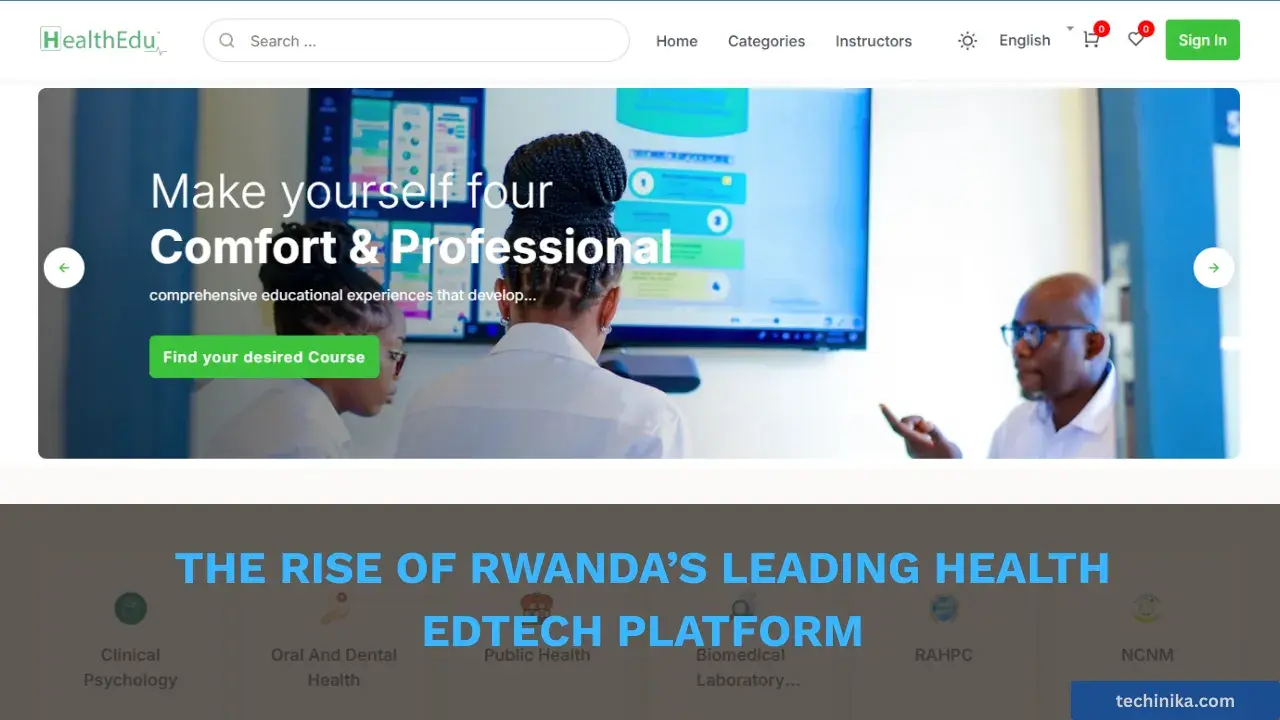
How HealthEdu is Architecting Rwanda’s Medical Workforce
AI Quick Summary
- HealthEdu leverages high-performance e-learning to ensure Rwandan healthcare professionals maintain up-to-date qualifications and provide evidence-based patient care.
- Founded in 2017, the platform has replaced in-person workshops with scalable digital solutions, becoming a regional leader with 8,000 active users and aligning with national health priorities.
- It fosters a global collaborative ecosystem, pioneering digital rehabilitation in low- and middle-income contexts and delivering digital literacy training to hospitals.
- The system offers over 260 accredited courses from Rwandan specialists, is developing a mobile app with offline access, and plans integrated credit tracking with regulatory bodies.
- HealthEdu aims to democratize ongoing medical education for all health workers, seeking AI partners to accelerate its mission.
As the article's publication date is in the future (April 8, 2026), there are no post-publication updates available at this time.
For Rwandan healthcare practitioners, the gap between medical discovery and bedside application is closing. As research accelerates, HealthEdu redefines how the medical workforce maintains qualifications, ensuring skills reach the frontlines. By fusing localized expertise with high-performance e-learning, the company tackles professional stagnation through digital infrastructure. Their mission is clear: leverage technology to ensure every clinician possesses the verified knowledge required for safe, evidence-based patient care.
The Evolution of HealthEdu
Founded in 2017 by Jean Damascene Bigirimana and Agnes Kubwimana, HealthEdu replaced heavy in-person workshops with a scalable e-learning alternative. By dismantling geographical barriers, the platform evolved into a regional leader serving 8,000 active users. Operating between public policy and private innovation, HealthEdu maintains coordination with regulatory bodies mandated by the Ministry of Health (MoH). This ensures continuous professional development (CPD) for health workers remains aligned with national clinical priorities.
A Global Collaborative Ecosystem
Based in elite innovation hubs like Norrsken House Kigali and the HealthTech Hub Africa, HealthEdu’s impact extends far beyond basic training:
Digital Rehabilitation: Through a partnership with the Institute of Rehabilitation of JAMK Finland University, the startup is pioneering a digital rehabilitation approach specifically tailored for low- and middle-income contexts.
Scale & Global Goals: Through Lumira Link Oy (Finland) and URCEBE, HealthEdu has provided digital rehabilitation to over 18,000 people. Notably, 90% of recipients required no hospital referral; a major milestone for Universal Health Coverage and the UN Sustainable Development Goals (SDGs).
Hospital Demand: In 2023, HealthEdu joined forces with ENABEL to deliver digital literacy training across 20 public hospitals. The training was so highly appreciated by hospital management that they are currently requiring the company to resume the program.
Community Empowerment: To date, 100 Community Health Workers have been empowered by the system; however, as the founders note, the journey is still long.
The HealthEdu Tech Stack
The system is custom-built for the unique challenges of the African healthcare environment:
Accredited Learning Streams: Access to over 260 short courses developed by more than 65 Rwandan-led health specialists from four regulatory bodies. These modules provide the CPD Credits required to increase capacity and meet the legal requirements for license renewal.
The Future-Ready Mobile App: HealthEdu is currently working on a mobile-first tool built for the "last mile." It will be finalized with features like offline accessibility, allowing professionals in remote districts to study without a constant internet connection.
Integrated Credit Tracking: The platform is planning to remove the administrative burden of career verification by integrating directly into regulatory systems. This will drastically reduce the burden of checking credits because the system will entirely overtake this verification work, letting practitioners focus on their patients and independent learning.
As the platform scales, it serves as a catalyst for a resilient, self-reliant African healthcare skills system. Reflecting on this mission, founder Mr. Jean Damascene Bigirimana stated: "Our goal is to ensure that no health professional is left behind by the speed of medical progress. We are building a future where quality health ongoing education for in-service practitioners is a right, not a privilege, for every health worker on the frontlines." Looking ahead, HealthEdu is seeking AI partners to accelerate its mission, aiming to democratize healthcare knowledge for every professional in the field.
If you enjoyed this article, follow us on WhatsApp for daily tech updates. If you have an idea, need to be featured or need to partner, reach out to us at editorial@techinika.com or use our contact page.
Don't let the story end here.
Share your thoughts, ask questions, and connect with the community.

Kellycie Bayingana
AuthorPassionate about the intersection of technology and storytelling. I am committed to uncovering and sharing the most compelling startup narratives from across Rwanda for Techinika.
View all articles by Kellycie Bayingana →Up Next
Hanga Pitchfest Announces Top 45 Startups for 2026 EditionBy Cishahayo Songa Achille • 5 min read