Rwanda's Mbaza System: AI-Powered Public Service Platform Expands Beyond COVID-19
AI Quick Summary
- Rwanda's Mbaza AI chatbot has expanded beyond its original COVID-19 focus to become a comprehensive public service platform, leveraging Large Language Models.
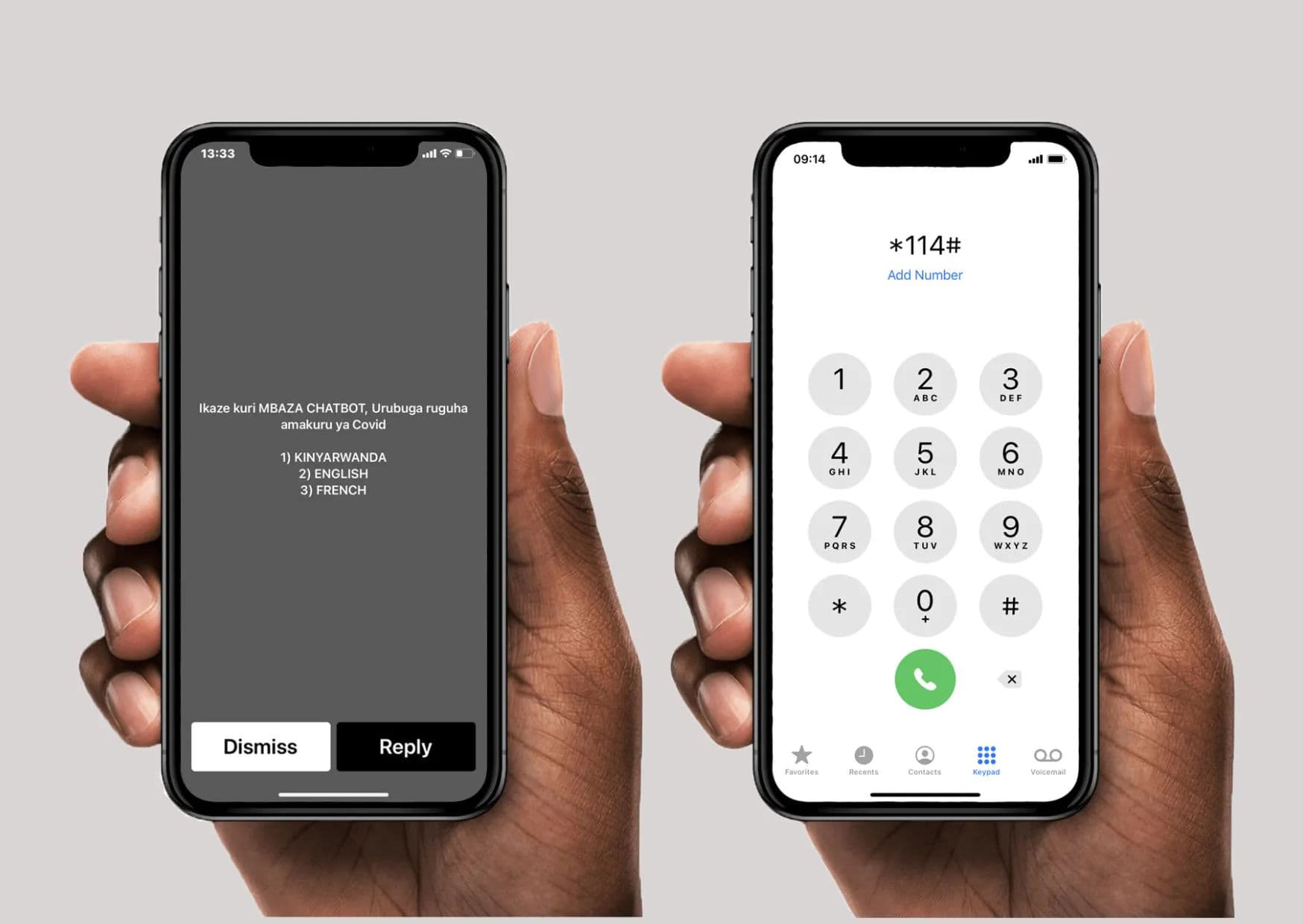
- Developed through a collaboration involving Mozilla and Rwandan entities, it initially provided COVID-19 information via USSD (*114#) in Kinyarwanda, English, and French, without requiring internet access.
- The system achieved a significant technical breakthrough by drastically reducing the word error rate for Kinyarwanda speech-to-text, enhancing accessibility for the local population.
- Mbaza has expanded its utility to assist Community Health Workers and launched a dedicated platform (*350#) providing information on gender-based violence, engaging over 100,000 individuals by September 2024.
- The project emphasizes an open-source approach for its technology and data, fostering a local AI ecosystem and community for further innovation.
Rwanda continued to solidify its position as an African tech hub, showcasing its innovation ecosystem at major global events like GITEX GLOBAL 2025 and Mobile World Congress 2025, underscoring ongoing support for digital transformation initiatives like Mbaza.
The Government of Rwanda continues to expand its Mbaza AI chatbot system, transforming it from a COVID-19 information tool into a comprehensive public service platform. According to research published in March 2025, the system now utilizes Large Language Models to assist Community Health Workers, marking a significant evolution in Rwanda's digital transformation strategy.
Origins and Initial Purpose
The Mozilla Foundation reports that Mbaza was developed as a collaboration between Mozilla Common Voice, Rwandan startup Digital Umuganda, the Rwanda Information Society Authority, and the German Development Cooperation. The project emerged from the #SmartDevelpmentHack hackathon, which sought creative digital approaches to address the pandemic in Rwanda.
The Rwanda Biomedical Center launched the RBC-Mbaza application as a chatbot providing relevant information around COVID-19 in Rwanda. The system can be accessed via the USSD short code *114#, allowing Rwandans to access information about case counts, vaccination progress, symptoms, and prevention methods without requiring internet connectivity.
How the System Works
According to BMZ Digital.Global, Mbaza uses artificial intelligence to provide reliable information in the local language Kinyarwanda, as well as in English and French. The chatbot is accessible via simple cell phone messages that do not require an internet connection, making it available to users across Rwanda regardless of their location or connectivity status.
The European Commission reports that since mid-July 2021, more than 15,000 Rwandans per day have accessed key information through the platform. Up until the end of 2021, 580,000 Rwandans had used the chatbot, with an average of 15,000 daily users.
Breakthrough in Kinyarwanda Language Processing
Recent research published in 2025 reveals that when first deployed, the chatbot faced significant technical limitations, with Kinyarwanda speech-to-text tools scoring a high 60.1 percent word error rate. Through iterative refinement, this WER was reduced to 18.9 percent, demonstrating the importance of continuous improvement in AI tool development for African contexts.
GIZ notes that a unique feature of the chatbot is its functionality in the local language Kinyarwanda. Previously, access to information and services was severely limited, but the chatbot has opened up access, allowing everyone to receive information in their native language.
Technical Achievement: Kinyarwanda is spoken by almost 99.6 percent of the population in Rwanda. The chatbot addresses the epistemic dominance of global languages like English and French in AI systems, enhancing accessibility and relevance for local users.
Expansion to Support Community Health Workers
According to a March 2025 research paper, the system now deploys and evaluates Large Language Model-based chatbots to assist Community Health Workers in Rwanda. The research focuses on usability, interaction modalities, and local language processing to support frontline healthcare workers.
The study states that by providing information and support to Community Health Workers, LLMs offer to improve the quality of care by providing quick access to medical guidelines, supporting clinical decision-making, and facilitating health education in local languages.
Gender-Based Violence Information Platform
In September 2024, AllAfrica reported that more than 100,000 individuals had engaged with the Mbaza USSD GBV Information Chatbot, utilizing its services over 500,000 times. This innovative tool, a collaborative effort between HDI-Rwanda and GIZ-Rwanda, is available through *350# and provides crucial information such as legal aid resources in the fight against gender-based violence.
GIZ-Rwanda's Sexualised and Gender-Based Violence Project Manager, Christiane Adamczyk, stated that the information chatbot had been developed over a year and a half and continues to be a work in progress. The platform provides information on four different forms of gender-based violence and resources for seeking help beyond the Isange One Stop Centre.
Consortium of Partners
BMZ Digital.Global reports that the consortium of partners includes public institutions such as the Rwanda Biomedical Center and the Rwanda Information Society Authority, which is in charge of the country's digital transformation, as well as private sector players.
The companies AOS Rwanda, Arxia, and the startup Digital Umuganda, together with the non-profit organizations Seeing Hands Rwanda and the Mozilla Foundation, have participated in the development of the chatbot.
Open-Source Technology and Community Building
The European Commission emphasizes that the project aims to make the underlying technology and data openly available by adopting an open-source approach. This allows other Rwandan startups to develop chatbot solutions based on RBC-Mbaza to tackle future challenges.
According to the DataLab blog, the Mbaza NLP Community was established to support the wider AI ecosystem in Rwanda. The community is open to anyone interested in AI and Natural Language Processing and focuses on knowledge exchange and joint learning through training, hackathons, and webinars.
The MBAZA-NLP GitHub repository now hosts 21 repositories, including work on Kinyarwanda automatic speech recognition, Text-to-Speech, and semantic chatbots. The code, models, and datasets are shared publicly on GitHub and HuggingFace.
Government Perspectives
Dr. Sabin Nsanzimana, now the Minister of Health of Rwanda, stated in earlier reports that information is very key in handling the pandemic. "The more we make it accessible, the easier people make use of it to abide by preventive measures and follow other guidelines that the Government puts in place," he said.
Innocent Bagamba Muhizi, who was the CEO of RISA, noted that Rwanda is already on the path to become a living laboratory for emerging technologies such as Unmanned Aerial Vehicles, Blockchain, and AI. "The Mbaza Chatbot is a very good example of how AI will be used to improve the dissemination of reliable health related information, starting with Covid-19," he stated.
Future Developments and Interactive Features
The European Commission reports that in its next version, the chatbot will become more interactive, allowing users to converse naturally via voice or text and including new features such as booking vaccination appointments.
Audace Niyonkuru, who heads Digital Umuganda, emphasized the importance of open-source code: "This is a really big help for those who work in Kinyarwanda or other African languages. They now have an infrastructure upon which they can build."
Impact on Digital Transformation
The Mbaza system represents a significant component of Rwanda's broader digital transformation strategy. By demonstrating the effectiveness of AI-driven public services in local languages, the platform has established a model that could be replicated across other African nations facing similar challenges in healthcare information dissemination and public service delivery.
The system's evolution from a COVID-19 information tool to a multi-purpose public service platform supporting community health workers and providing gender-based violence information demonstrates the government's commitment to leveraging technology for comprehensive social services.
If you enjoyed this article, follow us on WhatsApp for daily tech updates. If you have an idea, need to be featured or need to partner, reach out to us at editorial@techinika.com or use our contact page.
Don't let the story end here.
Share your thoughts, ask questions, and connect with the community.

Cishahayo Songa Achille
Chief EditorCishahayo Songa Achille is a Rwandan software engineer and tech entrepreneur focused on democratizing digital skills. He is best known as the Founder and Managing Director of Techinika, an edtech firm established in 2020 to make complex technological advances accessible to the general public and build solutions for the biggest problems.
View all articles by Cishahayo Songa Achille →Up Next
What Rwandan Creators Can Learn From Creators Who Built EmpiresBy Cishahayo Songa Achille • 6 min read