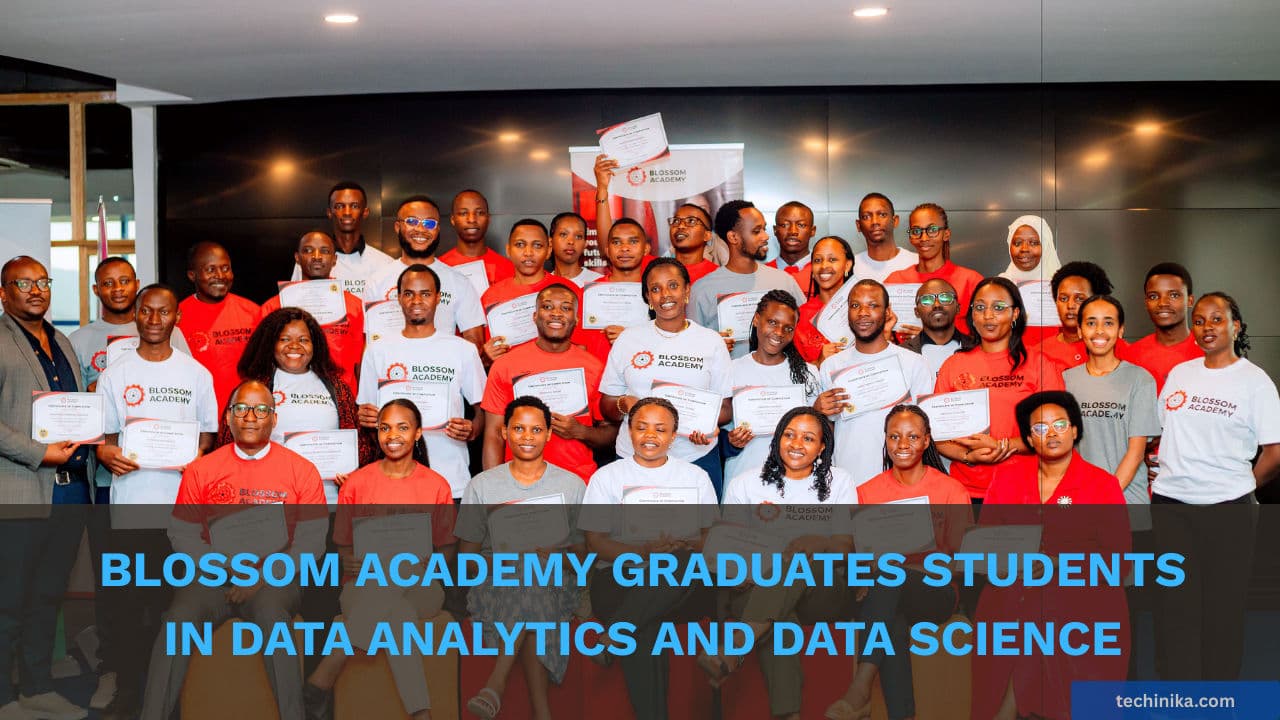
Blossom Academy Graduates 50 Students in Data Analytics and Data Science Programs
AI Quick Summary
- Fifty students completed six-month data analytics and data science programs at Blossom Academy.
- Graduates showcased capstone projects, addressing real-world challenges from youth employment to customer churn prediction.
- The training covered technical tools like Python and Power BI, alongside leadership and communication skills.
- Students expressed the program's practical value, enabling them to apply learned data skills in their current or future roles.
- The graduation ceremony fostered connections with industry partners like Munyax Eco, Techinika, Kozi, and Health Edu, offering employment pathways.
No specific updates regarding this particular cohort's post-graduation activities or new announcements from Blossom Academy directly following this article's publication date were found in the search results.
Fifty students completed six-month data analytics and data science training programs at Blossom Academy on Friday, presenting projects ranging from youth employment analysis to customer churn prediction and clean energy adoption modeling.
The graduation ceremony showcased work from 25 data analytics students and 25 data science students who trained on technical tools including Python, Power BI, MySQL Workbench, and Kobol while also developing leadership and communication skills. Students presented capstone projects demonstrating their ability to navigate the complete data lifecycle from collection through analysis to actionable recommendations.
Projects Addressing Real-World Challenges
Haragirimana Thacien developed a model analyzing survey data about youth employment and digital freelancing across Africa, cleaning and presenting insights from previously unstructured information. Babatunde Oyedele, who works at TeKnowledge, examined the EjoHeza pension scheme's performance, focusing on data integrity, monthly contribution trends, behavioral insights, regional performance patterns, inactive accounts, and risk identification with strategic recommendations.

Another student team built a customer churn prediction application for banks, developing a machine learning model using a dataset containing 10,000 data points to predict whether customers would leave the institution. Emmanuel's project analyzed clean gas adoption across five districts, examining household datasets through machine learning models to identify risks associated with not using clean energy sources.
From Theory to Application
Student testimonials highlighted practical motivations for enrollment and anticipated applications. Babatunde, who joined wanting to understand data's role in business operations, acknowledged the challenging nature of the program while expressing eagerness to implement acquired skills. Florence Niyigena, working in sales and business development, enrolled specifically because her company outsources data work. "We learned so we can start doing it ourselves and stop outsourcing," she explained, noting particular appreciation for leadership training and increased comfort speaking publicly.
Pamella entered the program with basic skills and after six months gained new capabilities she plans to implement immediately. The consistent theme across student reflections centered on transitioning from theoretical understanding to practical workplace application.
Technical Skills and Professional Development
Students worked extensively with Python libraries including pandas, Jupyter notebooks, and MySQL connectors, using VS Code as their development environment. The curriculum emphasized not just tool proficiency but complete project execution—collecting data, analyzing it, deriving insights, and formulating recommendations based on findings. One trainer explained the pedagogical approach: "Navigate all data cycle with one project," ensuring students experienced every phase rather than isolated technical exercises.

Seth Nana Amoah, Programs Lead at Blossom Academy, emphasized collaboration and networking importance during closing remarks. He challenged graduates to "be willing to learn, relearn, and unlearn," noting that doubt serves as a productive force in analytical work. Citing the philosophical principle "I think, therefore I am," he encouraged students to question assumptions and continuously refine their understanding.
Industry Partners and Employment Pathways
The ceremony featured representatives from multiple companies offering potential employment and collaboration opportunities. Munyax Eco, a solar panel provider, attended alongside Techinika, a technology company operating Techinika News and Agaseke for Creators. Kozi, which connects employers with employees, and Health Edu, offering free accredited continuous professional development courses for health professionals in English and French, also participated.
These partnerships reflect Blossom Academy's approach to bridging training and employment, exposing graduates to organizations requiring data skills across diverse sectors including renewable energy, technology platforms, recruitment, and healthcare education. As Rwanda expands its digital economy and organizations increasingly recognize data-driven decision-making importance, programs like Blossom Academy's six-month intensive training create pathways for professionals seeking to transition into analytics roles or enhance existing capabilities with quantitative skills.
If you enjoyed this article, follow us on WhatsApp for daily tech updates. If you have an idea, need to be featured or need to partner, reach out to us at editorial@techinika.com or use our contact page.
Don't let the story end here.
Share your thoughts, ask questions, and connect with the community.

Cishahayo Songa Achille
Chief EditorCishahayo Songa Achille is a Rwandan software engineer and tech entrepreneur focused on democratizing digital skills. He is best known as the Founder and Managing Director of Techinika, an edtech firm established in 2020 to make complex technological advances accessible to the general public and build solutions for the biggest problems.
View all articles by Cishahayo Songa Achille →