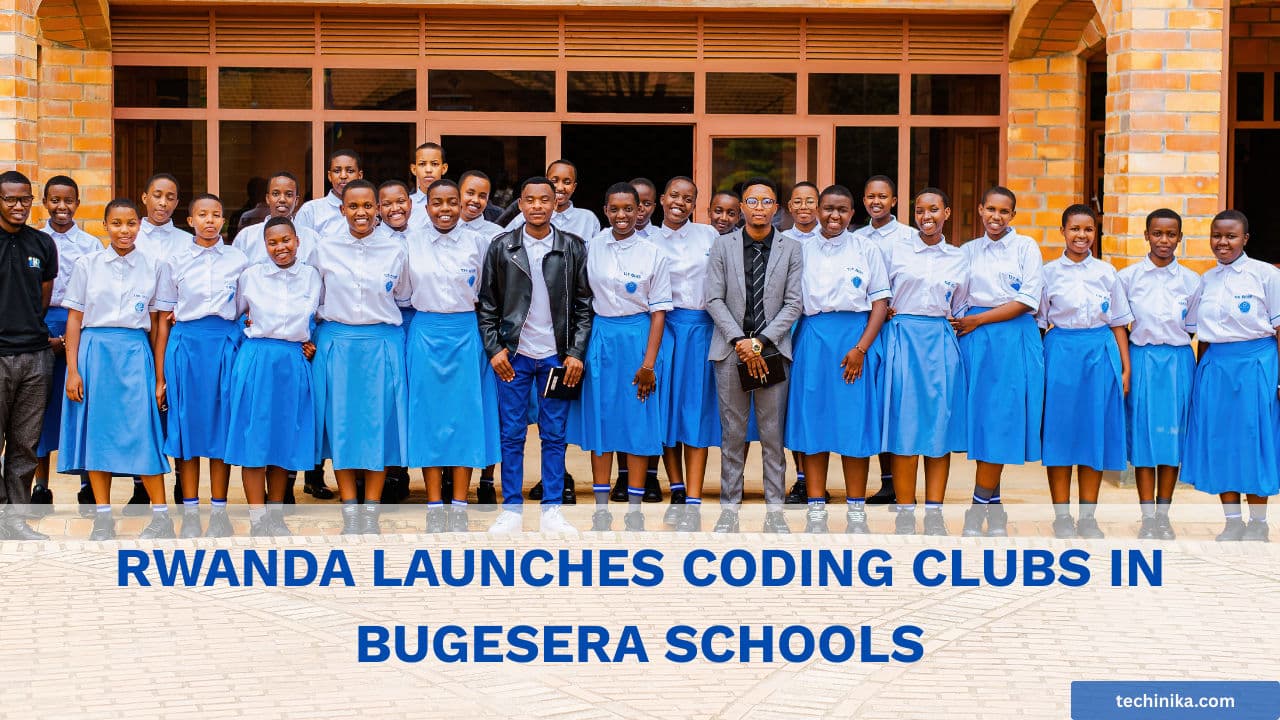
Rwanda Launches Coding Clubs in Bugesera Schools as Part of One Million Coders Initiative
AI Quick Summary
- Rwanda's Ministry of ICT and Innovation, in collaboration with Mastery Hub Rwanda, launched coding and robotics clubs in four secondary schools in Bugesera District.
- This initiative is part of Rwanda's "One Million Coders" program, which aims to train one million coders by 2029 under the National Strategy for Transformation 2.
- A total of 100 students, 25 from each participating school, are enrolled in a six-month intensive extra-curricular program, meeting twice weekly.
- The program emphasizes practical skill development, leading to students showcasing their solutions in a national competition.
- These school-based clubs complement a broader online "One Million Coders" platform and are slated for expansion to additional districts across Rwanda with various partners.
The "One Million Coders" initiative has since solidified its targets, aiming to train one million citizens in digital skills and 500,000 in advanced ICT by 2030, with the online platform actively offering various courses.
The Ministry of ICT and Innovation, in partnership with Mastery Hub Rwanda, has activated coding and robotics clubs in four secondary schools across Bugesera District, marking the latest phase in Rwanda's ambitious plan to train one million coders by 2029.
The program launched on January 19 at APEBU Nyamata, Maranyundo Girls School, Ntare Louisenlund School, and Nyamata Teacher Training Centre, enrolling 25 students at each institution for a six-month intensive training program. The initiative represents one component of Rwanda's One Million Coders program, established under the National Strategy for Transformation 2 to equip one million young Rwandans with coding skills and train 500,000 in advanced ICT capabilities.
Duration: 6 months
Participating Schools: 4 in Bugesera District
Students Enrolled: 100 total (25 per school)
Training Frequency: Twice weekly after regular classes
Culmination: National competition showcasing student-built solutions
Diverse Student Backgrounds and Prior Knowledge
The four participating schools bring varied student populations and existing technology exposure. APEBU Nyamata, a technical and vocational education center, enrolled students from software development, electronics, and non-IT trades, creating an interdisciplinary cohort where some participants arrive with foundational technical knowledge while others enter completely new to programming.

Maranyundo Girls School students study sciences and benefit from an existing STEM center that provided introductory coding exposure, giving participants baseline familiarity with programming concepts. Ntare Louisenlund School students, completing studies in the International Baccalaureate program, demonstrated surprisingly high prior coding knowledge through previous partnerships with Coderina and The Gym, which offered coding instruction as part of their curriculum.
Meanwhile, Nyamata Teacher Training Centre students, preparing for future teaching careers, showed enthusiastic interest in coding despite varied backgrounds, with some receiving introductory training from partners during the previous year.
Extra-Curricular Training Model
The program operates as an extra-curricular activity with trainers visiting schools twice weekly after regular classes conclude. This after-school model allows students to pursue coding education without disrupting standard curricula while testing whether voluntary, supplementary technology training can achieve meaningful skill development. The six-month timeline provides sufficient duration for progressing from foundational concepts to building functional solutions that students will showcase at a national competition scheduled for program conclusion.

The national competition component aims to motivate student engagement while providing tangible demonstrations of acquired capabilities. Rather than abstract assessments, students will present working projects built using skills developed throughout the training period, offering concrete evidence of program effectiveness and potentially identifying talented individuals for advanced opportunities.
Context Within One Million Coders Initiative
The Bugesera coding clubs launch represents one avenue within Rwanda's multi-faceted approach to achieving its One Million Coders target. The broader initiative, a partnership between Rwanda's government and the United Arab Emirates launched in September 2024, primarily delivers six-to-eight-week self-paced online courses through a dedicated platform accessible to anyone aged 13 and above with internet connectivity and a device. According to Ministry of ICT and Innovation information, the online program focuses on web development, data science, and Android development, offering free training requiring no prior experience.
The school-based clubs complement this online approach by providing structured, in-person instruction with consistent mentorship; addressing limitations of self-directed online learning where motivation, internet access, and device availability vary widely. While the online platform enables scale, reaching potentially millions through digital distribution, school-based programs ensure systematic coverage in areas where self-enrollment might prove challenging.
Planned Expansion Beyond Bugesera
Although Mastery Hub Rwanda initiated the program in Bugesera, Ministry of ICT and Innovation plans call for expanding coding and robotics clubs to Musanze, Muhanga, Kigali, and additional districts across Rwanda. Multiple ministry partners will activate programs in different regions, creating a distributed implementation model where various organizations contribute to the national goal rather than centralizing all training through a single provider.

This multi-partner approach allows leveraging diverse organizational strengths and existing relationships with schools while distributing implementation responsibilities across the education technology ecosystem. However, coordination challenges inevitably arise when numerous organizations operate independently toward shared objectives, requiring clear standards, consistent curricula, and unified assessment criteria to ensure comparable quality regardless of implementing partner or geographic location.
Critical Success Factors
Program effectiveness depends primarily on student willingness to consistently engage with after-school training over six months while balancing academic responsibilities and other commitments. Unlike mandatory curriculum components, extra-curricular programs face higher dropout risks as participation remains voluntary and competing priorities emerge. Maintaining student motivation throughout the full duration will prove critical to achieving intended learning outcomes.
Sustained support from the Ministry of ICT and Innovation alongside implementing partners represents another essential factor. Beyond initial launch enthusiasm, programs require ongoing trainer compensation, materials provision, equipment maintenance, and administrative oversight. Six-month commitments can falter midway if funding disruptions occur or organizational priorities shift, potentially leaving students without expected instruction.

The diverse prior knowledge levels across participating schools present both opportunity and challenge. Students entering with coding experience from previous programs may progress rapidly, potentially requiring differentiated instruction or advanced tracks to maintain engagement. Conversely, complete beginners need foundational support ensuring they achieve basic competency before attempting complex projects. Balancing these varying needs within twice-weekly sessions will test trainer adaptability and curriculum flexibility.
As the program unfolds over coming months, monitoring student retention rates, skill acquisition metrics, and eventual competition participation will indicate whether this school-based approach effectively complements the broader One Million Coders online platform. Success in Bugesera could inform nationwide scaling, while challenges encountered may reveal adjustments necessary before expanding to additional districts. The initiative represents one experiment among many as Rwanda tests various pathways toward its ambitious 2029 coding training target, with each approach offering lessons about what works in different contexts and for different student populations.
If you enjoyed this article, follow us on WhatsApp for daily tech updates. If you have an idea, need to be featured or need to partner, reach out to us at editorial@techinika.com or use our contact page.
Don't let the story end here.
Share your thoughts, ask questions, and connect with the community.

Cishahayo Songa Achille
Chief EditorCishahayo Songa Achille is a Rwandan software engineer and tech entrepreneur focused on democratizing digital skills. He is best known as the Founder and Managing Director of Techinika, an edtech firm established in 2020 to make complex technological advances accessible to the general public and build solutions for the biggest problems.
View all articles by Cishahayo Songa Achille →