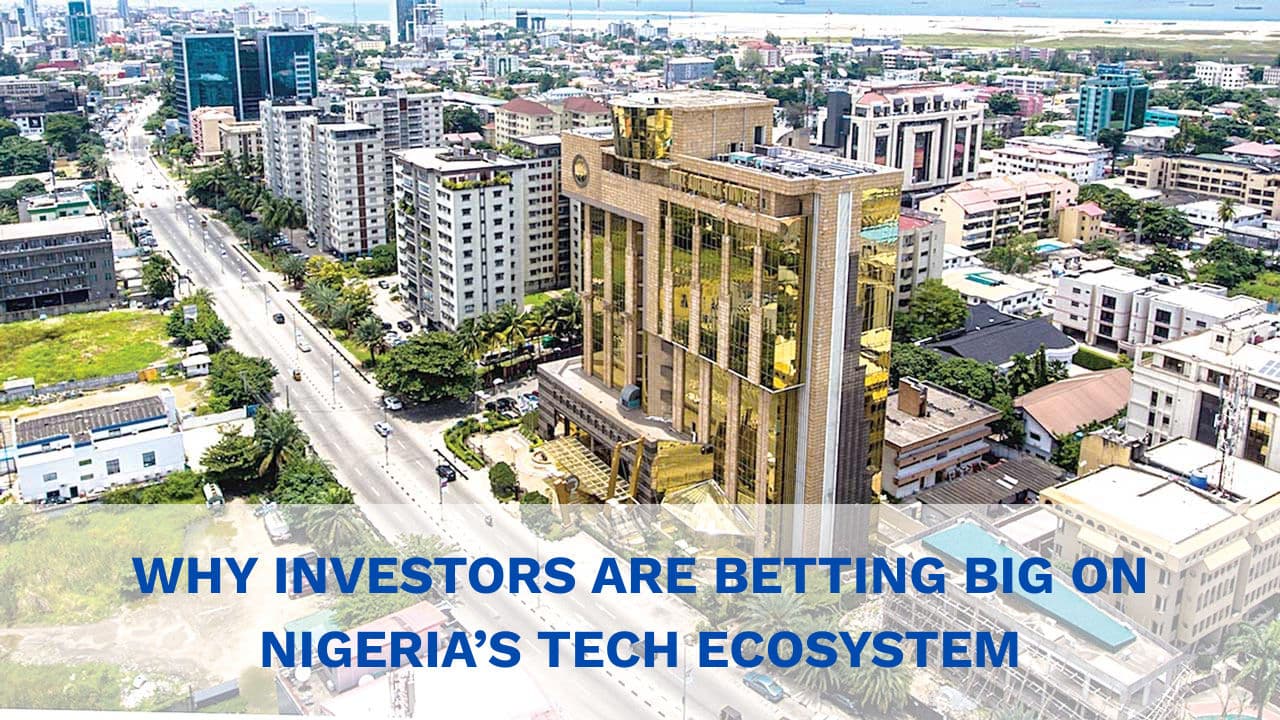
Why Global Investors Are Betting Big on Nigeria's Tech Ecosystem
AI Quick Summary
- Nigeria remains a core focus for investors like Baobab Network, driven by its large market, high internet penetration, and significant developer talent.
- The country dominates African fintech funding, securing approximately 60% of all capital in 2024, and houses five of the continent's seven tech unicorns.
- A thriving informal economy, youthful demographics, and supportive government policies, including the Startup Act and open banking guidelines, create immense opportunities for digital transformation.
- Nigerian startups secured $218 million in 2024, accounting for 13% of African startup investments, with a strong emphasis on solving local problems with scalable technology.
- Despite macroeconomic challenges like inflation and currency depreciation, the ecosystem demonstrates resilience, attracting both global and local investors, and is seeing diversification beyond fintech into sectors like healthcare and climate tech.
While the tech ecosystem showed consolidation in 2025 with significant broadband growth, Nigeria's overall share of African startup funding saw a relative decline, although fintech remained strong and 2026 is anticipated to bring deeper regulation and sustainable expansion.
Seven years ago, when Baobab Network made its first investment in Nigeria, co-founder Tom Fairburn was making a calculated bet on Africa's most populous nation. Today, that conviction has only strengthened. "Nigeria remains one of the most important pillars of our thesis," Fairburn recently wrote on LinkedIn, pointing to a market that continues to attract global capital despite economic headwinds that would deter less confident investors.
The numbers tell a compelling story. Nigeria captured roughly 60% of all fintech funding across Africa in 2024, cementing its position as the continent's undisputed financial innovation leader. With approximately one million developers—the largest concentration of software talent in Africa—the country's technical capacity grows by 10 to 15% annually. More than 120 million of Nigeria's 230 million people are online, with internet penetration hitting 89%, creating a digital-first market that rivals more developed economies.
Nigerian startups secured $218 million in funding in 2024, accounting for 13% of all African startup investments. Lagos alone boasts a startup ecosystem valued at over $9 billion, making it one of the most valuable tech hubs on the continent.
What makes Nigeria particularly attractive to investors extends beyond raw market size. The country hosts five of Africa's seven tech unicorns—companies valued at over $1 billion—including fintech giants Flutterwave ($3 billion), OPay ($2 billion), and Moniepoint, which recently achieved unicorn status with a $1 billion valuation after raising $110 million in Series C funding. These success stories aren't outliers—they're proof points of a maturing ecosystem.

Baobab's investment in Terminal Africa, now the fastest-growing cross-border parcel shipping startup in Africa, exemplifies the type of scalable solutions emerging from Nigeria. The company builds technology infrastructure that streamlines global shipping for logistics businesses across the continent, addressing a massive inefficiency in African commerce. Recent Baobab investments in aktivate, Creditchek, and BrandDrive are following similar trajectories—solving real problems with technology that can scale beyond Nigerian borders.
The Informal Economy's Digital Transformation
One factor often overlooked in investment discussions is Nigeria's informal economy, which accounts for more than 60% of GDP. For investors, this represents an enormous opportunity—millions of small businesses and consumers operating outside traditional banking systems who are now coming online. Mobile phone usage surpasses 80%, and the growing middle class has disposable income and appetite for digital solutions that make their lives easier.
"Mobile technology proliferation presents new opportunities for startups offering mobile applications and services," noted a recent analysis of Nigeria's tech investment landscape. The convergence of widespread connectivity, youthful demographics—median age of just 18—and government support through initiatives like the Nigeria Startup Act creates conditions that few emerging markets can match.
Government policy has played a crucial role in this growth. Nigeria became the third African nation to enact a Startup Act in 2022, creating a supportive regulatory environment for technology companies. In 2023, it became the first African country to approve open banking guidelines, accelerating fintech innovation. The government's initiative to train three million tech talents by 2027 signals long-term commitment to building the human capital that startups need to scale.
Yet Nigeria's appeal isn't just about opportunity—it's about resilience. Despite challenges including high inflation, currency depreciation, and infrastructure constraints like unreliable power supply, Nigerian startups continue innovating and expanding. Companies like Moove, backed by Future Africa, have extended mobility-focused fintech solutions beyond Nigeria to the UAE, demonstrating that Nigerian innovation travels well internationally.
The investor community reflects this confidence. Global players including Google for Startups, AWS Fintech Africa Accelerator, and Techstars executed over 100 deals in Nigeria despite a funding dip in 2024. Tiger Global, Y Combinator, and SoftBank Vision Fund continue hunting for the next generation of Nigerian fintech champions using AI-driven fraud detection and blockchain security enhancements.
Local investors are equally bullish. Microtraction, with its second fund closing at $15 million, invests $100,000 for 7% equity in pre-seed stage companies and provides up to $350,000 in follow-on funding. By 2023, Microtraction had invested in 67 companies that collectively raised over $100 million in follow-on funding. Ventures Platform played a key role in Moniepoint reaching unicorn status and helped MDaaS Global expand diagnostic services across Africa.
Diversification Beyond Fintech
While fintech dominates—156 funding deals between 2019 and 2022—investors are increasingly backing diverse sectors. Healthcare startups like Helium Health are revolutionizing medical records, financing, and patient interactions through digital platforms. In transportation, Shuttlers introduced 20 CNG-powered vehicles in early 2025, completing 1,484 trips and showcasing demand for eco-friendly transport solutions. Agriculture, education technology, and climate tech are all receiving increased attention as investors recognize that Nigeria's challenges create opportunities across multiple sectors.
The path forward isn't without obstacles. 51% of Nigerian startups still face difficulties securing funding, and many struggle with the "Startup Catch-22" where they generate revenue in naira but must repay investors in dollars amid currency volatility. Yet these challenges are fostering innovation—companies are implementing forex hedging strategies to protect themselves while operating in the local economy.
Looking ahead to 2030, with $15 billion in tech investments projected, Nigeria's position as Africa's leading tech hub appears secure. The country's startups already contribute 15% to GDP and have created thousands of jobs, with their economic impact only strengthening. For investors like Baobab Network, the decision to remain "long Nigeria" isn't just about betting on potential—it's about recognizing a market that has already proven its ability to produce world-class companies at scale.
As Tom Fairburn's conviction demonstrates, sometimes the best investment thesis is simply identifying where talent, opportunity, and market size converge—and in Africa, that convergence is happening most powerfully in Nigeria.
If you enjoyed this article, follow us on WhatsApp for daily tech updates. If you have an idea, need to be featured or need to partner, reach out to us at editorial@techinika.com or use our contact page.
Don't let the story end here.
Share your thoughts, ask questions, and connect with the community.

Cishahayo Songa Achille
Chief EditorCishahayo Songa Achille is a Rwandan software engineer and tech entrepreneur focused on democratizing digital skills. He is best known as the Founder and Managing Director of Techinika, an edtech firm established in 2020 to make complex technological advances accessible to the general public and build solutions for the biggest problems.
View all articles by Cishahayo Songa Achille →Up Next
Hanga Pitchfest Announces Top 45 Startups for 2026 EditionBy Cishahayo Songa Achille • 5 min read