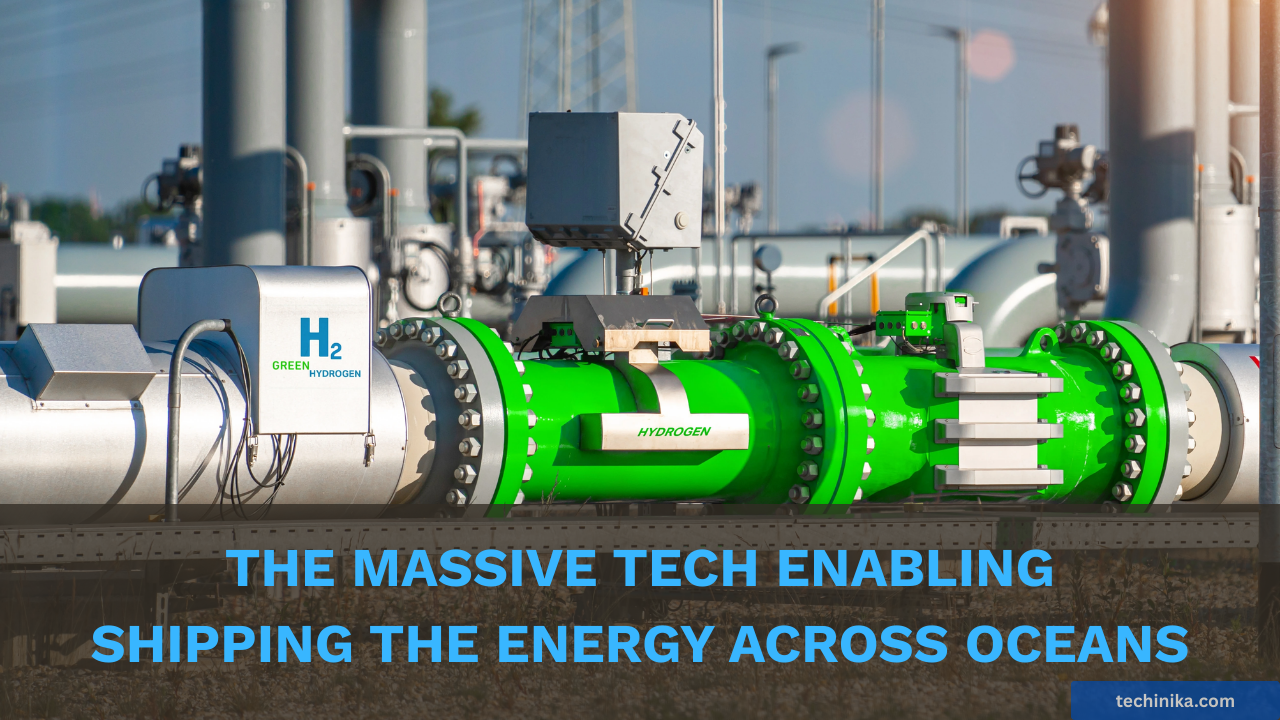
The Massive Tech Enabling Shipping the Energy Across Oceans
AI Quick Summary
- The global energy landscape is undergoing a major shift towards Green Hydrogen, moving from conceptual stages to large-scale infrastructure deployment.
- Green Hydrogen acts as a versatile, carbon-free fuel, transforming renewable energy into a storable and transportable "green molecule" capable of decarbonizing heavy industries and shipping.
- "Power-to-X" is a crucial systems engineering platform that integrates renewable energy harvesting with chemical manufacturing to produce Green Ammonia, utilizing gigawatt-scale electrolyzers, Haber-Bosch synthesis, desalination, and automated export terminals.
- Africa's coastlines are emerging as a prime location for industrial-scale Green Hydrogen projects, with significant developments like Namibia's Hyphen Project, Morocco's OCP Group initiatives, and Mauritania's Project Aman.
- This transition empowers nations with "Industrial Sovereignty," enabling them to produce advanced, carbon-free fuels from domestic resources, thereby reducing reliance on traditional fossil fuels and stabilizing national economies.
Morocco has officially signed its first green hydrogen production contracts in early February 2026, directly before the article's publication, signaling concrete advancements in its national energy strategy.
The global energy landscape has reached a definitive turning point, moving past the laboratory and into the era of heavy infrastructure. The focus has shifted to the physical deployment of Green Hydrogen; a technology fundamentally transforming the world's approach to fuel.
Green Hydrogen serves as the "Swiss Army Knife" of the energy transition. Unlike batteries, this technology creates a carbon-free fuel that can be shipped across oceans and stored for months. It effectively turns solar and wind power into a liquid commodity; the "green molecule," capable of decarbonizing heavy sectors like steel and maritime shipping.
The "Power-to-X" Foundry
This is a massive systems engineering platform known as "Power-to-X," which blends renewable harvesting with chemical manufacturing to create Green Ammonia.
- Gigawatt-Scale Electrolyzer Stacks: The "engines" that use renewable electricity to split desalinated seawater into pure hydrogen.
- Haber-Bosch Synthesis Loops: Units that combine hydrogen with atmospheric nitrogen to produce Green Ammonia; a stable, energy-dense liquid for global transport.
- Desalination Infrastructure: Facilities that provide high-purity process water without depleting local drinking supplies.
- Automated Export Terminals: Deep-water ports designed for the high-pressure loading of green molecules onto international fleets.
The African Tilt
Africa’s coastlines have become the world's most significant "goldmine" for this tech, moving from pilot projects to industrial-scale foundries.
- Namibia (Hyphen Project): Currently in the Vertical Construction phase, this $10 billion project has begun receiving industrial-grade electrolyzer stacks at the Port of Walvis Bay to assemble its 1.5 GW capacity.
- Morocco (OCP Group): Following a $13 billion investment, Morocco is now using domestic green ammonia to produce carbon-free fertilizer, ending a reliance on $2 billion in annual imports.
- Mauritania (Project Aman): This $40 billion venture is in Front-End Engineering Design (FEED), aiming for 1.7 million tonnes of green hydrogen annually to potentially boost national GDP by 40%.
Industrial Sovereignty
The shift toward these foundries is driven by a global demand for Industrial Sovereignty. By turning wind and sun into a manufactured product like ammonia, nations are no longer just providing raw materials; they are producing high-tech, carbon-free fuels that bypass traditional gas pipelines.
This infrastructure provides the massive, 24/7 baseload power required by international shipping and heavy industry while stabilizing national economies against global oil inflation. The era of African industrial fusion; merging desert resources with high-tech hardware; is here, creating a functioning energy platform that is actively reshaping the global power landscape.
Read more
If you enjoyed this article, follow us on WhatsApp for daily tech updates. If you have an idea, need to be featured or need to partner, reach out to us at editorial@techinika.com or use our contact page.
Don't let the story end here.
Share your thoughts, ask questions, and connect with the community.

Kellycie Bayingana
AuthorPassionate about the intersection of technology and storytelling. I am committed to uncovering and sharing the most compelling startup narratives from across Rwanda for Techinika.
View all articles by Kellycie Bayingana →