Qualcomm Acquires Arduino in Major Electronics Industry Move
AI Quick Summary
- Qualcomm Technologies has acquired Arduino, the open-source electronics platform, as part of its diversification strategy beyond mobile chips.
- Arduino will retain its independent brand, tools, mission, and continue to support chips from multiple manufacturers.
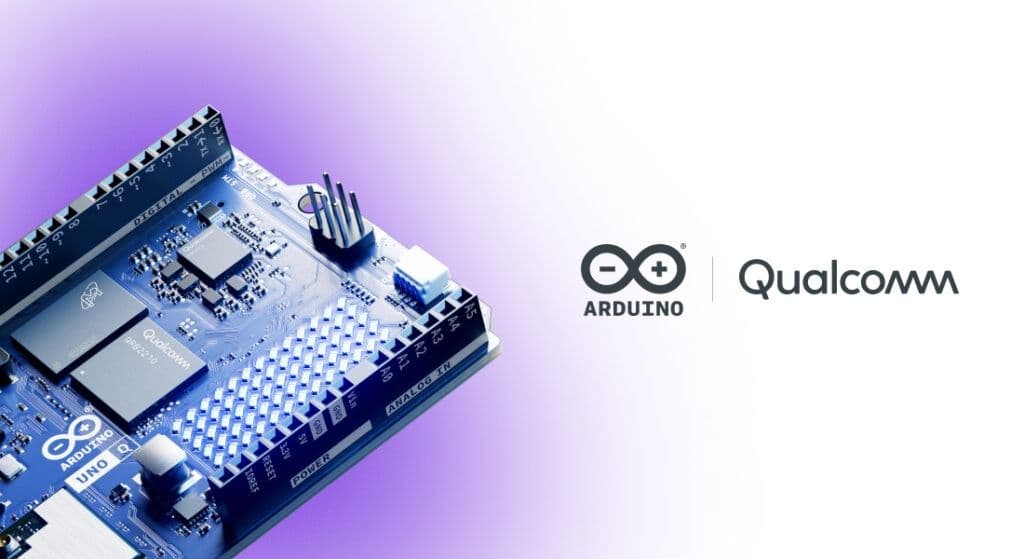
- A new "dual-brain" development board, the Arduino UNO Q, was unveiled, combining Qualcomm's Dragonwing QRB2210 processor with an STMicroelectronics microcontroller for AI and real-time control applications.
- The Arduino App Lab, a new integrated development environment, was introduced to unify development across real-time operating systems, Linux, Python, and AI applications.
- The Arduino UNO Q is immediately available for order, with pricing starting at $44, and aims to bridge high-performance computing with precise real-time control.
The acquisition officially completed on the announcement date, and the Arduino UNO Q and App Lab were launched as planned, with initial UNO Q boards experiencing a minor software update issue.
Qualcomm Technologies, Inc. announced Tuesday that it has entered into an agreement to acquire Arduino, the Italian open-source electronics platform used by over 33 million developers worldwide. The deal is subject to regulatory approval and customary closing conditions.
The acquisition marks a significant expansion for San Diego-based Qualcomm, which is primarily known as a major supplier of mobile phone chips but has been diversifying into connected vehicles, wireless earphones, laptop computers, and industrial machines.
Financial terms of the transaction were not disclosed by either company.
Key Details
- Arduino will retain its independent brand, tools, and mission following the acquisition
- The platform serves more than 33 million developers globally
- Arduino will continue to support chips from manufacturers beyond Qualcomm
- Transaction is pending regulatory approval
About Arduino
Arduino is an Italian not-for-profit organization that produces hardware and software for developing prototypes of robots and other electronic devices. The platform is widely used in educational settings, from high schools to universities, to teach students how to build and program electronic devices.
Professional engineers also utilize Arduino tools to develop prototypes quickly. The platform's hardware and software maintain compatibility with chips from various providers, not exclusively Qualcomm.
Introduction of Arduino UNO Q
Concurrent with the acquisition announcement, the companies unveiled the Arduino UNO Q, a new development board that combines two processing units in a single platform. The board is powered by Qualcomm's Dragonwing QRB2210 processor alongside an STMicroelectronics STM32U585 microcontroller.
Technical Specifications
| Component | Specifications |
|---|---|
| Main Processor | Qualcomm Dragonwing QRB2210 with quad-core Arm Cortex-A53 at 2.0 GHz |
| Microcontroller | STMicroelectronics STM32U585 with Arm Cortex-M33 at 160 MHz |
| Graphics | Adreno GPU with 3D graphics acceleration |
| Memory (Base Model) | 2 GB LPDDR4 RAM, 16 GB eMMC storage |
| Memory (Premium Model) | 4 GB LPDDR4 RAM, 32 GB eMMC storage (available late 2025) |
| Connectivity | Wi-Fi 5 (2.4/5GHz), Bluetooth 5.1 |
| Operating System | Linux Debian (main processor), Zephyr RTOS (microcontroller) |
| Form Factor | Standard UNO (68.85 × 53.34 mm) |
The dual-brain architecture provides AI acceleration, graphics processing capabilities, and dual image signal processor support from the Dragonwing chip, while the STM32 microcontroller handles real-time control functions. This design makes the board suitable for applications requiring both computational power similar to a computer or phone and precise real-time control of robotic elements such as wings or wheels.
Pricing and Availability
The Arduino UNO Q with 2 GB RAM and 16 GB storage is available for order immediately at $44 (€39), with shipping beginning October 25, 2025. The 4 GB RAM and 32 GB storage variant will be available for order in November 2025 at $59 (€53), shipping by year-end 2025.
The board is available through the official Arduino Store, RS Components, DigiKey, Mouser, and Macfos, with additional authorized distributors and resellers to be added in the future.
New Development Environment
Alongside the UNO Q hardware, the companies introduced Arduino App Lab, a new integrated development environment designed to unify development across real-time operating systems, Linux, Python, and AI applications.
According to Qualcomm, the tool aims to help Arduino developers bridge the gap between coding languages used in robotics and those used in more complex artificial intelligence systems. The environment provides a single interface for faster development across different domains.
Arduino App Lab features integration with Edge Impulse's platform, enabling developers to build and fine-tune AI models using real-world data for applications including object identification, anomaly detection, and sound recognition. The tool includes ready-to-use Arduino Apps and Bricks to accelerate development.
The UNO Q is the first Arduino board designed to work with Arduino App Lab, and the development environment can run directly on the board itself or on external computers.
Industry Context
The acquisition represents Qualcomm's continued expansion beyond its traditional mobile phone chip business. The company has been actively pursuing opportunities in emerging technology sectors including automotive systems, industrial IoT devices, and edge computing applications.
Arduino's legacy in the maker and educational communities spans two decades. The original Arduino UNO board, released 20 years ago, helped spark the modern maker movement by making microcontroller programming accessible to students, hobbyists, and professional engineers alike.
The platform's open-source philosophy has fostered a large ecosystem of compatible hardware, software libraries, and educational resources. Arduino's software and hardware designs are publicly available, allowing third-party manufacturers to create compatible boards and accessories.
Arduino has previously expanded its offerings to include industrial-grade hardware through its Pro product line, targeting commercial and professional applications beyond the educational and hobbyist markets.
Open Source Considerations
Arduino stated that board schematics for the UNO Q will be released as open source, consistent with the company's traditional approach. The board includes new high-speed connectors on the bottom for standard I/O including HDMI and Ethernet.
Qualcomm representatives indicated that the Dragonwing processor would eventually be available for third-party board designs, though no timeline was provided. Currently, accessing Dragonwing processors typically requires partnership status with Qualcomm and minimum order quantities in the hundreds or thousands of units.
If you enjoyed this article, follow us on WhatsApp for daily tech updates. If you have an idea, need to be featured or need to partner, reach out to us at editorial@techinika.com or use our contact page.
Don't let the story end here.
Share your thoughts, ask questions, and connect with the community.

Cishahayo Songa Achille
Chief EditorCishahayo Songa Achille is a Rwandan software engineer and tech entrepreneur focused on democratizing digital skills. He is best known as the Founder and Managing Director of Techinika, an edtech firm established in 2020 to make complex technological advances accessible to the general public and build solutions for the biggest problems.
View all articles by Cishahayo Songa Achille →