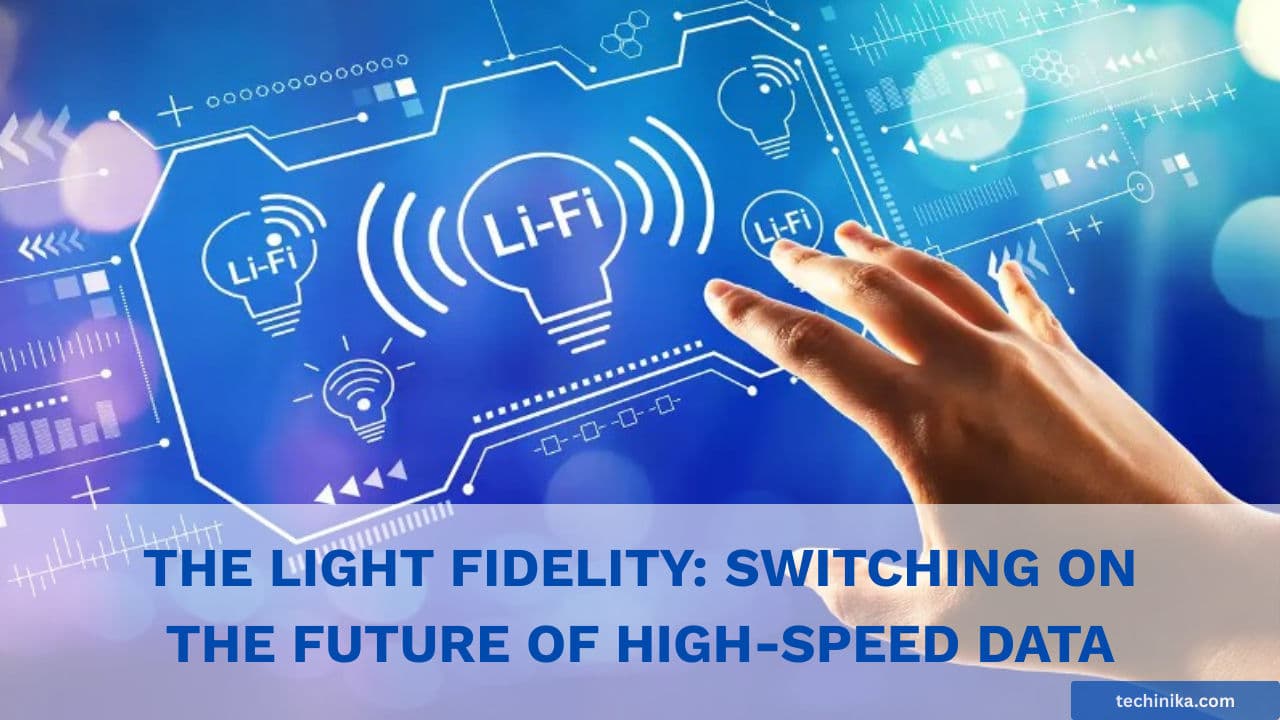
The Light Fidelity: Switching on the Future of High-Speed Data
AI Quick Summary
- Li-Fi, or Light Fidelity, is a wireless technology that transmits data using light waves from LED bulbs, essentially turning them into high-speed internet routers.
- It operates by rapidly flickering LED lights (imperceptible to the human eye), which are then decoded into data by a photodetector on a receiving device.
- This technology offers significant advantages including extremely high speeds (up to 224 Gbps in labs), enhanced physical security as signals cannot penetrate walls, and safe operation in electromagnetically sensitive environments like hospitals.
- Challenges to widespread adoption include the necessity for a direct line of sight between the light source and receiver, the requirement for lights to be "on" (though dimmable solutions exist), and the current lack of integrated Li-Fi hardware in most consumer devices.
- Li-Fi is envisioned as a complementary technology to Wi-Fi, fostering hybrid networks that provide ultra-secure and ultra-fast connections, especially for the future of 6G and the Internet of Things.
Since this article was written, the Li-Fi market has been projected for substantial growth, with increasing integration into consumer devices and broader application in sectors like smart cities and healthcare.
While the world remains tethered to Wi-Fi, a faster and more secure successor is already flickering overhead. Li-Fi, or Light Fidelity, is a wireless communication technology that uses light waves instead of radio frequencies to transmit data. First introduced by Professor Harald Haas, Li-Fi effectively turns every LED light bulb into a high-speed wireless router.
How It Works: The "Digital Morse Code"
At its core, Li-Fi is a highly advanced, ultra-fast version of Morse code. The process involves three main components:
- The Transmitter: A standard LED bulb is fitted with a signal-processing chip.
- The Signal: The chip flickers the light on and off thousands of times per second. When the light is On, it represents a 1; when it is Off, it represents a 0.
- The Receiver: These flickers happen so fast; billions of times per second; that the human eye perceives only a steady beam of light. However, a photodetector on your device "reads" these flashes and converts them back into binary data.
The Three Major Breakthroughs
1. Unprecedented Speed
The visible light spectrum is 10,000 times larger than the radio frequency spectrum used by Wi-Fi. Because of this massive "highway," Li-Fi can carry far more data. In laboratory settings, researchers have achieved speeds exceeding 224 Gbps, meaning you could theoretically download an entire high-definition film library in seconds.
2. Physical Security
Unlike Wi-Fi, which can be intercepted by a hacker sitting in a car outside your building, Li-Fi signals cannot penetrate opaque walls. If you are in a high-security meeting room, your data is physically locked inside that room by the boundaries of the light. To steal the signal, an intruder would literally have to be in the room with you.
3. Safety in Sensitive Zones
Radio waves can interfere with sensitive electronics. This is why Wi-Fi is often restricted in hospital operating rooms, nuclear power plants, or even inside airplanes. Because Li-Fi uses light, it is "electromagnetically silent," making it perfectly safe for these environments where interference can be dangerous.
The Challenges to Adoption
If Li-Fi is so superior, why isn't it in every home yet? The technology faces a few practical hurdles:
- Line-of-Sight: If you put your phone in your pocket or walk behind a pillar, the signal can drop, as the sensor needs to be able to "see" the light source.
- The "Always On" Requirement: The lights must be on to receive data. However, engineers have developed bulbs that can be dimmed to a level that looks "off" to humans while still transmitting a signal.
- Hardware Integration: Most current smartphones and laptops do not have built-in photodetectors. Until manufacturers integrate these sensors directly into screens, users must rely on external USB "dongles."
Li-Fi is not meant to replace Wi-Fi entirely. Instead, the future is hybrid. Imagine an office where Wi-Fi provides general coverage for the entire floor, while Li-Fi "spotlights" provide ultra-secure, ultra-fast connections at individual desks or in conference rooms.
As we move toward 6G and the Internet of Things (IoT), Li-Fi is set to become one of the primary ways our smart devices talk to one another, using the very lights that illuminate our world to keep it connected.
If you enjoyed this article, follow us on WhatsApp for daily tech updates. If you have an idea, need to be featured or need to partner, reach out to us at editorial@techinika.com or use our contact page.
Don't let the story end here.
Share your thoughts, ask questions, and connect with the community.

Kellycie Bayingana
AuthorPassionate about the intersection of technology and storytelling. I am committed to uncovering and sharing the most compelling startup narratives from across Rwanda for Techinika.
View all articles by Kellycie Bayingana →