How Smart Glove Technology is Bridging the Accessibility Gap
AI Quick Summary
- Sign-IO is a smart glove invented by Kenyan engineer Roy Allela to translate sign language into speech in real-time.
- Inspired by his deaf niece, Allela developed the portable, affordable, and high-performance solution to bridge communication gaps.
- The glove utilizes flex sensors to capture finger movements, transmitting them via Bluetooth to a smartphone app that uses machine learning to vocalize words with 93% accuracy.
- It can also serve as a multi-tool for sensory substitution, offering ultrasonic navigation for the blind and haptic Braille messages for the deaf-blind.
- The technology aims to reduce social stigma through "cool tech" designs and personalized voices, fostering autonomy and equal opportunities.
Despite its recognition, as of June 2024, the Sign-IO gloves were reported to still be in the prototype stage.
Powerful technology often begins with a simple human need. For the millions who are deaf or blind, a lack of public understanding of sign language creates a "dependency wall" that makes simple conversations; at a bank, a shop, or even a dinner table; nearly impossible. While "talking gloves" have been researched since the 1980s, earlier prototypes were often bulky, expensive, and tethered to stationary computers. Today, modern engineering has finally moved this technology out of the lab and into the hands of those who need it most.
A Tech Solution for Autonomy
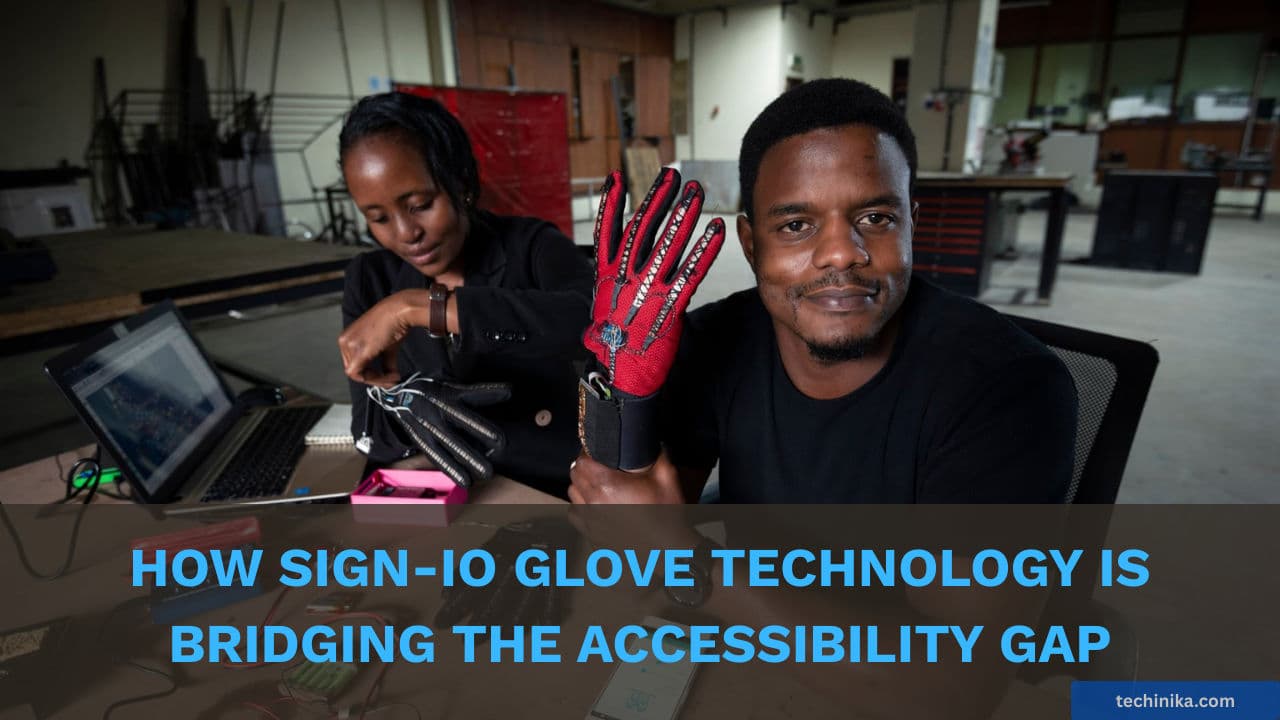
In 2018, Kenyan microprocessor engineer Roy Allela unveiled Sign-IO, a wearable solution designed to bridge this communication gap. Driven by his 6-year-old niece’s struggle to communicate with her family, Allela developed a system that is portable, affordable, and high-performance. By 2019, the invention gained global recognition, winning the Hardware Trailblazer Award from the American Society of Mechanical Engineers (ASME).
The Engineering of the Smart Glove
The smart glove translates physical movement into digital speech through a high-speed process:
- Kinetic Input (Flex Sensors): Thin sensors stitched into the fingers measure the precise degree of every bend. As the user signs, the changing electrical resistance creates a unique "digital fingerprint" for each gesture.
- Processing & Connectivity: A compact microcontroller on the wrist processes these signals and transmits them via Bluetooth to a smartphone app.
- Neural Translation: The app uses machine learning to decode these movements against a sign language database. Once identified, the phone’s engine vocalizes the word in real-time with 93% accuracy.
A Multi-Tool for the Senses
This technology is part of a broader wave of "Sensory Substitution" tools that extend beyond sign language:
- For the Blind: By integrating ultrasonic sensors, the gloves act as a "sonar." They emit waves that bounce off obstacles, sending a haptic vibration to the user’s hand to warn them of walls or chairs, providing navigation far more dynamic than a standard cane.
- For the Deaf-Blind: Newer versions use haptic actuators to "tap" the user's palm in Braille patterns. This allows a person who cannot see or hear to "feel" incoming text messages directly through the glove.
By prioritizing "cool tech" over medical looks, smart glove technology erases social stigma. Themed designs like superheroes turn disability aids into gear users wear with pride. This psychological shift, plus personalized voices that truly represent the user, unlocks educational and social doors previously closed. As this hardware merges with AI and robotics, it moves closer to the ultimate goal of total independence.
The Vision for Equality
Roy Allela, who developed the technology to ensure his niece could navigate life without constant dependency, noted:
"I was trying to envision how my niece's life would be if she had the same opportunities as everyone else in education, employment; all aspects of life. The general public doesn't understand sign language... imagine that dependency over the long term; how much that impairs her progress in life."
By converting movement into speech, smart gloves ensure the future of communication is no longer a silent struggle, but a tool for autonomy held firmly in the user's hands. For more on this invention, learn about it here.
If you enjoyed this article, follow us on WhatsApp for daily tech updates. If you have an idea, need to be featured or need to partner, reach out to us at editorial@techinika.com or use our contact page.
Don't let the story end here.
Share your thoughts, ask questions, and connect with the community.

Kellycie Bayingana
AuthorPassionate about the intersection of technology and storytelling. I am committed to uncovering and sharing the most compelling startup narratives from across Rwanda for Techinika.
View all articles by Kellycie Bayingana →