How Rwanda is Enrolling Millions in The New Biometric Digital ID Ecosystem
AI Quick Summary
- Rwanda's biometric digital national ID system has enrolled over 1.49 million people and pre-enrolled 1.69 million, expanding its registration efforts across the country.
- Registration began in the Southern Province in October 2025 and extended to Kigali in February 2026, with sites including sector offices, schools, and churches.
- The digital ID covers Rwandan citizens, foreign residents, refugees, migrants, and stateless persons, each with specific document requirements.
- The e-ndangamuntu system uses multimodal biometrics (iris scans, fingerprints, photos, signatures) and provides both physical and digital IDs, facilitating access to public and banking services.
- With a $70 million budget, supported in part by the World Bank, digital ID issuance is anticipated from mid-2026, aiming to enhance governance, digital inclusion, and economic participation.
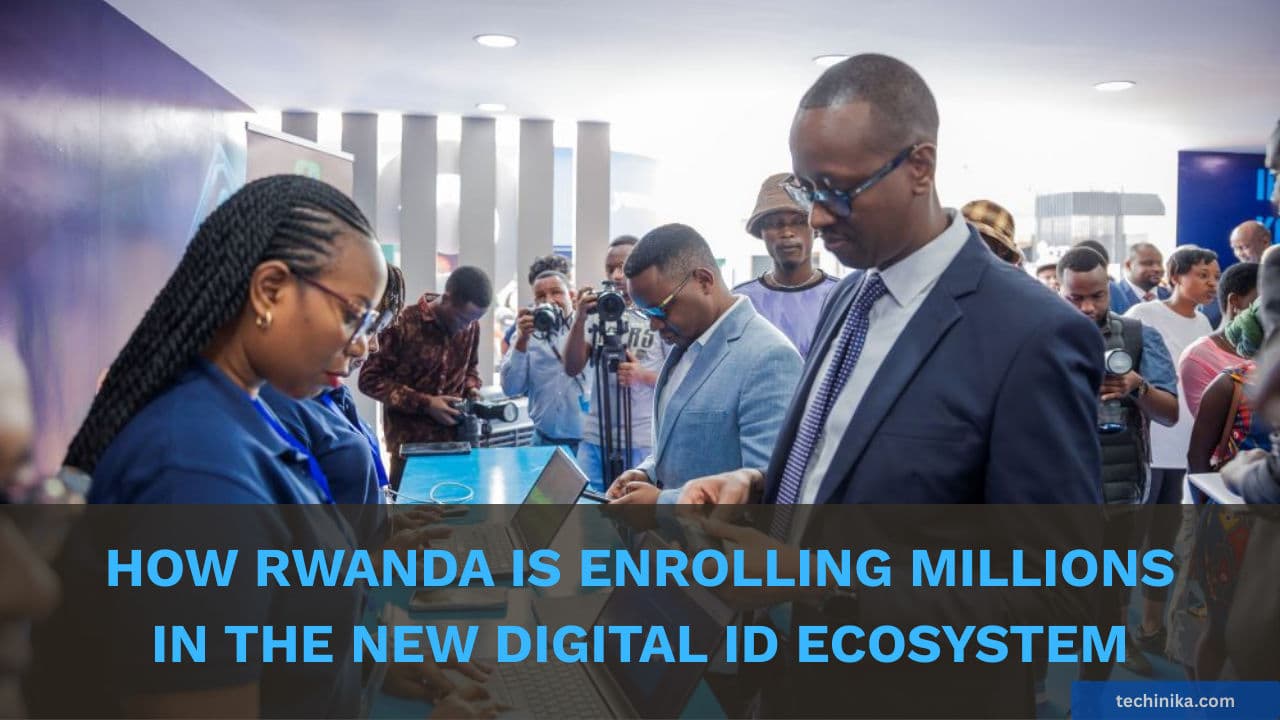
Rwanda’s biometric digital national ID system has reached a milestone, with over 1.49 million people fully enrolled and 1.69 million pre-enrolled, according to the National Identification Agency (NIDA).
The exercise began in the Southern Province on October 28, 2025, and expanded to Kigali on February 7, following registration in districts like Huye, Gisagara, Nyanza, Muhanga, Ruhango, and Kamonyi.
NIDA Director General Josephine Mukesha noted that pre-enrolment numbers are higher because children under 16 require parental consent before full enrolment.
Registration Across Kigali
In Kigali, the exercise is ongoing in Nyarugenge, Kicukiro, and Gasabo districts. Registration points include sector and cell offices, schools, churches, and community halls. City of Kigali spokesperson Emma-Claudine Ntirenganya said the exercise will run seven weeks, with new registration sites announced weekly to improve accessibility.
Who Is Eligible
The digital ID covers:
- Rwandan citizens
- Foreign residents
- Refugees, migrants, and stateless persons
Documents they provide vary; citizens present ID cards, children show birth certificates with parental consent, foreign nationals provide passports and permits, and refugees/migrants provide proof of residence or registration.
System Features and Benefits
The e-ndangamuntu system integrates:
- Multimodal biometrics (iris scans, fingerprints, photos, signatures)
- Physical and digital IDs with unique authentication numbers
- Secure data access allowing selective sharing of information
It enables access to public services, banking, and online transactions, supporting Rwanda’s Digital Acceleration Project and broader economic digitisation.
Budget and Timeline
The project has a $70 million budget, partly supported by the World Bank. While registration continues, digital ID issuance is expected from mid-2026.
Beyond being an ID, the system strengthens governance, digital inclusion, and economic participation, ensuring that citizens and residents can access services securely.
If you enjoyed this article, follow us on WhatsApp for daily tech updates. If you have an idea, need to be featured or need to partner, reach out to us at editorial@techinika.com or use our contact page.
Don't let the story end here.
Share your thoughts, ask questions, and connect with the community.

Mwiza Zamda
AuthorA technology writer at Techinika with an interest in digital innovation and emerging trends in Africa.
View all articles by Mwiza Zamda →