How Exuus is Creating Credit Identities for the Unbanked
AI Quick Summary
- Exuus digitizes traditional Rwandan community savings groups (Ibimina), which previously suffered from unorganized and untrustworthy data.
- The platform transforms informal trust into formal, verifiable digital records that banks can use for lending.
- It acts as a distributed ledger, managing community finances with decentralized fund management and real-time equity tracking.
- A "SAVE Score" is generated from members' financial behavior, allowing banks to extend credit based on reputation rather than physical collateral.
- The system is universally accessible via USSD, integrates with Mobile Money, and includes KYC for formalizing savings groups into recognized financial entities.
Exuus continues its scaling efforts across East Africa in 2026, operating within a region projected for strong economic growth.
In the traditional Rwandan financial landscape, community-led savings groups, known as Ibimina, have long served as the primary economic engine for millions. However, these groups have historically operated with disorganized data that was hard for anyone outside the group to see or verify, a situation known as a "data vacuum”.
Exuus, founded in 2014 by Shema Steve, is solving this problem. They provide the digital tools that help these groups take the trust they’ve built with each other and turn it into a formal record that banks can actually trust and use to give out loans.
Transparent Community Finance
The platform operates not just as a savings tool; it is a distributed ledger system that manages the internal economy of unbanked communities through automated record-keeping.
- Decentralized Fund Management: Exuus moves the traditional metal cashbox into the cloud. By allowing members to track contributions and payouts on a shared digital record, it solves the security and transparency gap without interfering with the social bonds that make these groups work.
- Reputation-Based Credit Intelligence: Through the SAVE Score, the platform aggregates data on saving frequency and group participation. This allows banks to extend credit based on a user's proven financial behavior rather than requiring physical property or land as collateral.
- Real-Time Equity Tracking: Every deposit or loan triggers an instant update of the entire group's balance. This ensures 100% clarity for every member, removing the human error and disputes often found in paper-based ledgers.
The Technical Architecture
Exuus operates as a Financial Middleware that connects traditional social saving habits with modern banking gateways.
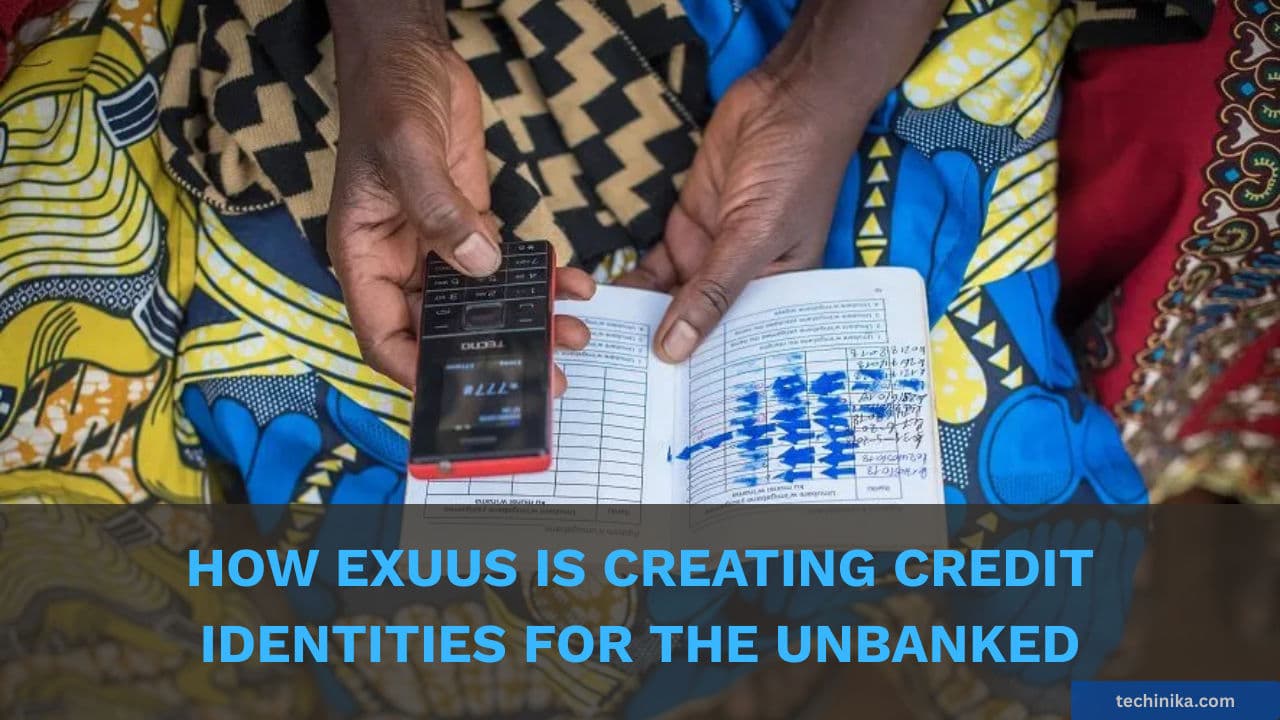
- Universal Access via USSD (*777#): To ensure total inclusion, the platform integrates directly with basic mobile networks. This allows members in remote areas to interact with their savings group using any phone, verifying their balance and requesting funds via Mobile Money in seconds.
- The SAVE Algorithm: This is the core engine. Every Rwandan Franc saved is logged in a secure database that ensures the group's Net Value is always accurate. This prevents groups from over-borrowing and allows for automated interest calculations from bank partners.
- Identity & Verification Layer: The infrastructure includes a built-in KYC (Know Your Customer) system that cross-references member data with national IDs. This turns a casual savings group into a formally recognized financial entity.
- Mobile Money Integration: Exuus facilitates sub-second disbursements to MTN MoMo or Airtel Money, treating community savings as a liquid, on-demand resource.
Exuus stands as a primary catalyst for financial evolution within the East African landscape. By integrating communal traditions with advanced software architecture, the company has effectively migrated the informal economy into a transparent, bankable environment.
Their model proves that when financial tools are built to complement existing social structures, they don’t just offer an app; they provide a foundation for long-term economic stability. As Exuus continues to scale its presence across the region in 2026, it is proving that the most sustainable way to drive financial inclusion is by transforming collective trust into a powerful, digital-first asset.
If you enjoyed this article, follow us on WhatsApp for daily tech updates. If you have an idea, need to be featured or need to partner, reach out to us at editorial@techinika.com or use our contact page.
Don't let the story end here.
Share your thoughts, ask questions, and connect with the community.

Kellycie Bayingana
AuthorPassionate about the intersection of technology and storytelling. I am committed to uncovering and sharing the most compelling startup narratives from across Rwanda for Techinika.
View all articles by Kellycie Bayingana →Up Next
Hanga Pitchfest Announces Top 45 Startups for 2026 EditionBy Cishahayo Songa Achille • 5 min read