Whatever Happened to Ogelle, "The Future of African Content Streaming"?
AI Quick Summary
- Ogelle was an African video streaming platform launched in 2019, aiming to be the "future of African content streaming" by providing a platform for African stories and better creator monetization.
- Despite initial promise and investment in awareness, the platform shut down in April 2024, with its founder reporting a personal loss of approximately $18 million.
- The primary reasons for its failure included overestimating the African market's willingness to pay for streaming services, insufficient capital to scale infrastructure, and intense competition from established global giants like YouTube.
- A significant misstep involved incentivizing content uploads before the platform's infrastructure could handle the resulting traffic surge, leading to crashes and user attrition.
- Lessons learned for African founders include thoroughly understanding market willingness to pay, ensuring infrastructure scales before marketing, recognizing that competing with global giants requires substantial capital beyond mission alone, and viewing failure as a potential pivot point for future ventures.
In 2021, Disrupt Africa published an article calling Ogelle "the future of African content streaming." I remember discovering the platform back in 2019. I loved it instantly, and even started uploading content there the same way I did on YouTube.
Today, Ogelle's website no longer loads. So what happened? How did a platform once hailed as the future of streaming in Africa simply disappear? In this article, we look at Ogelle, what went wrong, and what other African founders can learn from its rise and fall.
The Beginning
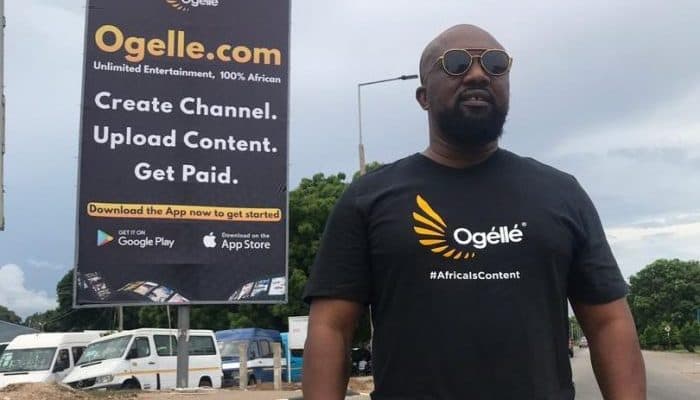
Ogelle was a video platform built in the spirit of YouTube, founded by Osita Oparaugo in 2019 and headquartered across Rwanda and Nigeria. The company invested heavily in awareness campaigns, and for a while, it worked.
Back then, YouTube creators would post their content on both platforms simultaneously. I did the same. Thousands of videos flooded in, drawn by Ogelle's promise of a monetization model similar to YouTube's own.
At its core, Ogelle was solving a problem many African creators knew well: unfair treatment on global platforms compared to creators elsewhere, and the broader reality that "African stories were not being told by Africans." Oparaugo's vision was simple but ambitious, a platform built by Africans, for Africans, to tell their own stories on their own terms.
What Went Wrong
Ogelle shut down in April 2024. In a conversation with TechCabal, Oparaugo reflected candidly on the collapse: "We overestimated the market." Over the years he spent running Ogelle, he says he personally lost roughly $18 million. "I lost $18 million building Ogelle. Money from my pocket, my partners, family, friends, colleagues, angel investors, we all lost."
He came to understand, painfully, that the market was unforgiving. Africa simply wasn't ready to pay for a streaming service, especially while going up against a competitor with far deeper pockets. The obstacles stacked quickly:
Low consumer purchasing power across Ogelle's target markets, which made monetization extremely difficult.
Insufficient capital or long-term funding to scale the kind of tech infrastructure the platform needed.
Intense competition from an established global giant in YouTube, with resources Ogelle could never match.
One especially costly misstep came when the team tried to incentivize young creators to upload videos to Ogelle before posting them on YouTube. The idea backfired almost immediately: the platform wasn't built to handle the surge in traffic, and it crashed. In an unforgiving market, users didn't wait around, they simply found alternatives. Unable to keep the sinking ship afloat, Oparaugo and his team eventually made the difficult call to shut Ogelle down.
Following the collapse, Oparaugo pivoted away from streaming entirely, going on to launch GetBundi, a STEM and digital skills edtech platform, and Doballi, an African recruitment hub.
What Can We Learn From This Story?
I sometimes wonder how many of today's startup stories will become forgotten tales a few years from now. But it's worth asking the harder question: if you were the founder, what would you have done differently? For African founders building African versions of foreign products, how should you actually compete?
Ogelle's story offers a few hard-earned lessons for founders building consumer platforms on the continent:
Know your market's willingness to pay before you build for it. A brilliant product means little if the audience you're serving can't or won't pay for it. Monetization strategy has to be designed around local purchasing power, not copied wholesale from markets where it worked.
Infrastructure has to scale before the marketing does. Driving a surge of users to a platform that can't handle the load doesn't just cost you uptime, it costs you trust, and users rarely come back to try again.
Competing with global giants requires more than mission. Purpose and identity can win hearts, but sustaining a fight against a well-funded incumbent requires capital reserves few startups have access to, and a clear-eyed plan for how you'll survive the war of attrition.
Failure isn't the end of the founder's story. Oparaugo's pivot into GetBundi and Doballi is a reminder that a shuttered company doesn't have to mean a shuttered career. Sometimes the clearest lesson from a failed venture is knowing when to build the next one.
Ogelle may no longer be live, but its story is far from a footnote. It stands as one of the clearest case studies of what it takes, and what it costs, to build for Africa on Africa's own terms. For every founder chasing the next "African version" of a global product, Ogelle is proof that ambition alone doesn't guarantee survival, but it can still leave behind lessons worth more than the millions lost building it.
Sources:
If you enjoyed this article, follow us on WhatsApp for daily tech updates. If you have an idea, need to be featured or need to partner, reach out to us at editorial@techinika.com or use our contact page.
Don't let the story end here.
Share your thoughts, ask questions, and connect with the community.

Cishahayo Songa Achille
Chief EditorCishahayo Songa Achille is a Rwandan software engineer and tech entrepreneur focused on democratizing digital skills. He is best known as the Founder and Managing Director of Techinika, an edtech firm established in 2020 to make complex technological advances accessible to the general public and build solutions for the biggest problems.
View all articles by Cishahayo Songa Achille →Up Next
Hanga Pitchfest Announces Top 45 Startups for 2026 EditionBy Cishahayo Songa Achille • 5 min read