Decoding the Most Advanced Sports Arena on Earth
AI Quick Summary
- Intuit Dome, a $2 billion, LEED Platinum-certified arena, hosted the 75th NBA All-Star Game, showcasing cutting-edge AI, facial recognition, and immersive display technologies.
- The arena's most striking feature is the "Halo Board," a 38,375-square-foot interactive double-sided LED scoreboard offering 360-degree visuals and fan participation.
- It utilizes "Game Face ID" for seamless entry and cashless purchases via facial recognition and spatial AI in concession areas.
- Every seat includes USB charging, lighting, and decibel sensors that reward enthusiastic fans, complemented by a steep seating design for optimal court views.
- President Paul Kagame attended, reinforcing Rwanda's growing partnership with the NBA and the Clippers organization.
Following the NBA All-Star Weekend, the Intuit Dome continued its busy schedule, hosting numerous Clippers games and various concerts throughout 2026.
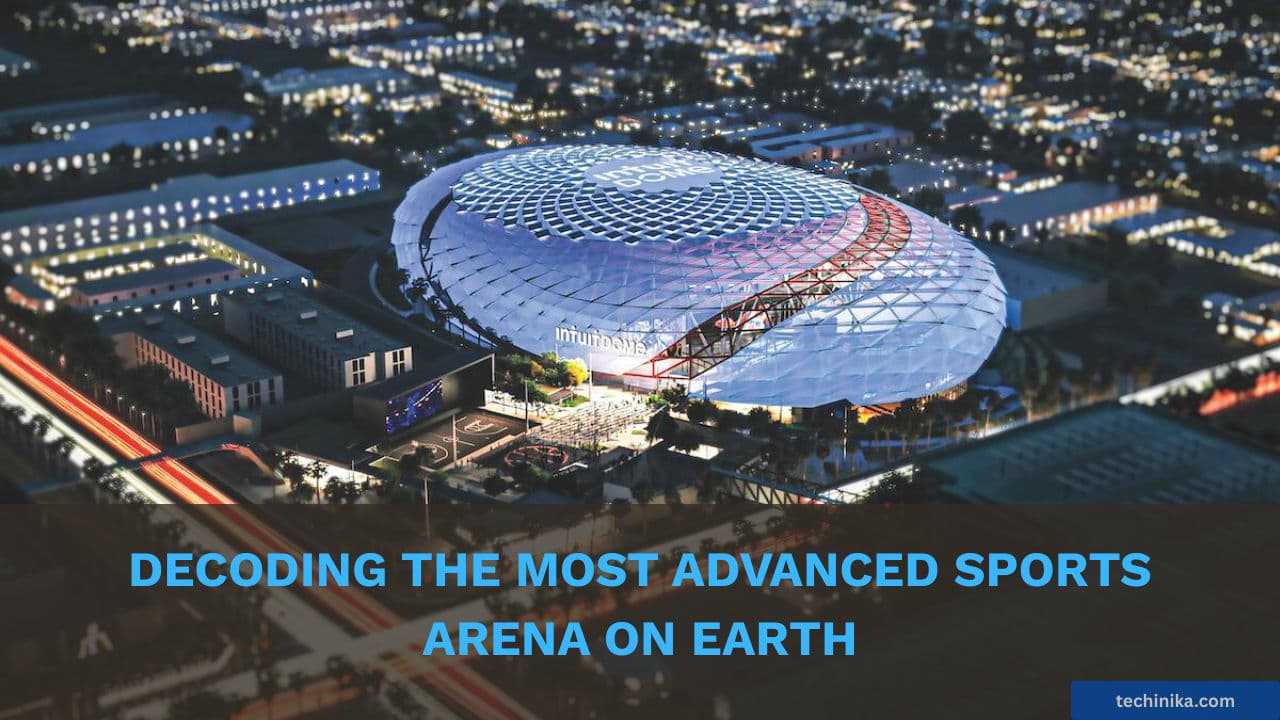
President Paul Kagame attended the 75th NBA All-Star Game in Los Angeles this weekend, held at Intuit Dome, a $2 billion facility that represents the most technologically advanced sports arena ever built, merging artificial intelligence, facial recognition, and immersive display technology into a single fan experience.
On the sidelines of the 2026 NBA All-Star Weekend in Inglewood, California, President Kagame met with leaders from the sports and business community, including Los Angeles Clippers owner Steve Ballmer (Former Microsoft CEO). Their discussions reflected the growing partnership between Rwanda and the NBA, including last year's sponsorship deal between Visit Rwanda and the Clippers, the same franchise that calls Intuit Dome home.
The Halo Board
The arena's most striking feature is the Halo Board, a 38,375-square-foot (equivalent to 3,565.2 square meters) double-sided LED scoreboard suspended above the court in a continuous oval ring. Comprising 233 million LEDs and spanning over 600 feet (equivalent 182.88 meters) in circumference, it delivers 360-degree visuals that keep replays, statistics, and graphics within every fan's sightline regardless of seat location.

Unlike traditional scoreboards, the Halo Board is interactive, each seat in the arena features controller-like buttons allowing fans to vote and participate in real-time games displayed on the screen. It also houses built-in T-shirt cannons, ensuring no fan is out of range of game-day giveaways.
AI and Facial Recognition
Artificial intelligence and facial recognition permeate virtually every fan touchpoint inside the arena. The system, branded "Game Face ID," allows fans to enter the venue, access suites, purchase concessions, and buy merchandise by simply walking through, no wallet, no phone, no checkout line required. Fans upload a selfie through the Intuit Dome app before arrival, linking their face to their ticket and payment information.
Spatial AI tracks movement inside cashier-less concession stores, automatically charging accounts for items selected. About 75 percent of attendees are enrolled in the system by the end of each event. The arena's Chief Technology Officer notes the system evolves constantly: "Every event, every game, something is different. We've changed something, we've tweaked it, we've made it better."
Smart Seats and Noise-Powered Rewards
Every seat inside the arena features USB charging ports, integrated lighting and laser systems, and decibel-level sensors that measure how loudly individual fans cheer. The loudest and most passionate supporters earn rewards for food and merchandise, turning crowd enthusiasm into a quantified, gamified experience. Sensors also detect whether fans wear Clippers gear, triggering additional loyalty rewards. The steep seating bowl design, with clear sightlines from all 18,000 seats including upper levels, ensures the closest possible proximity to court-level action regardless of ticket price.

The arena's signature fan section called "The Wall", 51 consecutive uninterrupted rows positioned on the baseline adjacent to the visiting team's bench. It was operated at capacity throughout All-Star Weekend, with Clippers supporters queuing as early as 5:30 in the morning to secure entry. Observers noted the arena's technology, lighting, and crowd flow made it "built for events like this," though the NBA itself faced criticism for low attendance during Friday's Rising Stars game.
LEED Platinum Sustainability
Beyond fan technology, Intuit Dome achieved LEED Platinum certification — the highest green building standard, through solar panels generating most of the arena's energy, drought-tolerant landscaping, a first-of-its-kind rainwater collection system, water-efficient irrigation, and natural ventilation design reducing air conditioning demands. Former Microsoft CEO Ballmer's vision was a carbon-neutral basketball venue that proves sustainability and premium fan experience are not mutually exclusive.
The arena will next host basketball competition during the 2028 Los Angeles Summer Olympics, cementing its status as a centerpiece of global sport. For Rwanda, whose NBA relationship deepens through Visit Rwanda partnerships and high-level diplomatic attendance at such events, Intuit Dome offers a reference point for what technology-integrated sports infrastructure can achieve when ambition and investment align.
If you enjoyed this article, follow us on WhatsApp for daily tech updates. If you have an idea, need to be featured or need to partner, reach out to us at editorial@techinika.com or use our contact page.
Don't let the story end here.
Share your thoughts, ask questions, and connect with the community.

Cishahayo Songa Achille
Chief EditorCishahayo Songa Achille is a Rwandan software engineer and tech entrepreneur focused on democratizing digital skills. He is best known as the Founder and Managing Director of Techinika, an edtech firm established in 2020 to make complex technological advances accessible to the general public and build solutions for the biggest problems.
View all articles by Cishahayo Songa Achille →