Could Rwanda Become Part of Africa’s Emerging Chip Industry?
AI Quick Summary
- ChipMango, a semiconductor technology company, is expanding its operations to Kigali, Rwanda, focusing on chip-design skills, workforce development, and AI infrastructure.
- The company recently raised $1.9 million in funding, led by Atlantica Ventures.
- ChipMango specializes in semiconductor design and verification, and trains engineers for commercial hardware projects, rather than manufacturing physical chips.
- For Rwanda, this initiative aims to develop specialized engineering skills to participate in the global semiconductor value chain and build a deep-tech ecosystem.
- The move is part of a larger effort for Africa to contribute more engineering talent to the growing global semiconductor industry, especially with increasing demand for AI and intelligent devices.
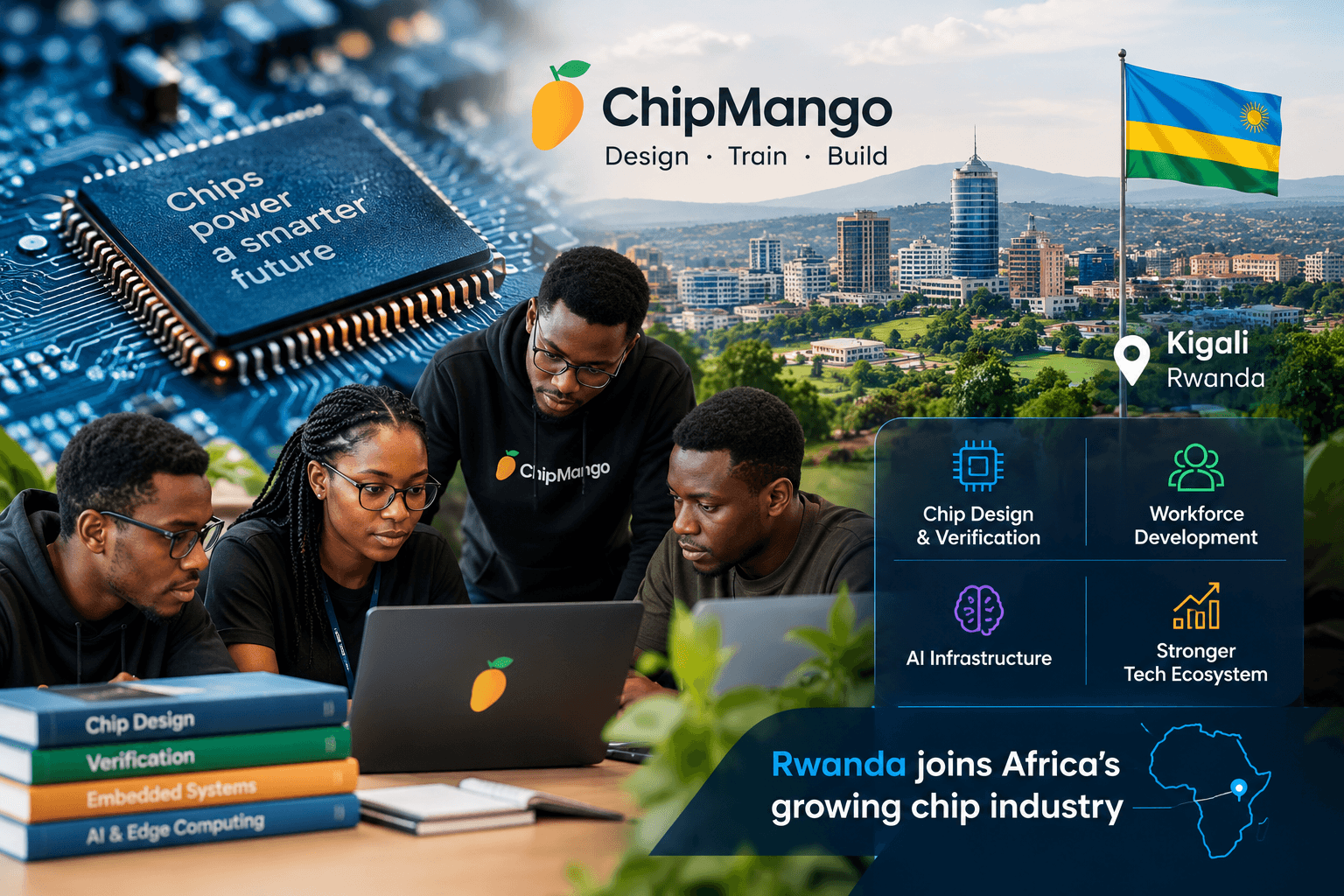
Rwanda is getting a new connection to Africa’s growing semiconductor industry as ChipMango plans initiatives in Kigali focused on chip-design skills, workforce development and AI infrastructure.
The move comes after the semiconductor technology company raised $1.9 million in a funding round led by Atlantica Ventures.
Africa Wants a Bigger Role in the Chip Industry
Semiconductors are the tiny components behind smartphones, computers, vehicles, data centres and many AI systems. While Africa remains a small player in the global semiconductor industry, companies such as ChipMango are betting that the continent can compete through engineering talent and chip design.
ChipMango does not manufacture physical chips. Instead, it works on semiconductor design and verification while training engineers for commercial hardware projects. Its model connects technical education with real industry work.
The company was founded in 2022 by Ola Fadiran and Jovan Andjelich and operates across the United States and Africa, including Rwanda.
Why Kigali Matters
As part of its expansion, ChipMango says it will support ecosystem-building initiatives in Kigali, with a focus on semiconductor capability, workforce development and AI infrastructure. The company has not announced a detailed timeline or specific investment amount for the Kigali initiatives.
For Rwanda, the opportunity is less about producing chips locally and more about developing the specialised engineering skills needed to participate in the global semiconductor value chain.
That could create new opportunities for engineers, universities and technology companies working in areas such as chip design, verification, embedded systems and edge AI.
The Opportunity Is Bigger Than One Company
The semiconductor industry is becoming increasingly important as demand for AI and intelligent devices grows. This is creating pressure to find more engineers with specialised hardware and chip-design skills.
ChipMango plans to use its new funding to expand engineering and product-development teams, commercial semiconductor projects, its AI-enabled workforce platform and edge-AI technologies.
For Rwanda, the bigger question is whether initiatives like this can help build a sustainable deep-tech ecosystem around universities, engineers and technology companies.
If that happens, Kigali could become part of a much larger African effort to move beyond consuming advanced technology and start contributing more of the engineering behind it.
Source: ChipMango funding announcement
Additional source: Disrupt Africa - ChipMango raises $1.9M
If you enjoyed this article, follow us on WhatsApp for daily tech updates. If you have an idea, need to be featured or need to partner, reach out to us at editorial@techinika.com or use our contact page.
Don't let the story end here.
Share your thoughts, ask questions, and connect with the community.

ISHIMWE Jean Claude
AuthorA technology writer at Techinika, exploring digital innovation and emerging technology trends across Africa. Dedicated to translating complex ideas into meaningful narratives.
View all articles by ISHIMWE Jean Claude →