Africa’s $3.4 Trillion Market Finally Trades with Itself
AI Quick Summary
- The Pan-African Payment and Settlement System (PAPSS) acts as the "Internet of African Money," eliminating the need for international detours for intra-African payments.
- PAPSS uses ISO 20022 for rich data, Real-Time Gross Settlement (RTGS) for fast finality, and AI Security to prevent fraudulent activities.
- Over 160 commercial banks in 19 countries have integrated PAPSS since its 2022 launch, with Rwanda emerging as a key hub.
- Key adoption drivers include fintech license passporting, South Africa's Rand joining the network, and strategic campaigns like Access Bank's zero-fee transfers.
- The PAPSSCARD initiative ensures that retail transaction data remains on African servers, boosting financial sovereignty and enabling direct intra-continental trade.
Since this article was written, PAPSS has continued its expansion, reaching over 40 countries and aiming for full continental coverage to further integrate Africa's financial landscape.
For decades, moving money across Africa was an exercise in digital futility. A payment from Accra to Nairobi or Kigali to Lagos; involved a torturous detour via London or New York, costing days in delays and a crippling reliance on the US Dollar. This wasn't just an economic inefficiency; it was a fundamental network problem. As of February 2026, the continent is witnessing the "death of the detour" through the successful deployment of the "Big Pipe."
What is PAPSS?
The Pan-African Payment and Settlement System (PAPSS) is effectively the "Internet of African Money." It is the underlying financial market infrastructure (FMI) that allows every bank and fintech on the continent to speak the same language.
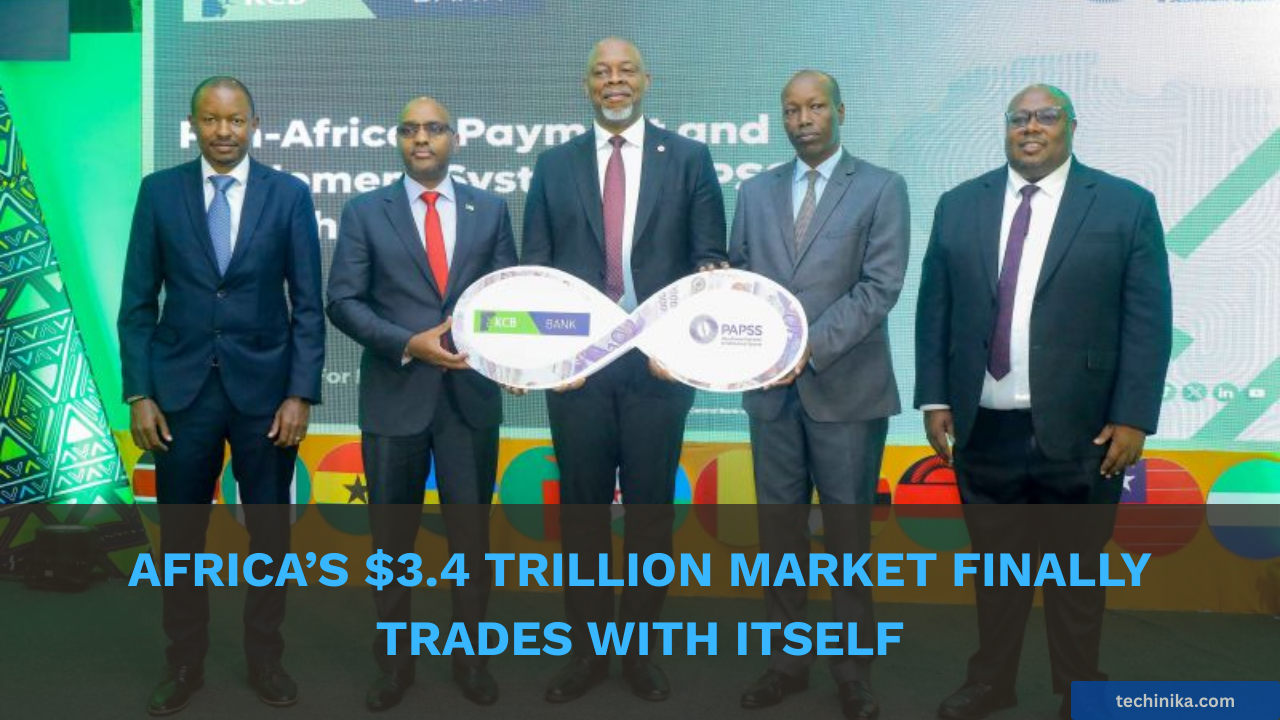
Developed by Afreximbank and the African Union, PAPSS solves the technical debt of 54 fragmented borders. Since its 2022 launch in Accra, Ghana, the network has integrated over 160 commercial banks across 19 countries. Rwanda has emerged as a critical hub in this expansion; in 2025, the Bank of Kigali and I&M Bank Rwanda became early regional leaders by fully integrating the system into their digital operations.
The Tech Stack Powering the Rail
PAPSS solves continental fragmentation through three core technical pillars:
- ISO 20022: A global standard for rich financial data. Every API call carries invoice and compliance data in a single XML-based payload, enabling Straight-Through Processing (STP) without manual intervention.
- RTGS: Unlike slow "batch" cycles, PAPSS uses Real-Time Gross Settlement. By validating bank liquidity at Central Banks in milliseconds, it ensures transaction finality in under 120 seconds, 24/7.
- AI Security: A machine-learning layer monitors transaction "velocity" in real-time. It identifies and automatically isolates velocity attacks; bursts of small payments designed to drain reserves; before they spread.
Mass Adoption and Sovereignty
- The Fintech "Passport": The National Bank of Rwanda and the Bank of Ghana recently implemented a license passporting framework. This allows a fintech licensed in Kigali to operate in Accra with minimal hurdles, using the PAPSS rail for instant interoperability.
- The Entry of the Rand: South Africa officially joined the network. This brings the Rand; the continent's most liquid currency; into the system, plugging Africa's most advanced economy into the shared rail.
- The "Zero-Fee" Drive: Access Bank launched a strategic campaign waiving all outgoing PAPSS transfer fees through April. This move is designed to force a permanent shift toward local-currency payments over traditional dollar-based wires.
- Sovereign Data with PAPSSCARD: The rollout of PAPSSCARD ensures retail transaction data stays on African servers. This ends the era where a local card swipe in Kigali or Lagos had to be processed via servers in Europe or the US.
Africa has solved the "Network Problem" that once paralyzed intra-continental trade. By deploying PAPSS; a continental-scale distributed system; the continent has leapfrogged legacy Western infrastructure to establish a resilient, API-integrated financial grid.
With the "Internet of African Money" now fully operational and entry costs hitting zero, the rails are permanently laid and data is localized. This is a milestone for financial sovereignty. As the continent plugs into this shared rail, the era of third-party currency reliance and offshore clearing ends, enabling Africa’s $3.4 trillion unified market to trade with itself, by itself, and for itself.
For official updates and technical documentation, visit the Official PAPSS Portal.
If you enjoyed this article, follow us on WhatsApp for daily tech updates. If you have an idea, need to be featured or need to partner, reach out to us at editorial@techinika.com or use our contact page.
Don't let the story end here.
Share your thoughts, ask questions, and connect with the community.

Kellycie Bayingana
AuthorPassionate about the intersection of technology and storytelling. I am committed to uncovering and sharing the most compelling startup narratives from across Rwanda for Techinika.
View all articles by Kellycie Bayingana →