Why the Government is Now Buying Problems, Not Products
AI Quick Summary
- Rwanda has introduced Public Procurement for Innovation (PPI) to shift government procurement from buying finished products to acquiring innovative ideas and solutions.
- This new system allows government agencies to define problems and invite innovators to propose solutions, moving away from rigid technical specifications.
- The framework includes "Design contests" for concepts/prototypes and "Pre-commercial procurement" for complex R&D, ensuring innovators retain intellectual property rights.
- The initiative aims to boost Rwanda's tech industry, create jobs, and reduce dependence on imported digital solutions, aligning with national development strategies.
- Successful implementation relies on well-trained procurement officers, clear problem definitions, and robust transparency to foster trust and accelerate the tech ecosystem.
Rwanda's Ministry of Finance and Economic Planning formally introduced the Public Procurement for Innovation policy in February 2026, signaling an active move towards leveraging public spending for local innovation.
For years, government tenders in many African countries have mostly benefited large or foreign companies selling ready-made products. Rwanda is now changing that system.
A new ministerial order from the Ministry of Finance and Economic Planning introduced Public Procurement for Innovation (PPI), a framework that allows the government to buy ideas and solutions, not just finished goods.
This move could reshape Rwanda’s technology industry.
From Buying Products to Buying Solutions
Traditionally, public institutions write detailed technical specifications and invite companies to bid. Contracts often go to firms with long experience and strong financial capacity. Startups usually struggle to qualify.
Under the new system, government agencies can now publish a problem instead of fixed specifications. For example, instead of requesting a specific hospital software, a ministry can describe the challenge, such as improving digital health records and invite innovators to propose solutions.
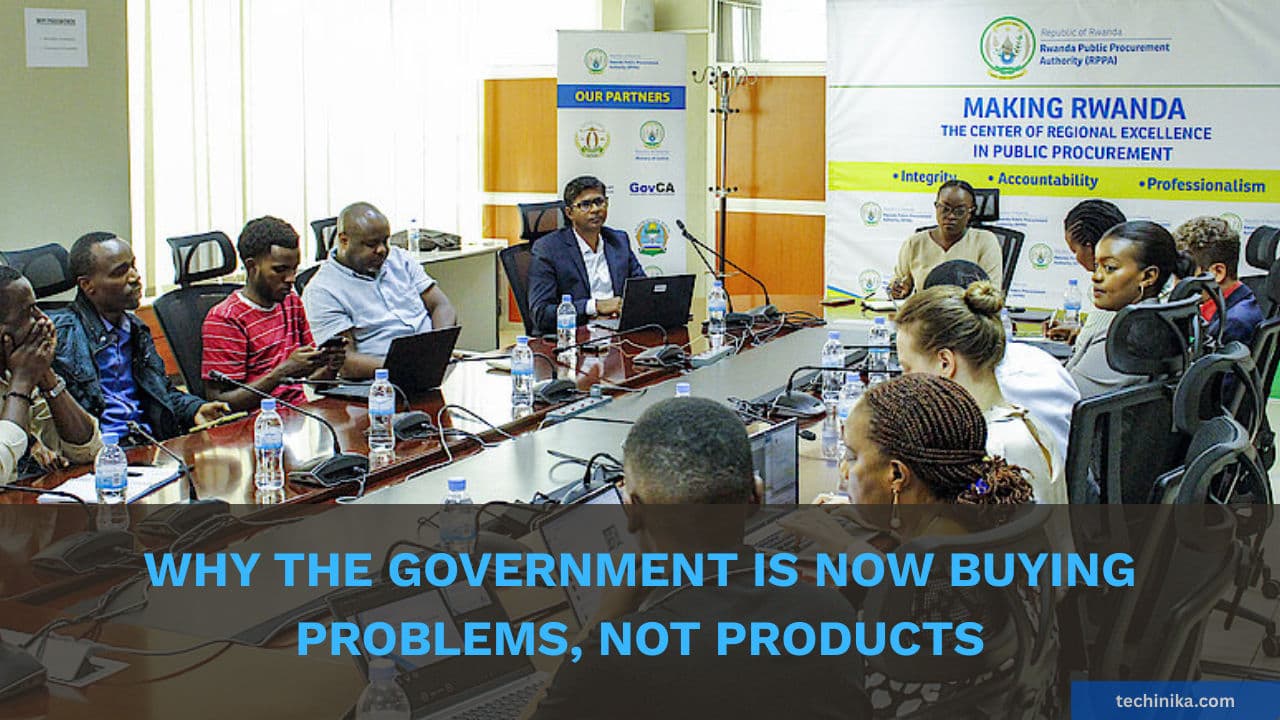
The reform is implemented with support from the Rwanda Public Procurement Authority (RPPA) and applies across public institutions.
How the Innovation Model Works
The framework introduces two main approaches.
- Design contests allow ministries to present a clear challenge and invite startups, researchers, and small businesses to submit concepts or prototypes. Independent experts evaluate the proposals based on technical quality, feasibility, and impact. Winners receive contracts, while other strong participants may receive prizes.
- Pre-commercial procurement focuses on more complex problems that require research and testing. In this model, early-stage ideas are funded and prototypes are developed before final contracts are awarded.
Importantly, innovators retain their intellectual property rights. The government gains the right to use the solution, but startups can still commercialize their products beyond the public sector.
Building on Previous Experiments
Although the policy is new in law, Rwanda has already tested innovation-focused procurement through agencies such as the Rwanda Information Society Authority (RISA). Pilot projects included an AI-powered procurement platform and a digital research portfolio management system developed by local startups.
These early experiments showed that traditional procurement rules often favored large companies and excluded young innovators. The new order reduces strict financial guarantees and experience requirements that previously limited startup participation.
Supporting Rwanda’s Digital Vision
The reform aligns with Rwanda’s long-term development plans, including Vision 2050 and the Second National Strategy for Transformation (NST2). Both strategies aim to build a knowledge-based, innovation-driven economy.
By turning public spending into a strategic tool, Rwanda hopes to strengthen its tech ecosystem, create skilled jobs, and reduce dependence on imported digital solutions.
Opportunities and Challenges
For startups, this policy offers early funding, market access, and real-world testing opportunities. For government institutions, it promises tailored solutions that better respond to local needs.
However, successful implementation will require trained procurement officers, clear problem definitions, and strong transparency measures to maintain trust in the system.
A Strategic Bet on Innovation
By formally integrating innovation into procurement law, Rwanda becomes one of the first African countries to take this comprehensive approach.
If effectively implemented, Public Procurement for Innovation could accelerate the growth of Rwanda’s technology sector. and position the country as a regional leader in digital transformation.
If you enjoyed this article, follow us on WhatsApp for daily tech updates. If you have an idea, need to be featured or need to partner, reach out to us at editorial@techinika.com or use our contact page.
Don't let the story end here.
Share your thoughts, ask questions, and connect with the community.

Mwiza Zamda
AuthorA technology writer at Techinika with an interest in digital innovation and emerging trends in Africa.
View all articles by Mwiza Zamda →Up Next
Rwanda and Kenya Sign Kigali Declaration to Allow Fintechs Operate Across BordersBy Mwiza Zamda • 2 min read