What the Rwanda-India AI Talks Mean for Local Citizens
AI Quick Summary
- Rwanda and India held high-level discussions on February 21, 2026, to explore collaboration in AI, biomanufacturing, and deep-tech.
- The partnership aims to boost Rwanda's tech sector by leveraging India's expertise to enhance public services with AI, accelerate biomanufacturing, and foster startup growth through mentorship.
- Local innovators in Rwanda can benefit from international expertise to overcome technical challenges and access new markets.
- The collaboration is expected to create new career paths for Rwandan students, provide startups with mentorship and funding, and drive economic benefits across various sectors.
- Rwanda's policymakers are focused on ensuring these technology partnerships lead to tangible local impact and nurture homegrown talent.
Following the initial discussions, India further reiterated its readiness to deepen engagement with Rwanda in AI, biotechnology, and nuclear energy on February 23, 2026, exploring structured frameworks for cooperation and linking innovation ecosystems.
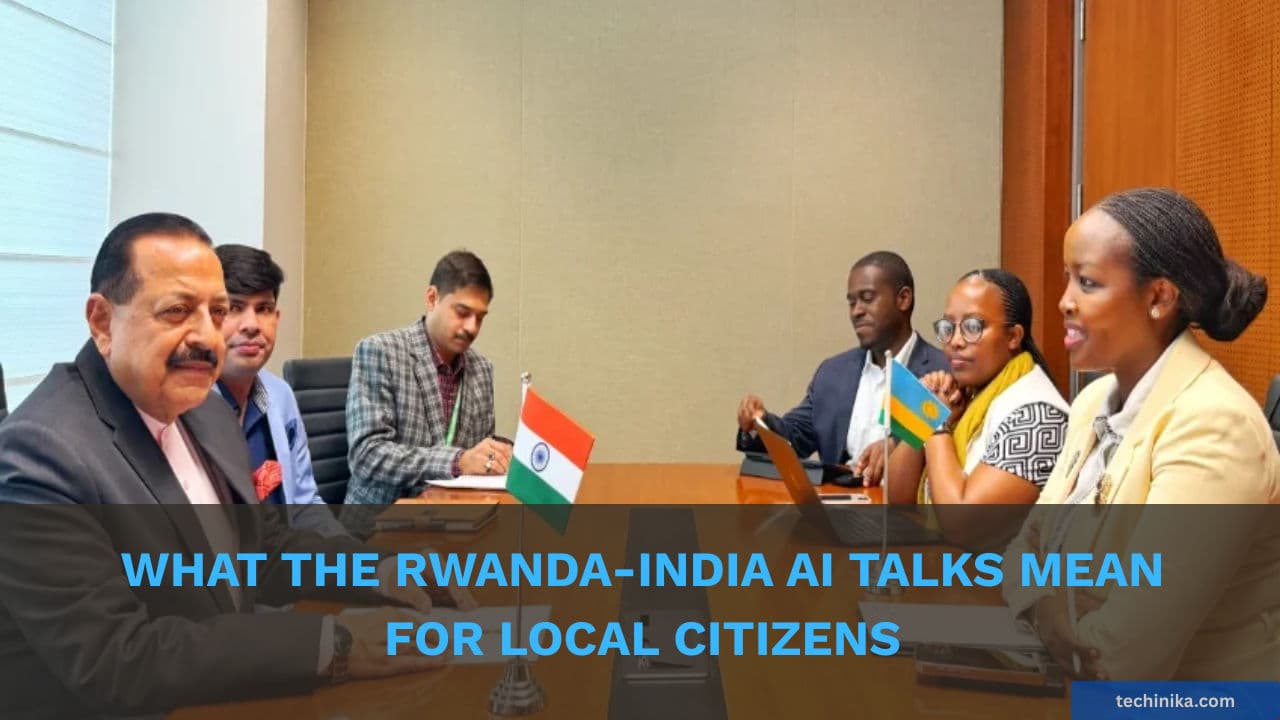
Rwanda is eyeing a leap into the future of technology. But the question many ask is: how will international partnerships in AI and emerging tech actually affect the country’s innovators and citizens? This question was at the center of high-level discussions in New Delhi on 21 February 2026, where Rwandan and Indian officials explored collaboration in AI, biomanufacturing, and deep-tech.
Building Skills and Opportunities for Rwanda
The discussions emphasized practical ways Rwanda can leverage India’s expertise:
- AI for Public Services: From education tools to healthcare analytics, AI can help Rwandan institutions become more efficient.
- Biomanufacturing: Knowledge transfer and joint research can accelerate Rwanda’s biotech sector, creating jobs and fostering innovation.
- Startup Collaboration: Indian startups can mentor Rwandan tech entrepreneurs, offering guidance on scaling products and attracting investment.
Local innovators like Pindo AI and Proto, who recently launched voice AI solutions, say that access to international expertise can help them overcome technical challenges faster and reach new markets.
Why This Matters
For Rwandan students, AI programs and skill-sharing initiatives could create career pathways that didn’t exist a few years ago. Startups gain access to mentorship and funding opportunities, while the broader economy can benefit from technology-driven solutions in health, agriculture, and government services.
Opinion: Partnerships like this are more than symbolic; they are catalysts. By connecting local innovators with global expertise, Rwanda can accelerate its digital transformation and ensure that emerging technologies work for local needs, not just imported ideas.
A Forward-Looking Approach
The India-Rwanda collaboration highlights an important principle: technology partnerships must prioritize local impact. Rwanda’s policymakers are now tasked with ensuring that AI and biotech initiatives create tangible benefits for citizens and nurture homegrown talent.
Source: biospectrumindia.com
If you enjoyed this article, follow us on WhatsApp for daily tech updates. If you have an idea, need to be featured or need to partner, reach out to us at editorial@techinika.com or use our contact page.
Don't let the story end here.
Share your thoughts, ask questions, and connect with the community.

ISHIMWE Jean Claude
AuthorA technology writer at Techinika, exploring digital innovation and emerging technology trends across Africa. Dedicated to translating complex ideas into meaningful narratives.
View all articles by ISHIMWE Jean Claude →