The Rise of the Ghost Fleet: Inside Autonomous Agriculture
AI Quick Summary
- Farming has advanced beyond smart tractors to fully autonomous ecosystems, where 20-ton machines and solar-powered bots operate without human intervention.
- These robots utilize a "Triple-Threat" hardware loop, combining LiDAR, Stereo Depth Cameras, and RTK-GPS for precise navigation and task execution.
- Full-cycle automation covers the entire crop lifecycle, from surgical seeding and laser weeding to tactile harvesting, ensuring precision from planting to picking.
- A "Swarm Model" enables robots to collaborate via low-power mesh networks, providing peer-to-peer feedback, self-healing capabilities, and collaborative mapping of farm conditions.
- Powered by LiFePO4 batteries and often supplemented with solar panels, these robots ensure 24/7 operation, transforming the farmer's role into a systems administrator overseeing a digital fleet.
Following 2026, the agricultural robotics market has continued its significant growth with an increased industry focus on commercially viable, deployment-ready solutions and further integration of AI for enhanced farm-level impact and decision-making.
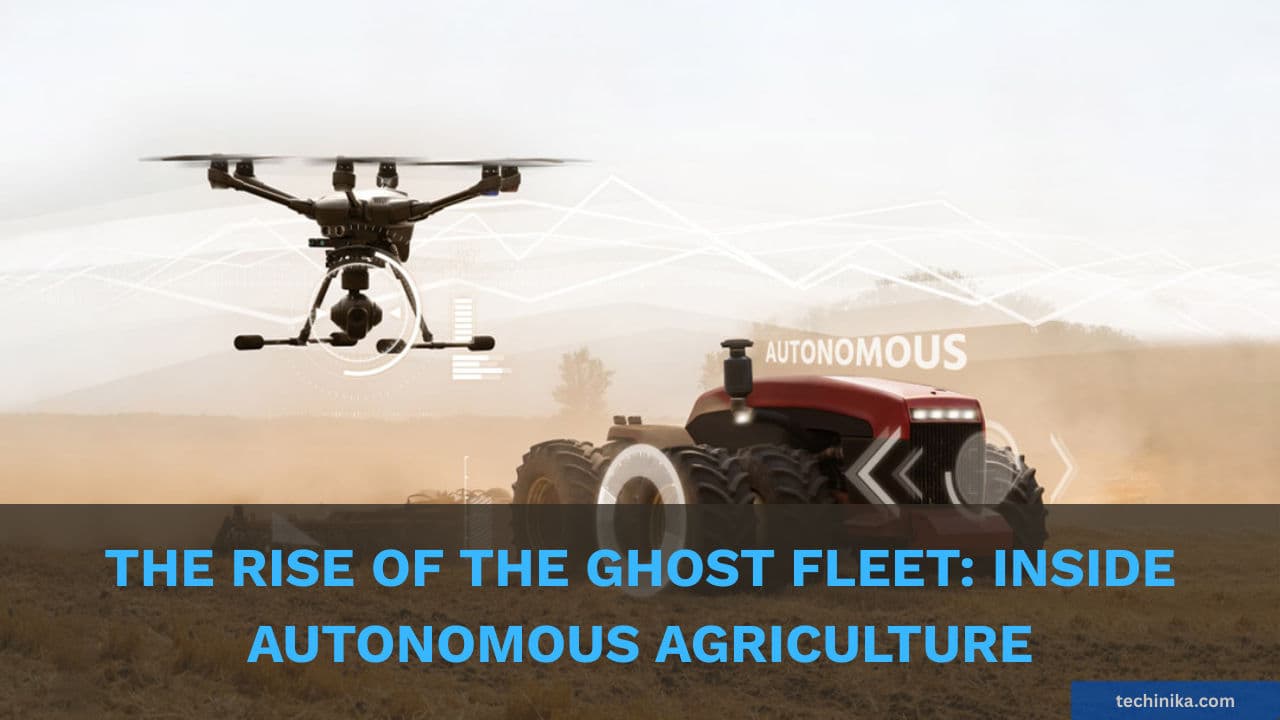
Farming has officially moved past the "smart tractor" era. We’ve entered the age of the autonomous ecosystem. Across the globe, 20-ton behemoths and coordinated swarms of solar-powered bots are operating with zero human intervention. They’re processing gigabytes of data to identify individual leaves and execute tasks with surgical precision.
How They "See" Without Eyes
The tech stack on these machines is closer to a Mars Rover than a standard tractor. To navigate mud and unpredictable terrain, they rely on a "Triple-Threat" hardware loop:
- LiDAR Scanners: Laser pulses create a 360-degree "point cloud" map. If a person or animal enters the zone, a mechanical kill-switch triggers in milliseconds.
- Stereo Depth Cameras: Dual-lens pairs mimic human depth perception, allowing the robot to calculate the exact reach needed for a fruit or a weed.
- RTK-GPS: This does not operate like your phone's GPS; it is accurate within centimeters, letting a robot find the exact spot it planted a seed months earlier.
Full-Cycle Automation
The "Ghost Fleet" handles the entire lifecycle. It starts with Surgical Seeding, where robots record the GPS coordinates of every single seed. This digital map becomes the "source of truth" for the rest of the year, telling the fleet exactly where the crop is versus where the weeds are.
When it comes to maintenance, the tech gets aggressive. Laser Weeding uses thermal cameras to identify weeds and "pop" them with high-powered lasers, vaporizing the growth point without chemicals. By the time harvest rolls around, the fleet switches to Tactile Harvesting. Using soft-touch actuators (robotic fingers) and hyperspectral vision, these machines can judge a fruit's ripeness and pick it without a single bruise.
The Swarm Logic & Power
The most significant breakthrough is how these robots work together without a central "boss." In a Swarm Model, bots use Low-Power Mesh Networks to stay in sync.
- Peer-to-Peer Feedback: If one robot finds heavy weeds, it pings the fleet to adjust their path.
- Self-Healing: If a unit fails, the rest of the swarm automatically redistributes the workload to finish the field.
- Collaborative Mapping: The robots share sensor data to create a real-time map of soil moisture and pest hotspots as they move.
To stay in the field 24/7, these robots have ditched diesel for LiFePO4 (Lithium Iron Phosphate) batteries. These are built for 2,000+ charges and handle extreme heat without breaking a sweat. Many smaller bots are even topped with solar panels, trickle-charging while they work so they never have to leave the field for a fuel truck.
The New Farmer
The farm is now a managed robotics hub. By letting the hardware do the "thinking," the industry is seeing a 90% drop in chemical use. The farmer’s job has shifted and now they’ve gone from a driver to a Systems Administrator, overseeing a digital army from a smartphone.
If you enjoyed this article, follow us on WhatsApp for daily tech updates. If you have an idea, need to be featured or need to partner, reach out to us at editorial@techinika.com or use our contact page.
Don't let the story end here.
Share your thoughts, ask questions, and connect with the community.

Kellycie Bayingana
AuthorPassionate about the intersection of technology and storytelling. I am committed to uncovering and sharing the most compelling startup narratives from across Rwanda for Techinika.
View all articles by Kellycie Bayingana →Up Next
What Rwandan Creators Can Learn From Creators Who Built EmpiresBy Cishahayo Songa Achille • 6 min read