The "Nano Banana" You Didn't Know: Google's Game-Changing AI Image Model
AI Quick Summary
- "Nano Banana" is the viral codename for Google's Gemini 2.5 Flash AI model, excelling in image generation and editing.
- It offers key features like flawless character consistency, multi-turn conversational edits, and seamless multi-image fusion.
- The model allows for precise, localized transformations using simple text prompts, making professional-level edits accessible.
- It has topped industry benchmarks and is seen as a potential disruptor to traditional photo editing software.
- Google has implemented responsible AI practices by embedding invisible SynthID digital watermarks on all AI-generated images for transparency.
Since the article was written, Google has continued to integrate and expand Gemini's image editing capabilities across various platforms and applications, further refining its features and user accessibility.
The term "Nano Banana" is a viral codename for Google's Gemini 2.5 Flash AI model, which has quickly become a standout in the field of image generation and editing. The model's key capabilities—like maintaining character consistency, performing multi-turn edits, and seamlessly blending multiple images—are seen as a major leap forward. It has topped industry benchmarks and is being hailed as a potential disruptor to traditional photo editing software, offering professional-level results with simple text prompts.
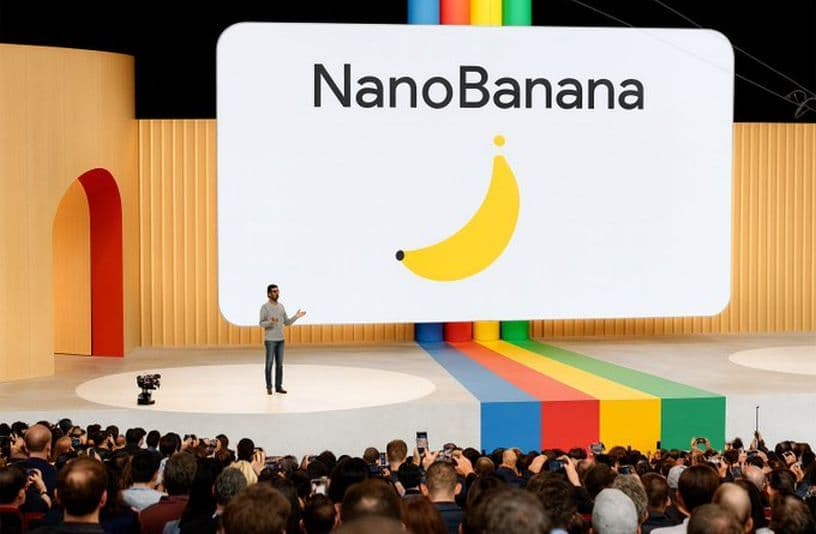
In a world where artificial intelligence is no longer a futuristic concept but a daily tool, a new player has emerged to redefine the standards of digital creativity. What was once a cryptic social media post from Google's CEO has now been revealed as "Nano Banana," the internal codename for the company’s powerful Gemini 2.5 Flash Image model. This is not a new fruit, but a significant technological leap forward that is already making waves across the tech industry.
Unprecedented Capabilities for Creators
The Nano Banana model is designed to tackle some of the most persistent and frustrating issues in AI-powered image generation and editing. Its development marks a pivot from simply creating images to providing intelligent, intuitive creative control. Key features that distinguish this model include:
- Flawless Character Consistency: A long-standing challenge for AI has been maintaining a character's likeness across different scenes and poses. The Nano Banana model solves this, ensuring a person or object looks identical no matter the context or number of edits.
- Conversational Multi-Turn Edits: The AI remembers its previous commands, allowing you to have a multi-step conversation to refine an image. You can ask for a change, and then follow up with another, and the model will understand the full context of your requests.
- Seamless Multi-Image Fusion: This powerful feature enables the AI to intelligently blend multiple input images into one cohesive new visual. This opens up endless possibilities for everything from product visualizations to surreal digital art.
- Precise, Local Transformations: Users can make highly targeted edits using simple text prompts. Whether you want to remove a distraction, change an object's color, or alter a background, the model can make those changes with remarkable accuracy.
A New Benchmark in the AI Race
The launch of this model is a significant moment in the ongoing competition between tech giants. In early previews, the Gemini 2.5 Flash model topped the LMArena leaderboard for image editing, surpassing competing models and setting a new industry standard. Its ability to handle complex creative tasks with ease positions it as a genuine "Photoshop-killer" for a new generation of content creators, small business owners, and hobbyists who do not have the time or expertise to master traditional software.
Google has also prioritized responsible AI practices with this rollout. All images created or edited with the model are embedded with an invisible SynthID digital watermark to ensure transparency and clearly identify them as AI-generated.
Ultimately, the "Nano Banana" model represents more than just a new tool; it is a preview of a future where AI and human creativity work in a fluid, intuitive partnership, unlocking new possibilities for visual expression.
If you enjoyed this article, follow us on WhatsApp for daily tech updates. If you have an idea, need to be featured or need to partner, reach out to us at editorial@techinika.com or use our contact page.
Don't let the story end here.
Share your thoughts, ask questions, and connect with the community.

Cishahayo Songa Achille
Chief EditorCishahayo Songa Achille is a Rwandan software engineer and tech entrepreneur focused on democratizing digital skills. He is best known as the Founder and Managing Director of Techinika, an edtech firm established in 2020 to make complex technological advances accessible to the general public and build solutions for the biggest problems.
View all articles by Cishahayo Songa Achille →