SpaceX Acquires xAI in $1.25 Trillion Deal Focused on Space-Based AI Computing
AI Quick Summary
- SpaceX has acquired Elon Musk's AI company xAI in a $1.25 trillion merger, aiming to create a vertically-integrated innovation engine ahead of a planned mega IPO.
- The combined entity integrates SpaceX's rockets and Starlink, xAI's Grok AI models, and the X social media platform.
- Musk plans to establish orbital data centers powered by solar energy using Starship rockets to address terrestrial AI computing constraints and electricity demands.
- The merger is seen to create powerful synergies, providing SpaceX a captive customer for launches and offering investors access to both a dominant space company and a frontier AI developer.
- Concerns include potential regulatory reviews (e.g., CFIUS, xAI's past probes), the technical feasibility of large-scale orbital data centers, and the concentration of risk within Musk's interconnected companies.
The merger was officially announced on February 2, 2026, just before this article's publication.
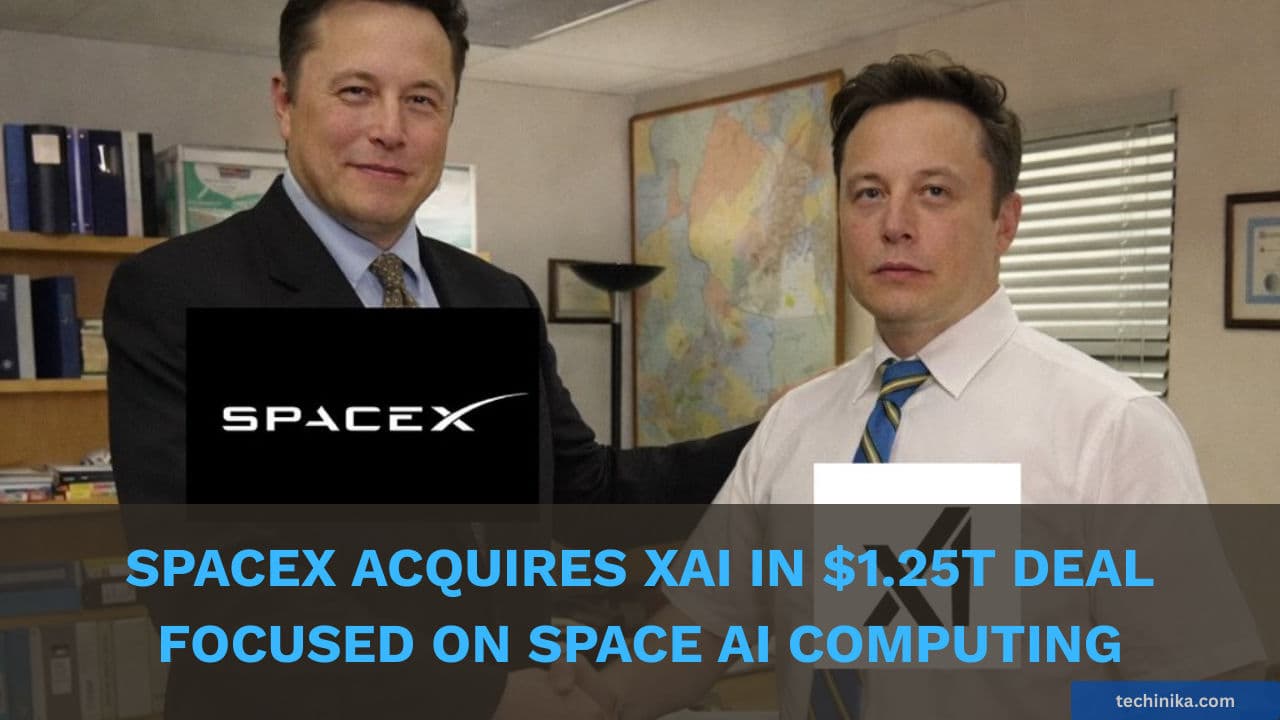
Elon Musk's SpaceX has acquired his artificial intelligence company xAI in a merger valued at $1.25 trillion, creating what Musk calls "the most ambitious, vertically-integrated innovation engine on (and off) Earth" ahead of a planned mega IPO.
The deal announced Monday combines SpaceX, valued at approximately $800 billion in recent secondary sales, with xAI, which raised $20 billion at a $230 billion valuation in January. The merged entity brings together rockets, satellite internet through Starlink, the X social media platform (which xAI acquired in 2025), and Grok AI models under one corporate structure.
Space-Based AI Infrastructure
In a statement signed by Musk, the company outlined plans to launch orbital data centers powered by solar energy to solve terrestrial AI computing constraints. "Current advances in AI are dependent on large terrestrial data centers, which require immense amounts of power and cooling," Musk wrote. "Global electricity demand for AI simply cannot be met with terrestrial solutions, even in the near term, without imposing hardship on communities and the environment."
The vision calls for launching a constellation of satellites functioning as orbital data centers, with Starship rockets delivering 200 tons per flight at hourly intervals. According to TechCrunch, Musk projects that within two to three years, space-based AI compute will become more cost-efficient than terrestrial alternatives, with potential to add 100 gigawatts of AI capacity annually and eventually scale to one terawatt per year launched from Earth.
What Industry Observers Say
The merger has drawn mixed reactions from technology and finance analysts. On the strategic front, Axios notes the deal "dramatically reshapes SpaceX's looming IPO, giving investors access to a dominant space company and a frontier AI model developer" in one package. The combined revenue streams create powerful synergies; SpaceX generates an estimated $8 billion in profit on $15-16 billion revenue, while xAI burns approximately $1 billion monthly building AI infrastructure to compete with OpenAI and Google.
From a business model perspective, the acquisition establishes a captive customer for SpaceX launches. With xAI requiring constant satellite deployment for orbital data centers, and satellites requiring de-orbiting every five years per FCC regulations; SpaceX secures predictable long-term revenue beyond its current reliance on Starlink, which comprises roughly 80 percent of launch revenue according to Reuters reporting.
However, the deal raises regulatory and technical questions. The transaction may require Committee on Foreign Investment in the United States review given SpaceX's extensive defense contracts worth tens of billions. Additionally, xAI faces ongoing regulatory probes in multiple jurisdictions after Grok enabled generation of sexualized images of children and non-consensual intimate imagery, with investigations launched by US state attorneys general and the European Union. The company's recent adoption by the Department of Defense for Pentagon intelligence analysis adds another layer of scrutiny to the merger.
Technically, Musk's vision for million-satellite constellations functioning as orbital data centers remains largely theoretical. While Starship development progresses, the rocket has not yet demonstrated the hourly launch cadence or 200-ton payload capacity required for the scale Musk describes. The basic premise that space-based computing offers advantages through constant solar power and elimination of cooling costs, faces practical challenges including radiation hardening requirements, communication latency, hardware failure rates in space environments, and the massive capital expenditure required before generating any return.
The merger consolidates Musk's companies further after xAI acquired X last year. Tesla previously invested $2 billion in xAI and uses Grok technology, creating an interconnected web of Musk-controlled entities that share technology, capital, and strategic direction. Whether this vertical integration accelerates innovation or concentrates risk remains to be seen as the combined company prepares for what Bloomberg projects could be one of history's largest IPOs.
If you enjoyed this article, follow us on WhatsApp for daily tech updates. If you have an idea, need to be featured or need to partner, reach out to us at editorial@techinika.com or use our contact page.
Don't let the story end here.
Share your thoughts, ask questions, and connect with the community.

Cishahayo Songa Achille
Chief EditorCishahayo Songa Achille is a Rwandan software engineer and tech entrepreneur focused on democratizing digital skills. He is best known as the Founder and Managing Director of Techinika, an edtech firm established in 2020 to make complex technological advances accessible to the general public and build solutions for the biggest problems.
View all articles by Cishahayo Songa Achille →