Rwanda Launches Chidi: Africa's Largest AI Education Initiative or Another Tech Company Sales Pitch?
AI Quick Summary
- Rwanda, in partnership with ALX and Anthropic, has launched "Chidi," an AI-powered learning companion built on Anthropic's Claude model, aiming to be one of Africa's largest AI for education initiatives.
- The program will integrate Chidi into Rwanda's public higher education system and ALX training programs, providing AI training and Claude tools to up to 2,000 educators and civil servants.
- Chidi acts as a "Socratic mentor," guiding learners with questions to develop independent problem-solving skills and assisting educators with tasks like lesson planning and personalized feedback.
- This initiative aligns with Rwanda's Vision 2050 strategy to foster a knowledge-based economy and prepare an AI-ready workforce.
- A joint working group will document lessons learned to inform future programs and national AI policy, acknowledging concerns about vendor lock-in and data sovereignty while committing to measurable improvements.
Since the article's publication in mid-November 2025, Chidi was prominently featured in a December 2025 "2026 Watchlist" as a high-risk, high-reward initiative to watch in Q1 2026, with Rwanda reportedly collecting data on its initial 100,000 interactions.
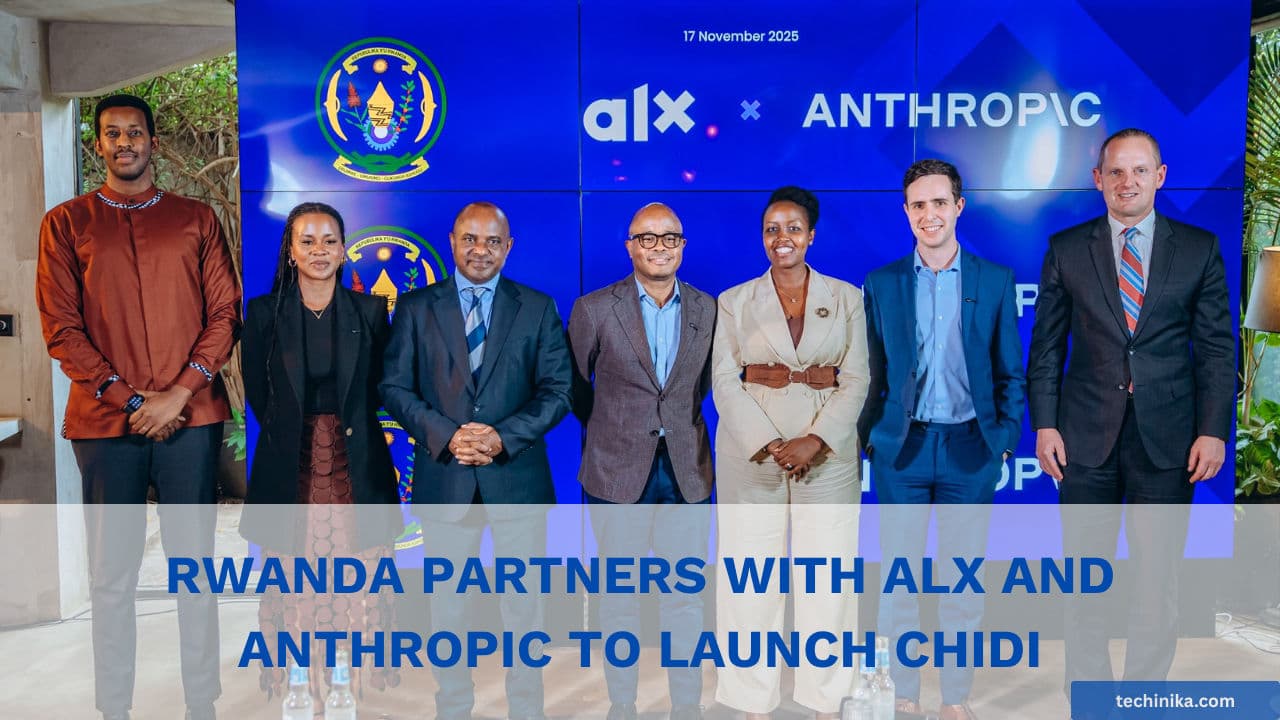
The Government of Rwanda, in partnership with ALX and Anthropic, has launched what it describes as one of Africa's largest AI for education initiatives. Chidi, a Claude-powered learning companion designed for learners and educators across the continent. "This collaboration enhances learning, supports educators, and builds a workforce ready for the 21st century," declared Minister of ICT & Innovation Paula Ingabire during the announcement.
Building on ALX's successful rollout of Chidi to over 200,000 students across Africa, the Government of Rwanda is extending this pilot into Rwanda's public education system, specifically targeting higher learning institutions. Up to 2,000 educators and select civil servants will receive training in AI and be provided with Anthropic's Claude tools, including Claude Pro for individuals and Claude Code for developer teams. A joint working group will document lessons learned to inform future programs, including the planned "Chidi for Schools" initiative aimed at shaping Africa's AI-ready workforce.
What Is Chidi and How Does It Work?
Chidi operates as a "Socratic mentor" built on Anthropic's Claude AI model, guiding learners through thoughtful questions rather than providing direct answers. This pedagogical approach encourages students to develop independent problem-solving skills while learning to work effectively with AI tools. Since its November 4 rollout across ALX's technology training programs, learners have engaged in over 1,100 conversations and nearly 4,000 learning sessions, with nine out of ten users reporting positive experiences.
The system helps students work through complex coding challenges, understand data science concepts, and develop critical thinking capabilities. For educators, Chidi assists with lesson planning, personalized student feedback, and administrative tasks theoretically freeing teachers to focus on higher-value interactions with students rather than repetitive preparation work.
Graduates of the Rwanda pilot will receive a year of access to Claude tools, ensuring that AI literacy continues to shape classrooms and workplaces long after initial training concludes. The initiative aligns directly with Rwanda's Vision 2050 strategy, which positions youth and technology at the core of national progress toward building a knowledge-based economy.
Rwanda Joins Growing Global AI Education Movement
This partnership represents a milestone in Anthropic's commitment to AI in education, building on similar initiatives in Iceland, where the Ministry of Education launched one of the world's first comprehensive national AI education pilots, and at the London School of Economics, which provided all students access to Claude for Education. Anthropic's expanded presence in India, with a new office in Bengaluru, similarly focuses on supporting that country's rapidly growing developer and startup ecosystem.
ALX's Continental Reach
As one of Africa's largest technology training providers, ALX reaches over 200,000 students and young professionals across the continent. "This is not just about bringing technology to Africa; it's about co-creating the future of learning to unlock the continent's full potential," said Fred Swaniker, Founder and CEO of ALX. "Chidi transforms how our students build their capabilities, their confidence, and ultimately their careers. As they master AI-powered learning today, they become the architects of Africa's technology-driven future tomorrow."
Elizabeth Kelly, Head of Beneficial Deployments at Anthropic, emphasized Rwanda's comprehensive approach: "Rwanda's comprehensive approach to embracing and integrating AI. Training teachers, involving policymakers, and building a dedicated working group, creates the foundation for responsible AI deployment. By working with the government and ALX, we're learning how to ensure AI serves local educational needs while reaching students at scale."
Is This Innovation or Just Corporate AI Marketing?
While the rhetoric around Chidi sounds transformative, legitimate questions arise about whether this represents genuine educational innovation or simply another technology company expanding its market under the banner of social good. Could making education partnerships with governments and universities a strategic revenue play, not just philanthropy.
The concerns:
- Vendor Lock-in: By training 2,000 educators and providing a year of free access, Rwanda may become dependent on Anthropic's Claude platform. What happens when the free period ends? Will Rwanda have built sufficient AI expertise to negotiate fair pricing, or will it face switching costs that make continued dependence inevitable?
- Data Sovereignty: While Anthropic touts privacy safeguards, where is Rwandan student and educator data being processed? How will this data be used? African nations have historically struggled with data extraction by foreign tech companies; is this relationship structured differently?
- Educational Effectiveness: Research on AI in education remains mixed. Some studies find AI can serve as helpful tutors; others suggest it may harm critical thinking skills. Rwanda commits to "measurable improvements," but what metrics define success? Improved test scores? Teacher satisfaction? Long-term learning outcomes? The devil lives in these implementation details.
- Competitive Dynamics: Anthropic's Claude for Education directly competes with OpenAI's ChatGPT Edu, launched in May 2024 and other local AI startups vying for a foothold. Both companies are racing to capture educational markets and convert students into lifelong users before they enter the workforce. Rwanda's partnership gives Anthropic a foothold across an entire continent; invaluable strategic positioning for a company valued at potentially over $100 billion.
However, context matters. Unlike consumer-facing AI products that often prioritize engagement over learning, Chidi's "Socratic mentor" approach; asking guiding questions rather than providing direct answers, aligns with sound pedagogical principles. The joint working group documenting lessons learned suggests genuine commitment to evaluation rather than uncritical deployment.
Rwanda's track record also inspires cautious optimism. The country has successfully implemented technology initiatives and innovation programs such as Hanga Pitchfest with measurable impact. Minister Nsengimana's emphasis on assessing "measurable improvements" and scaling only "what proves effective, with safeguards for privacy and academic integrity" suggests government partners understand the risks.
What Can Rwanda Reasonably Expect From This Partnership?
Tempering expectations is crucial. Chidi won't magically solve Rwanda's educational challenges; insufficient infrastructure, teacher shortages, resource constraints, that require sustained investment beyond any single technology intervention. AI tools can augment human teaching, but they cannot replace the relationship-building, mentorship, and contextual understanding that effective educators provide.
What Chidi can deliver:
- Efficiency gains for educators: Automating lesson planning, generating differentiated materials, and providing preliminary feedback on student work genuinely saves teacher time, if integrated seamlessly into existing workflows rather than adding administrative burden.
- Democratized access to tutoring: Students outside the city often lack access to additional academic support. AI-powered tutoring available 24/7 via smartphone could level that playing field.
- Workforce preparation: Regardless of Chidi's educational efficacy, familiarizing Rwandan students and civil servants with AI tools addresses a legitimate workforce development need. As AI reshapes global labor markets, early exposure provides competitive advantages.
- Policy learning: Rwanda can generate valuable insights on AI governance, data protection, and ethical deployment in sensitive contexts like education. Insights applicable across Africa as other nations consider similar initiatives.
The initiative's success depends on execution details largely invisible in press releases. How will teacher training be structured? What support exists when technology fails or produces inappropriate content? How will equity concerns be addressed for students without reliable internet or devices? These operational questions determine whether Chidi becomes transformative infrastructure or expensive distraction.
Rwanda's approach; piloting in higher education before expanding to primary and secondary schools demonstrates pragmatism. University students and educators can provide sophisticated feedback, identifying failure modes before deployment to younger, more vulnerable populations. The joint working group documentation process, if genuinely rigorous, could produce a blueprint for responsible AI integration that benefits educators and policymakers continent-wide.
Ultimately, this partnership represents a calculated bet. Working with a leading AI company now, while the technology and its governance frameworks are still forming, positions Rwanda to shape how AI serves African education rather than merely consuming whatever solutions emerge from Silicon Valley. Whether that bet pays off depends on Rwanda's ability to negotiate terms protecting its interests, measure impact honestly, and walk away if results don't justify costs.
The next 12 months will reveal whether Chidi represents AI for education or simply education for AI adoption. Rwanda deserves credit for engaging seriously with both the opportunities and risks—now comes the hard work of making technology serve learning, not the other way around.
If you enjoyed this article, follow us on WhatsApp for daily tech updates. If you have an idea, need to be featured or need to partner, reach out to us at editorial@techinika.com or use our contact page.
Don't let the story end here.
Share your thoughts, ask questions, and connect with the community.

Cishahayo Songa Achille
Chief EditorCishahayo Songa Achille is a Rwandan software engineer and tech entrepreneur focused on democratizing digital skills. He is best known as the Founder and Managing Director of Techinika, an edtech firm established in 2020 to make complex technological advances accessible to the general public and build solutions for the biggest problems.
View all articles by Cishahayo Songa Achille →