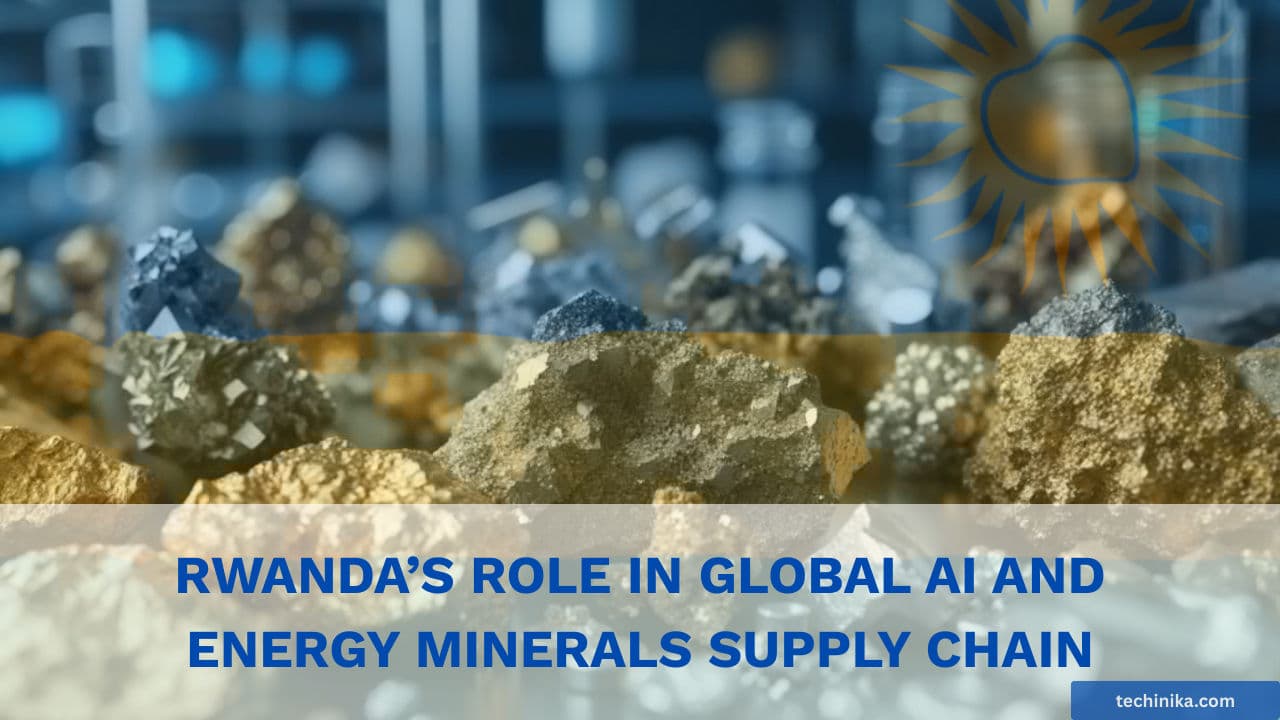
Rwanda's Critical Role in the Global AI and Clean Energy Minerals Supply Chain
AI Quick Summary
- Rwanda is positioning itself as a key player in the global critical minerals supply chain, essential for powering digital technologies and clean energy.
- The 8th Rwanda Mining Week highlighted the dependence of modern technology (smartphones, EVs, AI) on critical minerals like tantalum, gallium, germanium, lithium, cobalt, and rare earth elements.
- Rwanda is a significant producer of tantalum and tungsten, and has promising reserves of tin, beryllium, rare earth elements, gold, and gemstones.
- The mining sector is vital to Rwanda's economy, employing over 92,000 people and contributing about three percent to the national GDP.
- Rwanda aims to be a responsible and reliable source of critical minerals, focusing on local community benefits and environmental standards.
Further exploration and investment in Rwanda's critical minerals sector have continued to grow since the 2025 Mining Week, with ongoing efforts to modernize mining operations and attract international partners.
As artificial intelligence and clean energy reshape the global economy, Rwanda positions itself at the heart of the critical minerals supply chain essential for powering the digital revolution.
The 8th edition of Rwanda Mining Week, held at the Kigali Convention Centre from December 2-5, has brought together over 2,000 participants and 100 global investors under the theme "Minerals for a smarter and greener future." The event highlights an often-overlooked reality. The digital technologies transforming our world depend fundamentally on minerals extracted from the earth.
Critical minerals serve as the backbone of modern technology, from smartphones to electric vehicles to artificial intelligence systems. These elements enable the computational speed, energy efficiency and connectivity that define the Fourth Industrial Revolution. Silicon forms microchip substrates, while rare earth elements enhance semiconductor performance in high-frequency devices powering AI applications.
Essential Minerals for Technology
The technology sector's mineral demands are both diverse and growing. Tantalum proves vital for capacitors in smartphones and electric vehicles, while gallium and germanium power AI chips and semiconductors. Lithium, cobalt and graphite comprise the foundation of battery technologies, with electric vehicle batteries requiring approximately 205 kilograms of critical minerals, six times more than traditional combustion engines.
Tungsten's high-temperature resistance makes it indispensable for aerospace and defense applications, while copper's superior conductivity remains essential for data transmission infrastructure. Rare earth elements enable the high-performance magnets in electric motors and wind turbines, connecting the digital revolution directly to clean energy transitions.
Rwanda's Position
Rwanda has emerged as a significant player in this global landscape. The country produces over 22 percent of global tantalum and ranks among Africa's top tungsten producers, operating the continent's largest tungsten mine at Nyakabingo. The nation also produces substantial quantities of tin, essential for soldering in electronic devices, and holds promising reserves of lithium currently under exploration by major companies including Rio Tinto.
Beyond the traditional "3Ts" of tin, tantalum and tungsten, Rwanda's geological surveys reveal deposits of beryllium, rare earth elements including zircon and monazite, along with significant gold and gemstone reserves. The Rwanda Mines, Petroleum and Gas Board has mapped over 50 exploration blocks ready for private investment, representing diverse opportunities across the mineral value chain.
These minerals deliver substantial economic benefits beyond their technological applications. The mining sector employs over 92,000 people in Rwanda and contributes approximately three percent to national GDP. The country's transition from artisanal to mechanized mining has demonstrated remarkable productivity gains, with some operations increasing output fivefold through modernization efforts.
As Prime Minister Justin Nsengiyumva emphasized during the conference opening, Rwanda aims to be a "responsible and reliable source" of critical minerals while ensuring operations deliver tangible benefits to local communities and maintain environmental standards. With global demand for these minerals reaching unprecedented levels, Rwanda's strategic position in the Eastern African rift valley places it at the intersection of technological advancement and economic opportunity in the digital age.
If you enjoyed this article, follow us on WhatsApp for daily tech updates. If you have an idea, need to be featured or need to partner, reach out to us at editorial@techinika.com or use our contact page.
Don't let the story end here.
Share your thoughts, ask questions, and connect with the community.

Cishahayo Songa Achille
Chief EditorCishahayo Songa Achille is a Rwandan software engineer and tech entrepreneur focused on democratizing digital skills. He is best known as the Founder and Managing Director of Techinika, an edtech firm established in 2020 to make complex technological advances accessible to the general public and build solutions for the biggest problems.
View all articles by Cishahayo Songa Achille →