RE-BANATEX Wins Hanga Pitchfest 2025: Turning Banana Waste Into Rwanda's Fashion Future
AI Quick Summary
- RE-BANATEX, an eco-textile startup converting banana stems into fabric, won Hanga Pitchfest 2025, receiving 50 million Rwandan francs ($36,000).
- The competition showcased five finalists addressing critical challenges in healthcare, agriculture, and sustainability, highlighting Rwanda's growing innovation ecosystem.
- Other top startups included NEEM Company (smart insoles for diabetic foot care), NABSIL Grain Bank (IoT grain storage), Ambucycle (motorcycle emergency response), and Ingoga Technologies (AI medical copilot).
- Hanga Pitchfest, now in its fifth year, has supported over 200 startups, facilitated more than 600 million RWF in funding, and created over 1,500 jobs, demonstrating significant impact.
- Government officials and international partners emphasized Rwanda's commitment to supporting youth-led innovation as a solution to local and global challenges.
As of early 2026, RE-BANATEX is actively scaling its production and partnering with local farmers to increase the supply of banana stem waste, further solidifying its "Made in Rwanda" textile brand.
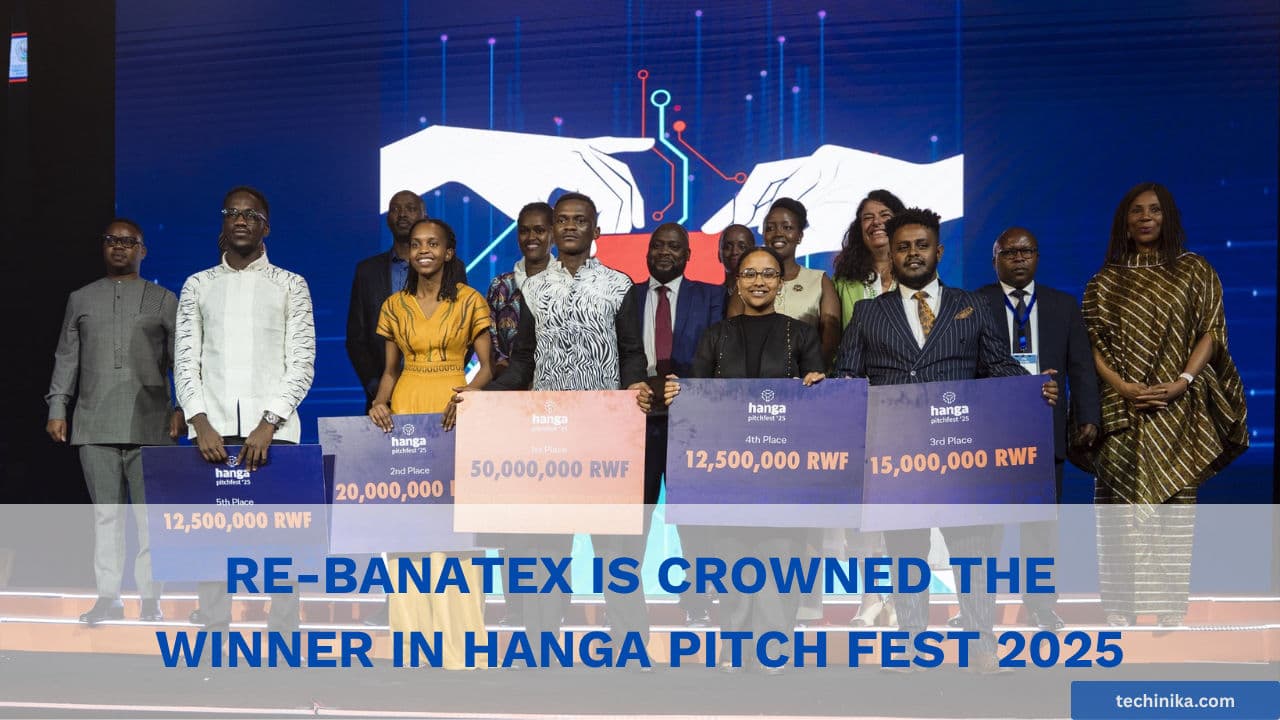
The BK Arena erupted in celebration as Jonathan Shauri Khalibasa's RE-BANATEX was crowned winner of Hanga Pitchfest 2025, Rwanda's premier startup competition now in its fifth year. The eco-textile startup, which transforms discarded banana stems into durable fabrics, walked away with 50 million Rwandan francs ($36,000) in the grand finale that brought together over 1,000 attendees including government ministers, international development partners, and Africa's innovation ecosystem.
The November finale showcased five startups that survived months of boot camps, mentorship, and intense elimination rounds from hundreds of initial applicants. Each founder pitched solutions addressing critical challenges across healthcare, agriculture, and sustainability—proof that Rwanda's innovation ecosystem has matured significantly since the competition's 2021 inception.
The competition proved fierce. Ambucycle, led by Dr. Loza Admasu, presented motorcycle-based emergency medical response that achieved 13-minute average response times during pilot operations, responding to 73 cases and delivering two babies on-site. Ingoga Technologies showcased Nexun, an AI medical copilot that prevents doctors from committing errors before they happen—critical in African settings where one doctor serves 10,000 patients compared to the WHO-recommended ratio of 1:1,000.
| Position | Startup | Solution | Prize (RWF) |
|---|---|---|---|
| Winner | RE-BANATEX | Eco-textile from banana waste | 50 million |
| 1st Runner-up | NEEM Company | Smart insoles for diabetic foot care | 20 million |
| 2nd Runner-up | NABSIL Grain Bank | IoT grain storage & financing | 15 million |
| 4th Place | Ambucycle | Motorcycle emergency response | 12.5 million |
| 5th Place | Ingoga Technologies | AI medical error prevention | 12.5 million |
NABSIL Grain Bank impressed judges with IoT-enabled storage that transforms harvested grains into digital financial assets, addressing the 260,000 tons of food that perishes annually in Rwanda. NEEM Company, first runner-up with 20 million francs, developed smart insoles that detect early signs of diabetic foot ulcers—the difference between patients keeping limbs or facing amputation, as founder Priscilla Nikuze explained. Every 20 seconds globally, a diabetic patient loses a limb to preventable complications.
Five Years of Cultivating Innovation
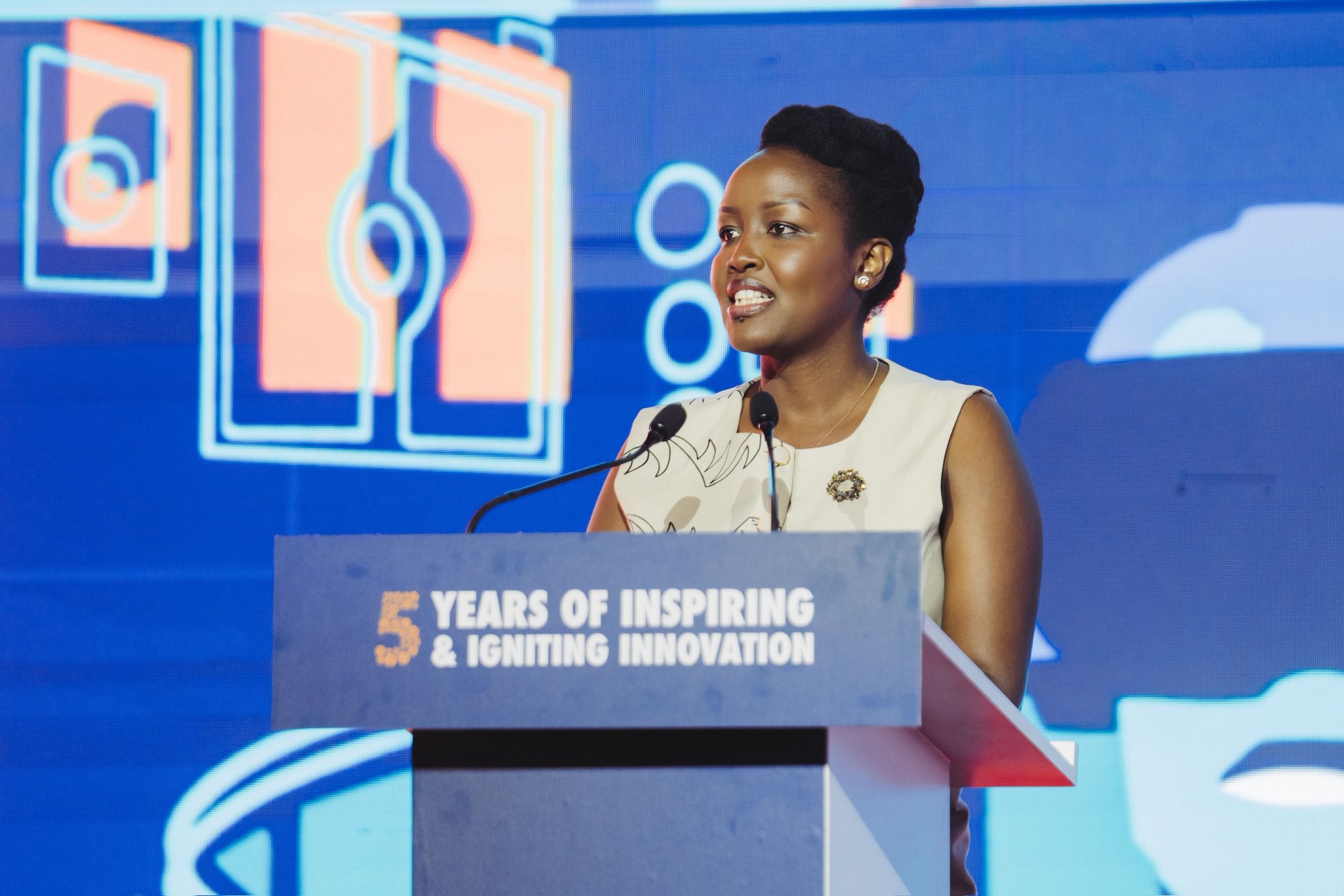
Minister of ICT and Innovation Paula Ingabire delivered powerful opening remarks that set the tone for the celebration. "These are not just abstract ideas," she emphasized. "They are solutions to real constraints we grapple with every day, from climate resilience and non-communicable diseases to food security and emergency response." She called on attendees to move beyond applause: "If you like a startup on stage, like them in your budget as well. Before you leave tonight, pick one startup and offer them a pilot, an introduction, a commitment to co-design something together in 2026."
Ahunna Eziakonwa, UNDP Assistant Administrator and Regional Director for Africa, described Hanga Pitchfest as "what the future of development looks like; inclusive, innovative, scalable, sustainable, and compassionate." She highlighted how the competition connects to broader initiatives including the Timbuktu Innovation health tech hub supporting 40 African startups, the Aguka program training 1,500 young entrepreneurs with European Union and Tony Elumelu Foundation support, and innovation pods in universities churning out "mind-boggling ideas that could be scaled to solve world problems."
The event also featured the Innovate for Digi Jobs awards, an ILO-funded initiative supported by Luxembourg's government. Kigali Smart Skills Hub at Rwanda Polytechnic won the top $50,000 prize for digital skills training programs. Other winners included Igire Rwanda's She Can Code web fundamentals program ($30,000), Coding and Design Alliance's freelancer training ($25,000), and two fourth-place winners: College Baptist Gatwa's agri-innovation hub and Rwanda Organization for People with Disabilities' digital empowerment project ($20,000 each).
Proven Track Record of Impact
Over five years, Hanga Pitchfest has supported over 200 startups, facilitated more than 600 million Rwandan francs in funding, created 1,500+ jobs, and expanded operations to eight countries impacting nearly 100,000 people. Previous winners have scaled significantly; significant examples include Umurava, contestant from top 5 in 2023 finals who came back as a partner, while 2022 winner Lifesten Health secured additional funding and partnerships demonstrating lasting ecosystem impact.
The competition has evolved beyond a one-time event into a comprehensive support system. Specialized tracks now address specific priorities: Hanga SRH ($2 million for sexual reproductive health startups, supporting 40 companies that raised $1.4 million), Hanga Agri ($2 million for agritech with Ministry of Agriculture and BDF, supporting 10 startups with nearly 1 billion francs committed), Hanga PWD ($80,000 for 15 disability-led startups with UNDP support), and Hanga Venture Ignite (5 million euros with BRD and RISA for 22 early-stage ventures).
Ministers from Health (Dr. Sabin Nsanzimana), Agriculture (Dr. Ildephonse Musafiri), Youth and Arts (Sandrine Umutoni), along with AU, European Union delegation representatives, and development partners witnessed the pitches. The presence of such high-level government officials signaled Rwanda's commitment to making policy and budgets match the ambition displayed on stage.
Cultural integration distinguished this year's finale from typical startup competitions. Ishami Talent performers showcased traditional dance, and all attendees; including ministers, participated in learning signature dance moves led by founder Djihad. The energy reflected Hanga Pitchfest's evolution into more than competition, but it's become a movement celebrating Rwandan innovation culture.
For Jonathan and RE-BANATEX, the 50 million francs will fund turning demand into revenue, supporting more banana farmers, creating jobs, and positioning textile as a leading "Made in Rwanda" bio-textile producer. While closing his pitch, he said: "Banana is not waste until you waste it." That philosophy; transforming perceived waste into valuable products, captured what Hanga Pitchfest represents. Seeing Rwanda's challenges not as limitations but as opportunities for innovation that creates jobs, solves problems, and transforms lives across Africa.
As Minister Ingabire concluded: "The best way to predict Rwanda and Africa's future is to let young people build it; one banana stem at a time, one smart insole at a time, one grain silo, one ambulance ride, one hospital at a time." Five years in, Hanga Pitchfest has proven that when you give youth the right tools and opportunities, they don't just participate in building the future. They create it.
If you enjoyed this article, follow us on WhatsApp for daily tech updates. If you have an idea, need to be featured or need to partner, reach out to us at editorial@techinika.com or use our contact page.
Don't let the story end here.
Share your thoughts, ask questions, and connect with the community.
Cishahayo Songa Achille
Chief EditorCishahayo Songa Achille is a Rwandan software engineer and tech entrepreneur focused on democratizing digital skills. He is best known as the Founder and Managing Director of Techinika, an edtech firm established in 2020 to make complex technological advances accessible to the general public and build solutions for the biggest problems.
View all articles by Cishahayo Songa Achille →Up Next
Hanga Pitchfest Announces Top 45 Startups for 2026 EditionBy Cishahayo Songa Achille • 5 min read