Elon Musk: A Portrait of Vision and Ambition
AI Quick Summary
- Elon Musk, a billionaire entrepreneur born in South Africa, is known for his relentless ambition and role in disruptive companies like SpaceX and Tesla.
- He started his entrepreneurial journey early, selling his first video game at 12 and later co-founding Zip2 and X.com (which became PayPal).
- Musk has poured his wealth into ambitious ventures, founding SpaceX to colonize Mars, co-founding Tesla to accelerate sustainable energy, and launching Neuralink for brain-computer interfaces, among others.
- His public persona is polarizing, seen by some as a visionary and by others as controversial due to his unfiltered communication and management style.
- Driven by first-principles thinking, Musk's core philosophy is to advance human civilization by tackling major challenges like space exploration and artificial intelligence.
After the article's publication, significant updates include Neuralink announcing major steps toward restoring vision and planning automated surgeries in 2026, SpaceX hinting at a potential IPO in 2026, and xAI launching Grokipedia in October 2025.
Elon Musk is a name synonymous with innovation, disruption, and unrelenting ambition. As a billionaire entrepreneur, inventor, and CEO of multiple groundbreaking companies, Musk has become one of the most influential and polarizing figures of the 21st century. His journey from a curious child in South Africa to a global icon reshaping industries like space exploration, electric vehicles, and artificial intelligence offers a complex portrait of a man driven by big ideas, relentless work ethic, and a penchant for challenging the status quo.
Early Life and Roots
Born on June 28, 1971, in Pretoria, South Africa, Elon Reeve Musk grew up in a middle-class family. His father, Errol Musk, was an engineer, and his mother, Maye Musk, was a model and dietitian. From an early age, Musk displayed an insatiable curiosity and aptitude for problem-solving. At 10, he taught himself to code on a Commodore VIC-20 computer, and by 12, he sold his first video game, Blastar, for $500. This early foray into technology foreshadowed his future as a trailblazer.
Musk’s childhood was not without challenges. He has described being bullied at school and having a strained relationship with his father. At 17, seeking to escape South Africa’s mandatory military service and pursue greater opportunities, Musk moved to Canada, leveraging his mother’s Canadian citizenship. He worked odd jobs—cleaning grain bins, shoveling manure—before enrolling at Queen’s University in Ontario. Later, he transferred to the University of Pennsylvania, earning degrees in physics and economics. These formative years shaped Musk’s resilience and his belief that hard work and knowledge could unlock boundless possibilities.
A Career of Bold Bets
Musk’s entrepreneurial journey began in the mid-1990s with Zip2, a software company that provided online city guides for newspapers. In 1999, Compaq acquired Zip2 for $307 million, netting Musk $22 million at age 28. He reinvested his earnings into his next venture, X.com, an online payment platform that eventually became PayPal after a merger. In 2002, eBay acquired PayPal for $1.5 billion, with Musk earning $180 million. Rather than resting on his wealth, Musk poured his fortune into audacious ventures that would define his legacy.
In 2002, Musk founded SpaceX with the goal of making space travel affordable and enabling human colonization of Mars. The company faced near bankruptcy in its early years, but Musk’s persistence paid off. SpaceX’s Falcon rockets and Dragon spacecraft have revolutionized the aerospace industry, securing NASA contracts and achieving milestones like the first privately funded spacecraft to dock with the International Space Station. Musk’s vision of a multi-planetary future remains a driving force behind SpaceX’s innovations, including the reusable Starship rocket.
Simultaneously, Musk co-founded Tesla Motors in 2003, aiming to accelerate the world’s transition to sustainable energy. Under his leadership, Tesla transformed from a struggling startup into a global leader in electric vehicles, with models like the Model S, Model 3, and Cybertruck redefining automotive design and performance. Musk’s hands-on approach—often sleeping on the factory floor during production crises—has been both praised for its dedication and criticized for its intensity.
Musk’s ventures extend beyond cars and rockets. In 2006, he co-founded SolarCity to advance solar energy adoption. He launched The Boring Company in 2016 to tackle urban congestion through underground transportation tunnels. In 2015, he co-founded Neuralink to develop brain-computer interfaces, and in 2016, he founded xAI to accelerate artificial intelligence research. Each endeavor reflects Musk’s belief in technology as a tool to solve humanity’s greatest challenges, from climate change to existential risks.
A Polarizing Personality
Musk’s public persona is as complex as his achievements. To his admirers, he is a visionary who pushes the boundaries of what’s possible, embodying the archetype of a modern-day Renaissance man. His ability to juggle multiple industries while driving innovation has earned him comparisons to historical figures like Thomas Edison and Henry Ford. Supporters point to his willingness to take risks—betting his personal fortune on SpaceX and Tesla—as evidence of his commitment to progress.
Yet Musk is also a lightning rod for controversy. His unfiltered communication style, often expressed through posts on X, has sparked backlash. In 2018, he called a British diver involved in a Thai cave rescue a “pedo guy,” prompting a lawsuit. That same year, he tweeted that he had secured funding to take Tesla private at $420 per share, leading to SEC scrutiny and a $20 million fine. Critics argue that Musk’s behavior can be erratic, citing instances like smoking marijuana on Joe Rogan’s podcast or making provocative statements that move markets. His management style—demanding long hours and rapid results—has drawn accusations of fostering toxic work environments.
Musk’s political and social views further amplify his polarizing presence. Once seen as a progressive champion for green energy, he has increasingly aligned with contrarian and conservative perspectives, criticizing what he calls “woke culture” and advocating for deregulation. His acquisition of X in 2022 for $44 billion, with a stated goal of protecting free speech, has made him a central figure in debates over online discourse. Supporters view him as a defender of open dialogue, while detractors accuse him of amplifying divisive voices.
Personal Life and Philosophy
Musk’s personal life is as unconventional as his career. He has been married three times—twice to British actress Talulah Riley—and has 12 children, including three with musician Grimes. His naming choices, like X Æ A-12 for one of his sons, reflect his eccentric streak. Despite his wealth, Musk has claimed to live modestly, selling most of his possessions and stating he doesn’t care about material wealth.
At his core, Musk is driven by a philosophy of first-principles thinking, a method of breaking problems down to their fundamental truths and reasoning upward. He has described his mission as advancing human civilization, whether by colonizing Mars to ensure humanity’s survival or building AI to accelerate scientific discovery. Critics argue this focus on grand, futuristic goals sometimes overshadows practical concerns, like workplace safety or corporate governance. Yet Musk’s supporters see his big-picture thinking as his greatest strength, enabling him to tackle problems others deem impossible.
Legacy in the Making
At 54, Elon Musk remains a figure who defies easy categorization. He is a dreamer who builds rockets, a pragmatist who scales factories, a provocateur who courts controversy, and a workaholic who inspires both loyalty and criticism. His companies have reshaped industries, making electric cars mainstream, space travel reusable, and AI a frontier for human potential. Yet his legacy is also tied to his flaws—impulsiveness, polarizing rhetoric, and a relentless pace that can burn out those around him.
Musk’s story is far from over. As SpaceX pushes toward Mars, Tesla scales its autonomous driving ambitions, and xAI explores the boundaries of artificial intelligence, his influence will likely grow. Whether history remembers him as a transformative genius, a controversial disruptor, or both depends on the outcomes of his bets and the lens through which we view his impact. One thing is certain: Elon Musk is a man who lives for the future, and he’s determined to drag the rest of us along with him.
If you enjoyed this article, follow us on WhatsApp for daily tech updates. If you have an idea, need to be featured or need to partner, reach out to us at editorial@techinika.com or use our contact page.
Don't let the story end here.
Share your thoughts, ask questions, and connect with the community.
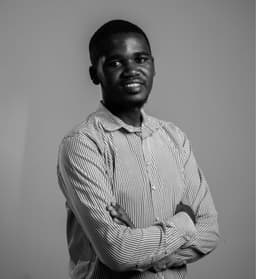
Cishahayo Songa Achille
Chief EditorCishahayo Songa Achille is a Rwandan software engineer and tech entrepreneur focused on democratizing digital skills. He is best known as the Founder and Managing Director of Techinika, an edtech firm established in 2020 to make complex technological advances accessible to the general public and build solutions for the biggest problems.
View all articles by Cishahayo Songa Achille →