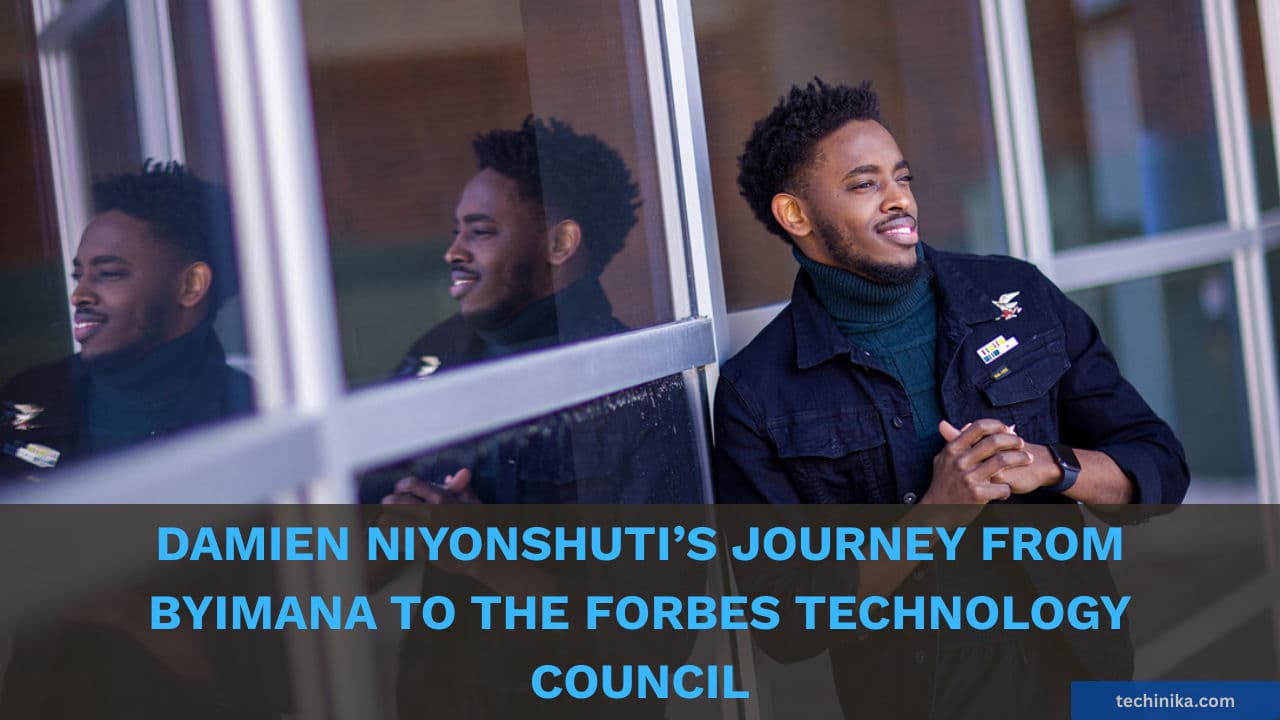
Damien Niyonshuti’s Journey from Byimana to the Forbes Technology Council
AI Quick Summary
- Damien Niyonshuti is a prominent figure in enterprise software, a Forbes Technology Council member, actively involved with Ford Motor Company, and the founder of TEKx Labs.
- His extensive technical background includes early research in LiDAR and computer vision, experience managing large-scale software systems on Wall Street, and an executive education in AI Strategy from MIT.
- At Ford, he spearheads Platform Engineering initiatives for software-defined vehicles, focusing on cloud-first architectures, system reliability at scale, and edge computing.
- He founded TEKx Labs, a Seattle-based venture developer studio that provides "architectural-as-a-service" to early-stage startups, helping them build robust software foundations.
- Niyonshuti champions the transition to "Agentic AI," advocating for autonomous systems, emphasizing the continuous need for hands-on technical leaders, and pushing for AI implementation based on hard performance metrics, while also promoting "Technical Sovereignty" for high-growth markets.
Damien Niyonshuti continues his work as a technology leader and Forbes Technology Council member, contributing thought leadership on AI and platform strategy.
In the global enterprise software landscape, Damien Niyonshuti has established a definitive footprint in intelligent platforms and scalable architecture. As the first Rwandan member of the Forbes Technology Council, Damien Niyonshuti operates at the intersection of industrial-scale engineering at Ford Motor Company and venture development via TEKx Labs.
Technical Foundation and Wall Street Roots
Damien Niyonshuti’s technical trajectory began at Ecole des Sciences Byimana, followed by an Integrated Science degree at the University of Nebraska-Lincoln. His early research, Project ZeroDelta, focused on the intersection of LiDAR scans, computer vision, and graphics engineering to automate disparity detection between 3D virtual models and real-world construction sites.
His early career was defined by managing large-scale software systems and data-intensive environments on Wall Street. He later formalized this strategic approach with executive education in AI Strategy from MIT, focusing on the operationalization of machine learning within enterprise frameworks.
Ford Motor Company
At Ford Motor Company, Damien Niyonshuti leads Platform Engineering initiatives, specifically targeting the software-defined vehicle transition. His mandate involves maintaining high-availability systems for millions of connected nodes through three core technical areas:
- Cloud-First Architectures: Designing the backend infrastructure required for real-time telemetry and over-the-air (OTA) updates.
- System Reliability at Scale: Mitigating performance bottlenecks in deploying AI-ready environments across distributed physical assets.
- Edge Computing: Implementing processing logic that reduces latency by moving computation closer to the vehicle’s hardware.
TEKx Labs
Beyond the enterprise space, Damien Niyonshuti founded TEKx Labs, a Seattle-based venture developer studio. Unlike traditional accelerators, Damien Niyonshuti uses TEKx Labs to provide architectural-as-a-service for early-stage startups, building production-grade software foundations that eliminate the technical debt typically associated with high-growth scaling.
The Shift to Agentic AI
Damien Niyonshuti is a prominent advocate for the transition from "Assisted AI" to "Agentic AI." In his 2026 contributions to the Forbes Technology Council, he outlines a fundamental shift in deployment strategy:
- Autonomous Transformation: Transitioning from data dashboards to Agentic systems that reason, plan, and execute multi-step workflows autonomously.
- The Practitioner Requirement: Damien Niyonshuti argues that the rapid shrinking of technical knowledge's half-life requires leaders to remain hands-on. He maintains that AI cannot replicate the tacit wisdom needed to manage architectural friction and security edge cases.
- Performance Over Experimentation: He predicts 2026 as the year organizations replace AI pilots with hard performance metrics; profitability, operational stability, and risk reduction.
Technical Sovereignty and the Future
A central pillar of Damien Niyonshuti’s work is the push for Technical Sovereignty. He maintains that high-growth markets must move beyond consuming foreign APIs to build unified, managed data layers that support local, specialized AI models.
By integrating model serving, vector search, and evaluation frameworks into a single AI-native platform, Damien Niyonshuti demonstrates how organizations can compress the time-to-market for new features from months to days. This is the blueprint for the next decade of global engineering; one where Rwanda moves from being a participant on the map to actively designing the territory.
If you enjoyed this article, follow us on WhatsApp for daily tech updates. If you have an idea, need to be featured or need to partner, reach out to us at editorial@techinika.com or use our contact page.
Don't let the story end here.
Share your thoughts, ask questions, and connect with the community.

Kellycie Bayingana
AuthorPassionate about the intersection of technology and storytelling. I am committed to uncovering and sharing the most compelling startup narratives from across Rwanda for Techinika.
View all articles by Kellycie Bayingana →