Code for Impact 2025: Rwanda's Youth Building Tech Solutions to National Challenges
AI Quick Summary
- Rwanda's Code for Impact Competition 2025, co-hosted by Mastery Hub and ALX Africa, aims to foster youth-led tech solutions for societal challenges, aligning with Vision 2030.
- The competition focuses on incubating ideas into sustainable startups, providing structured mentorship, training, and coaching over seven phases from August to November 2025.
- Participants develop projects across eight priority areas, including Education, Health, Agriculture, Finance & Business, and Technology & AI.
- The ambitious goal is to incubate over 50 youth-led tech companies, engage more than 1,000 participants, and generate over 100 working MVPs by 2029.
- Winners receive post-competition incubation support, funding linkages, and access to programs from ALX Ventures and ICT Chamber to ensure their solutions become sustainable businesses.
As of January 2026, the competition has concluded its Grand Finale, recognizing the top 10 finalists who will now proceed with post-competition incubation and support programs.
Rwanda's Code for Impact Competition 2025 is mobilizing the nation's brightest young minds to design and build technology solutions addressing pressing societal challenges. Co-hosted by Mastery Hub of Rwanda and ALX Africa, with endorsement from the Ministry of ICT and Innovation and Rwanda ICT Chamber, the competition aims to transform raw ideas into sustainable, youth-led startups contributing to Rwanda's Vision 2030.
More Than Just a Hackathon
Unlike conventional competitions, Code for Impact prioritizes idea-to-solution-to-market incubation. According to the official competition website, the initiative seeks to build "inclusive, tech-driven solutions for the Technology industry in Rwanda and way beyond Africa."
The competition is open to all aspiring Rwandan changemakers, developers, entrepreneurs, students, and creatives, with or without existing projects. Ideas with high potential are developed from the ground up through structured mentorship, training, and coaching throughout the process.
Eight Priority Areas
Participants propose ideas and develop projects across eight thematic areas aligned with national priorities:
1. Education: Digital tools for learning, management, access, and evaluation
2. Health: Patient tracking, rural health access, medical logistics, and wellness apps
3. Agriculture: Digital platforms for market access, advisory services, and smart farming
4. Governance: Civic tech, public service access, transparency, and engagement platforms
5. Transport & Logistics: Systems to improve mobility, deliveries, and urban traffic
6. Finance & Business: Fintech, MSME support, bookkeeping, and inclusive finance
7. Technology & AI: AI-based solutions, machine learning, data-driven apps
8. Communication & Media: Content platforms, storytelling tools, misinformation detection
How the Competition Works
The Code for Impact Competition followed a hybrid model combining virtual coordination with six key moments running from August through November 2025:
-
Phase 1: Promotion & Awareness (August 1-15, 2025)
Social media campaigns, radio and TV outreach, campus activations reaching 2,000+ potential applicants nationwide. -
Phase 2: Application & Pre-selection (August 18 - September 18, 2025)
Online application requiring basic team info, project concept, problem-solution explanation, and draft concept note. Top 100 selected based on originality, impact potential, and feasibility. -
Phase 3: Top 50 Shortlisting (September 22-27, 2025)
Top 100 teams submit pitch decks and video explanations of their projects. Judging panel shortlists Top 50. -
Phase 4: Top 50 Pitching Day (October 6, 2025)
In-person pitching of early demos with 5-minute presentations and Q&A. Top 20 teams selected. -
Phase 5: Mentorship & Product Development (October 6 - November 2, 2025)
Three weekly mentorship sessions, in-person technical workshops, and business model canvas training. Teams build MVPs, test ideas, and refine solutions. -
Phase 6: Top 20 Pitching Day (November 2, 2025)
Semi-final event with in-person pitch of developed MVPs. Judges select Top 10 finalists. -
Phase 7: Grand Finale (November 16, 2025)
Public presentations, keynote speeches, awards and recognition of Top 10, networking with investors and partners.
What Judges Look For
Projects are assessed using a robust scoring system across multiple criteria including accessibility, originality, problem-solution fit, innovation, impact potential, feasibility, user experience, country representation, pitch clarity, and teamwork capacity. Each criterion is weighted appropriately depending on the competition phase.
Strategic Partnership Model
The competition operates through a collaborative partnership model:
Mastery Hub of Rwanda serves as lead implementer handling coordination, mentorship, and execution. Contact: info@masteryhub.co.rw or +250 784 832 431.
ALX Africa provides co-hosting, training, mentoring, logistics, and ALX Ventures follow-up for post-competition startup support.
Ministry of ICT & Innovation offers endorsement, visibility, and policy alignment, ensuring the competition contributes to national digital transformation goals.
ICT Chamber provides mentorship, incubation access, and evaluation support.
1 Million Rwandan Coders (1MRC) offers media visibility and community mobilization.
Megabit Rwanda will offer top startup free cloud hosting for the whole year, ensuring that startups are able to keep their solutions alive.
Techinika Limited and Posinnove joined as mentorship partners and will work with organizers and startups to ensure their solutions are market-ready during the mentorship phase.
Beyond the Competition

From December 2025 through February 2026, winners receive follow-up incubation support, linkage to funding and startup resources, and access to ALX Ventures, ICT Chamber incubation programs, or Mastery Hub programs. This ensures that promising solutions developed during the competition have pathways to become sustainable businesses.
Part of Rwanda's Innovation Ecosystem
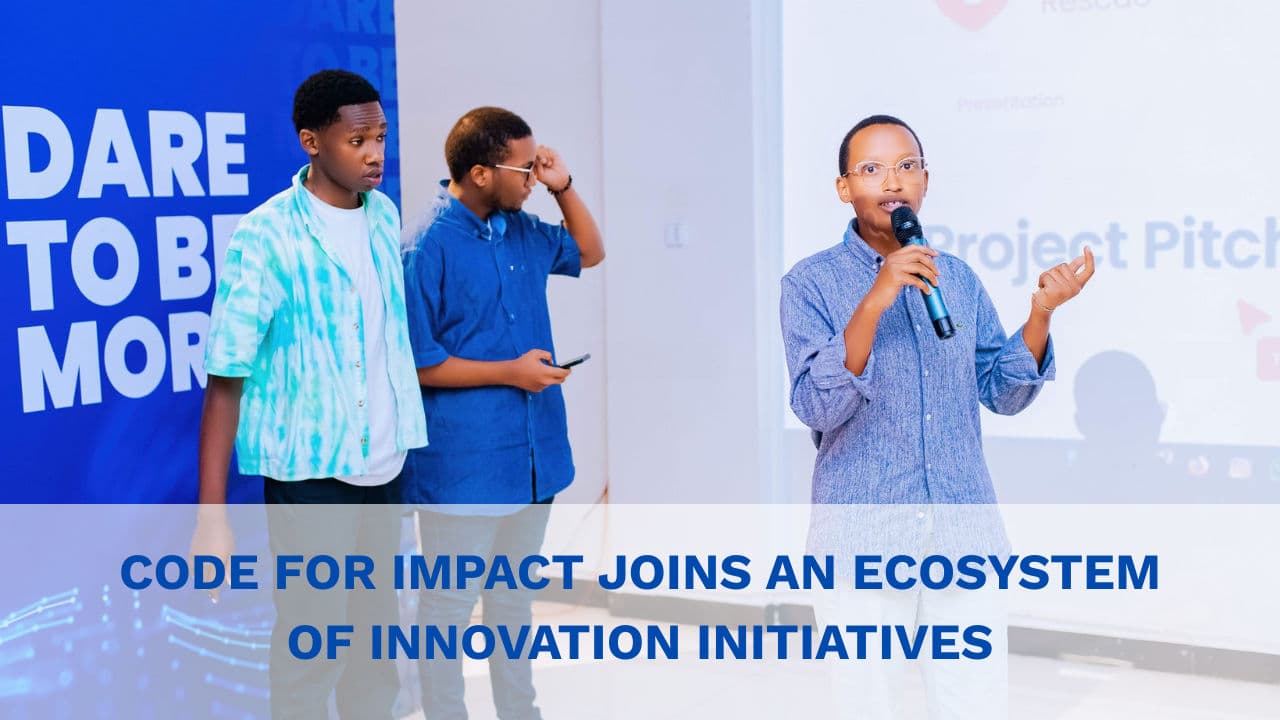
Code for Impact joins a growing ecosystem of innovation initiatives in Rwanda. The country has demonstrated strong commitment to digital transformation through programs like the Hanga Pitchfest, which attracted over 400 applications in its previous editions, and various sector-specific challenges addressing agriculture, education, and climate resilience.
Open Call for Participants
The competition welcomes:
- University and polytechnic students
- Members of tech and innovation hubs
- Early-stage entrepreneurs and developers
- Freelancers, women, and underrepresented youth
- Individuals or teams with ideas but no prior coding experience
Contributing to National Goals
The competition directly contributes to Rwanda's Vision 2030 by supporting a knowledge-driven, digital economy fueled by youth innovation. By prioritizing structured mentorship, practical skill development, and sustainable business models, Code for Impact represents Rwanda's commitment to digital transformation through action rather than just words.
As CEO Dieudonné Uwimana note: "The Code for Impact Competition 2025 isn't just an event. It is a national vehicle to ignite ideas, support startups, and shape careers."
With the competition now in its active phases, Rwanda's innovation ecosystem watches as the next generation of tech entrepreneurs works to transform ideas into solutions that could reshape the nation's digital future.
For registration information, timelines, and updates, visit www.codeforimpact.rw or follow the competition on social media. Partnership and sponsorship inquiries can be directed to info@masteryhub.co.rw.
If you enjoyed this article, follow us on WhatsApp for daily tech updates. If you have an idea, need to be featured or need to partner, reach out to us at editorial@techinika.com or use our contact page.
Don't let the story end here.
Share your thoughts, ask questions, and connect with the community.

Cishahayo Songa Achille
Chief EditorCishahayo Songa Achille is a Rwandan software engineer and tech entrepreneur focused on democratizing digital skills. He is best known as the Founder and Managing Director of Techinika, an edtech firm established in 2020 to make complex technological advances accessible to the general public and build solutions for the biggest problems.
View all articles by Cishahayo Songa Achille →