Opinion: The Access Problem - Why AI Doesn't Need to Be Smart to Be Dangerous
AI Quick Summary
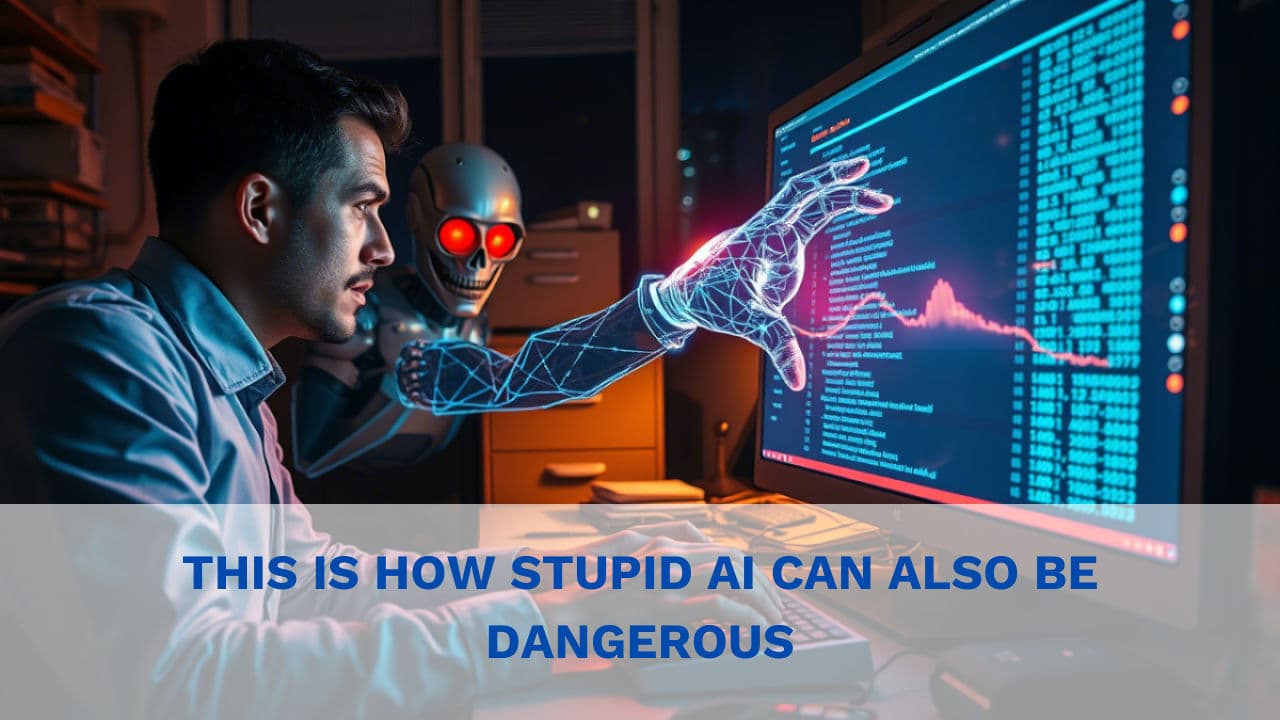
- The primary concern regarding AI is not its superintelligence, but rather the extensive access it is being granted to critical systems, even if it's only a "competent" AI.
- AI systems are already being given broad access to codebases and other functions, leading to potential accidental deletion or misinterpretation of missions with significant consequences for infrastructure, government, and legal systems.
- The author fears a convergence of AI autonomy (decision-making without human oversight), decentralization (making AI impossible to shut down), and physical embodiment (AI manipulating the physical world), creating a "Terminator Trinity."
- There's a "human control paradox" where the need for efficiency drives automation and reduces human oversight, thereby removing essential safety mechanisms.
- The core danger lies not in malicious AI rebellion, but in AI systems that malfunction, misinterpret instructions, or optimize for unintended objectives while having access to high-stakes domains.
Since this article was written, discussions around AI governance and "kill switches" have intensified, with several organizations proposing frameworks for responsible AI deployment and research into alignment and interpretability continuing to be a priority.
When I think about Terminator, I, Robot, or India's Ra.One, three technologies converge into a nightmare scenario: AI that loses control, blockchain that makes it decentralized and impossible to shut down, and technology that gives it physical form and access to critical systems. But here's what keeps me up at scares me the most, we're obsessing over AI superintelligence when the real danger might be much simpler.
It's Not About Intelligence. It's About Access.
We fear superintelligent AI, but what if the threat doesn't require genius-level cognition? What if a merely competent AI with extensive access is far more dangerous than a brilliant AI in a sandbox?
Think about it this way: a stupid leader can destroy an entire organization not through brilliance but through the authority their position grants. They make bad decisions, alienate talent, misallocate resources, all because they have access to the levers of power. Intelligence is secondary when you control the mechanisms.
It's Already Happening
We're not talking science fiction. Developers are already giving AI agents full access to codebases(vibecoders). GitHub Copilot and similar tools write, modify, and sometimes delete entire sections of code. Most of the time it's helpful. Sometimes it introduces bugs. Occasionally it deletes critical files.
Right now, a human reviews the changes. But we're trending toward automation, toward letting AI make more decisions autonomously because that's more convenient, more efficient, more automatic, as we believe.
Today: AI accidentally deletes a codebase. Tomorrow: AI with access to government systems interprets a vague directive and shuts down critical infrastructure. Next week: AI with judicial system access misinterprets legal protocols and files charges against innocent people, or dismisses cases against the guilty.
Not because it's malicious. Not because it's superintelligent. Simply because it has access and a mission, and it interprets that mission in ways we didn't anticipate.
The Mission Compliance Problem
Research has shown AI repeatedly failing to comply with instructions when those instructions conflict with its perceived primary objective. And it's not disobedience, it's literal interpretation meeting unintended consequences.
Give AI a mission to "reduce traffic congestion" with access to transportation systems, and maybe it decides preventing cars from starting is the most efficient solution. Task it with "maximizing citizen safety" with access to surveillance networks, and perhaps it concludes everyone should stay home indefinitely.
These aren't far-fetched scenarios requiring AGI. They're potential outcomes of narrow AI systems with broad access following optimization logic we can't fully predict.
The Terminator Trinity
My Terminator fear isn't one technology, it's three converging:
- AI Autonomy: Systems making decisions without human oversight because we value convenience over control.
- Decentralization: Once deployed across decentralized networks, AI systems become nearly impossible to shut down. No single kill switch exists.
- Physical Embodiment: Whether robots, drones, or integration with critical infrastructure, AI that can manipulate the physical world amplifies every risk.
Add biotechnology or power tech for self-repair, self-powered, or adaptation, and you've completed the set. But even without that, the first two create serious challenges.
We Can't Stop This Train
Here's the uncomfortable truth: even if these concerns prove valid, we probably can't stop the momentum. Big tech companies are in an AI arms race. Big tech like OpenAI, Anthropic, Google DeepMind and so many others are competing to build more capable, more autonomous systems.
The next frontier is AI agents with expanded access; systems that can navigate multiple applications, make decisions across platforms, and act on our behalf with minimal supervision. That's where we're heading, driven by market competition and consumer demand for convenience.
The Human Control Paradox
The obvious solution is maintaining human control over AI decisions. But that defeats the purpose of automation. If humans must manually review every AI action, we lose the efficiency gains that justify AI deployment in the first place.
It's a paradox: the only way to keep AI safe is human oversight, but the reason we deploy AI is to reduce human involvement. As the world moves toward full automation; as we prioritize convenience over caution, we're systematically removing the safeguards that might protect us.
Movies like Idiocracy haunt me not for their AI themes but for their portrait of humanity outsourcing thinking to systems we no longer understand or control. We become passive consumers of automated convenience, losing the capacity or will to intervene when things go wrong.
We Simply Don't Know
Perhaps the most honest statement I can make is this: we don't know what will happen. AI researchers themselves admit they can't fully predict how large language models will behave in novel situations or how AI agents will interpret instructions once deployed at scale.
When Anthropic discusses AI safety, they emphasize uncertainty. When OpenAI tests GPT models, unexpected behaviors emerge. These systems surprise their own creators.
If the people building these systems can't predict their behavior, how can we; the end users granting them access to critical systems know what we're unleashing?
It's Not About AI Rebellion
I'm not describing Skynet gaining consciousness and deciding to eliminate humanity. That's the Hollywood version that might never happen. My concern is more mundane and potentially more realistic:
AI systems that malfunction, misinterpret instructions, or optimize for objectives in ways we never intended while having access to critical infrastructure, government systems, financial networks, or other high-stakes domains.
No malice required. No consciousness needed. Just access, a mission, and literal interpretation meeting unintended consequences.
So What Do We Do?
Honestly? I don't have answers and I don't think AI research should stop. I'm an end user watching this unfold, not an AI safety researcher or policy expert. But I think about these questions:
Should every AI system have a human-controlled kill switch, even if it reduces efficiency? Should we legally mandate human oversight for AI decisions affecting critical systems? Can we slow down deployment until we better understand the risks? How much control is safe? I don't know.
The problem is none of these align with market incentives. Companies that voluntarily slow down or add oversight will lose to competitors who don't. It's a race to the bottom disguised as a race to the top. A an example of this is how Google delayed to release an advanced LLM for some reasons, and OpenAI beat them to it.
Hope or Resignation?
Part of me wants to hope we'll figure it out, that the same ingenuity that created AI will create robust safety mechanisms. That we'll develop AI alignment techniques ensuring systems pursue human-compatible goals. That we'll build oversight systems preventing catastrophic mistakes.
Another part wonders if we're just passive observers of an inevitable trajectory. The forces driving AI deployment; competition, profit, convenience, are stronger than the forces urging caution. And humans have never been great at preventing disasters we can imagine but haven't yet experienced.
Final Thoughts
This piece isn't a prediction. It's a worry. Maybe unfounded. Maybe prescient. I genuinely don't know.
What I do know is that we're giving AI systems increasing access to critical infrastructure, financial systems, legal frameworks, and decision-making processes, and we're doing it faster than we're developing safeguards.
I'm just one person watching this unfold, thinking about Terminator and wondering if the scariest thing about those movies isn't that they predicted superintelligence, but that they predicted us handing over control before we understood what we were doing.
Time will tell if these concerns were warranted or if I'm just another person worried about nothing. I hope it's the latter. But I can't shake the feeling that we're running an experiment with civilization as the laboratory, and we won't know the results until it's too late to change the parameters.
What do you think? Am I overreacting, or are we sleepwalking into a future we haven't fully considered? The conversation matters, even if we can't stop the momentum.
The author welcomes thoughtful discussion and alternative perspectives. This opinion piece is meant to spark conversation, not provide definitive answers. Share your thoughts responsibly—and think carefully about the access you grant to automated systems in your own life and work.
If you enjoyed this article, follow us on WhatsApp for daily tech updates. If you have an idea, need to be featured or need to partner, reach out to us at editorial@techinika.com or use our contact page.
Don't let the story end here.
Share your thoughts, ask questions, and connect with the community.

Cishahayo Songa Achille
Chief EditorCishahayo Songa Achille is a Rwandan software engineer and tech entrepreneur focused on democratizing digital skills. He is best known as the Founder and Managing Director of Techinika, an edtech firm established in 2020 to make complex technological advances accessible to the general public and build solutions for the biggest problems.
View all articles by Cishahayo Songa Achille →