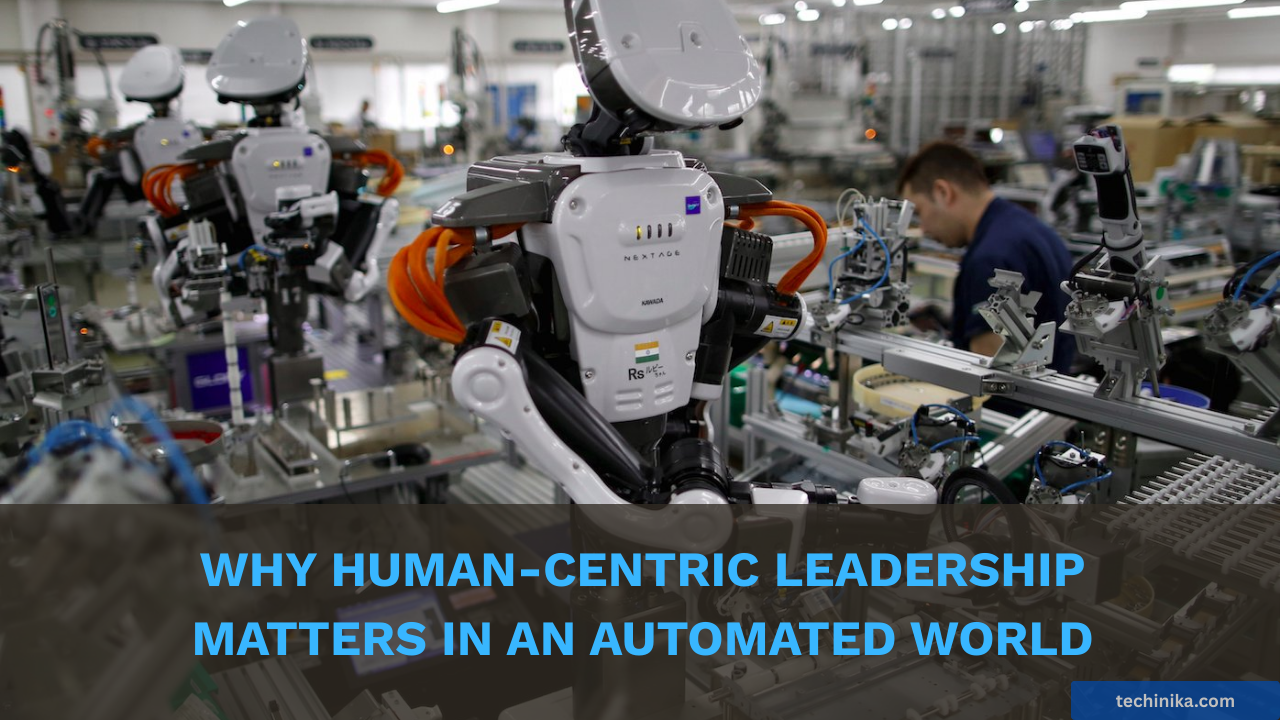
Why Human-Centric Leadership Matters in an Automated World
AI Quick Summary
- Microsoft's AI CEO, Mustafa Suleyman, warned that AI could automate most white-collar jobs within the next 18 months.
- AI systems are rapidly advancing to achieve "human-level performance" in professional tasks like drafting reports, data analysis, legal analysis, and coding.
- The advent of AI will fundamentally transform, rather than completely eliminate, many professional roles, with a potential shift towards higher-level strategic and human-centric tasks.
- This rapid automation raises critical questions for workers on adapting to AI, the emergence of new job categories, and the need for governments to manage potential economic and employment disruption.
- For emerging economies like Rwanda, this shift presents both challenges in reskilling the workforce and opportunities to leverage advanced AI for global competitiveness.
His prediction was widely discussed and echoed by other industry leaders at the time, emphasizing the need for workforce adaptation and ongoing debate regarding AI's transformative impact on employment.
Microsoft’s CEO of AI has issued a stark warning that artificial intelligence could fully automate white-collar jobs within the next 18 months, reshaping the global workforce and how businesses operate. The comments were reported today by Times of India and reflect growing debate over AI’s role in professional work.
According to the report, the Microsoft AI boss stated that AI systems are progressing rapidly and could soon perform most tasks currently done by professionals in fields like finance, law, marketing, and software development.
Rapid Advances in AI Capabilities
The core of the warning centers on AI models reaching “human-level performance” in a wide range of professional tasks. This includes:
- Drafting reports and legal analysis
- Generating marketing and sales content
- Performing data analysis and forecasting
- Writing and debugging code
As these systems improve, the CEO suggested that organizations may increasingly rely on AI agents to handle day-to-day professional responsibilities.
The idea is not that every human job will disappear, but that roles could be fundamentally transformed. Tasks that once required years of training may soon be handled by AI systems that learn and adapt quickly.
What This Means for Workers and Businesses
If AI begins to automate professional work at scale within the next year or two, it raises urgent questions:
- How will professionals adapt to working alongside advanced AI?
- Will new job categories emerge to oversee and collaborate with AI systems?
- What policies should governments adopt to manage economic and employment disruption?
Experts argue that while some jobs may shrink or disappear, others could evolve. Higher-level strategic roles, human-centric leadership, and ethics oversight may grow in importance.
Implications for Rwanda and Africa
For emerging tech ecosystems like Rwanda’s, this shift presents both challenges and opportunities. On one hand, professionals may need accelerated reskilling in AI-related skills. On the other, local businesses and innovators could use advanced AI to compete globally.
Rwanda’s digital transformation agenda including skills development and innovation hubs may become even more critical as global workplaces evolve.
If you enjoyed this article, follow us on WhatsApp for daily tech updates. If you have an idea, need to be featured or need to partner, reach out to us at editorial@techinika.com or use our contact page.
Don't let the story end here.
Share your thoughts, ask questions, and connect with the community.

ISHIMWE Jean Claude
AuthorA technology writer at Techinika, exploring digital innovation and emerging technology trends across Africa. Dedicated to translating complex ideas into meaningful narratives.
View all articles by ISHIMWE Jean Claude →