The Ultimate Guide to Sending and Receiving Money from Africa

AI Quick Summary
- Money transfer to Africa has transitioned from traditional, slow, and expensive methods to a diverse ecosystem of faster, more affordable digital solutions.
- Traditional methods, such as international bank transfers and money transfer operators (e.g., Western Union), offer security and wide physical reach but come with higher fees and slower processing times.
- Digital methods, including mobile money services (e.g., M-Pesa) and fintech apps (e.g., Wise, Remitly), provide quicker transfers, lower costs, and enhanced accessibility, especially for unbanked populations.
- Cryptocurrency is an emerging option for international transfers, boasting very low fees and near-instant transactions, but it currently requires technical understanding and faces regulatory uncertainties.
- The optimal method for sending money to Africa depends on individual needs, considering factors like transaction speed, cost, accessibility for the recipient, and the amount being sent.
Since September 2025, Africa has seen accelerated adoption of stablecoins for remittances due to lower costs and faster transfers, alongside continued growth and regulatory efforts in the broader fintech and mobile money sectors.
Sending and receiving money to and from Africa has evolved dramatically, moving from a reliance on slow, expensive traditional methods to a dynamic ecosystem of digital solutions. This guide explores the most common methods, breaking down how they work, along with their pros and cons, to help you make an informed decision.
Traditional Methods: Bank Transfers & Operators
For decades, these were the primary ways to move money across borders. While they offer a sense of security, they are often slower and more costly.
International Bank Transfers (SWIFT)
How it works: This method uses the SWIFT (Society for Worldwide Interbank Financial Telecommunication) network to facilitate transfers between bank accounts globally. You initiate the transfer from your bank, and the funds are sent to the recipient's bank account.
Pros:
- Highly secure and reliable for large sums of money.
- Accessible through any major bank.
Cons:
- Can be slow, often taking 3-5 business days.
- High transfer fees and unfavorable exchange rates.
- Requires both parties to have bank accounts, which can be a barrier to financial inclusion.
Examples:
- Ecobank: A pan-African bank with a presence in over 30 countries, offering cross-border transfers.
- Standard Chartered: A global bank with a strong network across multiple African countries.
- Citi Bank: Offers a secure global transfer network, often used for corporate and large-value transfers.
- Absa Group: A major financial services provider with a significant presence in Southern and Eastern Africa.
- Individual Bank Networks: Most national banks (e.g., FNB in South Africa, Equity Bank in Kenya) are connected to the SWIFT network for international transactions.
Money Transfer Operators (e.g., Western Union, MoneyGram)
How it works: These services operate through a vast network of physical agents. The sender visits an agent location, provides cash and recipient details, and the recipient can pick up the cash at a different agent location in their country after providing a transaction code and ID.
Pros:
- Extremely wide physical reach, even in rural areas.
- Cash-to-cash service, no bank account required.
- Funds can be available for pickup within minutes.
Cons:
- Fees can be very high, especially for smaller amounts.
- Exchange rates are often less competitive than other methods.
Examples:
- Western Union: One of the largest global operators with thousands of agent locations across Africa.
- MoneyGram: A major competitor to Western Union, with a large network for cash pickups.
- RIA Money Transfer: Known for its competitive pricing and a strong presence in the African market.
- TransFast: An international service specializing in remittances to Africa, Asia, and Latin America.
- Dahabshiil: A remittance company focused on the Horn of Africa, particularly Somalia.
Digital & Online Platforms
The rise of mobile technology has created faster and more affordable alternatives to traditional methods.
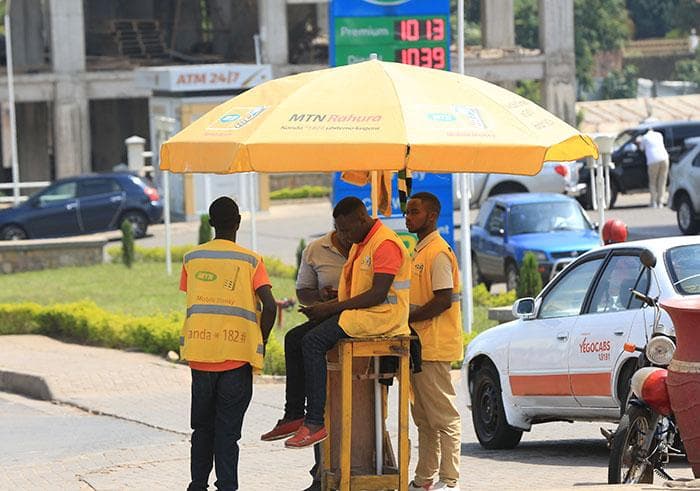
Mobile Money (e.g., M-Pesa, MTN Mobile Money)
How it works: Mobile money allows users to store, send, and receive money using their mobile phone. In many African countries, it acts as a digital wallet. International remittances can be sent directly to a mobile money account, which can then be cashed out at a local agent or used for digital payments.
Pros:
- Fast and low-cost for small transactions.
- High penetration and accessibility, even for those without a bank account.
- Can be integrated with other services like bill payments.
Cons:
- Transfers are typically limited to specific networks and countries.
- Daily transaction limits can be a constraint.
Examples:
- M-Pesa: Originating in Kenya, it is the most widely used mobile money service in East Africa.
- MTN Mobile Money: A dominant platform in West and Central Africa, including Ghana and Nigeria.
- Orange Money: A popular service in francophone African countries.
- Airtel Money: A prominent mobile money service available in several countries, including Nigeria and Uganda.
- MoMo (by MTN): The brand name for MTN's mobile money service in Ghana.
Fintech Apps (e.g., Wise, Remitly)
How it works: These platforms are built to optimize international money transfers. They use digital-only infrastructure to offer better exchange rates and lower fees than banks. Senders use a mobile app or website to initiate a transfer from their bank account or card, and the recipient can receive the money via bank deposit, mobile money, or cash pickup.
Pros:
- Significantly lower fees and better exchange rates.
- Transparent fee structures and easy-to-use interfaces.
- Fast transfer times, often within minutes or hours.
Cons:
- Requires an internet connection and a smartphone.
- Service availability may vary by country.
Examples:
- Wise (formerly TransferWise): Known for its mid-market exchange rates and low, transparent fees.
- Remitly: A popular app for remittances, offering various payout options including cash pickup and mobile money.
- WorldRemit: Provides a range of services, including bank transfers, cash pickup, mobile money, and airtime top-up.
- Sendwave: Specializes in no-fee transfers to select African countries, with a focus on speed and ease of use.
- Chipper Cash: A pan-African fintech company that facilitates instant cross-border payments between African countries.
Emerging Methods: Cryptocurrency
While still niche for everyday use, cryptocurrency is gaining traction as a potential method for fast, low-cost international transfers.
Cryptocurrency
How it works: A sender purchases a stablecoin (a cryptocurrency pegged to a fiat currency like the USD) on an exchange and sends it to the recipient's digital wallet. The recipient can then sell the stablecoin on a local exchange for local currency.
Pros:
- Extremely low transaction fees, regardless of the amount.
- Decentralized, with no single authority controlling the network.
- Transfers are nearly instant.
Cons:
- High volatility for non-stablecoin transfers.
- Requires a high level of technical understanding.
- Regulatory challenges and lack of consumer protection in some regions.
Examples:
- Binance: One of the world's largest cryptocurrency exchanges, with a strong presence in Africa for peer-to-peer (P2P) trading.
- Luno: A cryptocurrency exchange with a focus on emerging markets, including Nigeria and South Africa.
- Yellow Card: An exchange that specializes in local currency on-ramps and off-ramps for cryptocurrencies in Africa.
- Paxful: A peer-to-peer marketplace that allows users to buy and sell cryptocurrency using various payment methods.
- BitPesa (now a part of a larger entity): One of the pioneers in using cryptocurrency for cross-border payments in Africa.
Method Comparison
| Method | Speed | Cost | Accessibility | Best For... |
|---|---|---|---|---|
| Bank Transfers | 3-5 Days | High | High (for banked individuals) | Large, formal business transactions. |
| Money Operators | Minutes to Hours | High | Very High (cash pickup) | Quick, cash-based transfers to remote areas. |
| Mobile Money | Minutes | Low | High (mobile phone users) | Small, fast transfers to banked and unbanked. |
| Fintech Apps | Minutes to 24 Hours | Low | High (digital users) | Digital-first users seeking low fees and good rates. |
| Cryptocurrency | Seconds to Minutes | Very Low | Low (technical users) | Tech-savvy users for high-value transfers. |
Conclusion
The landscape of money transfer to Africa is richer and more accessible than ever. While traditional methods remain a viable option for some, digital and mobile platforms are reshaping the market by offering a faster, more affordable, and more inclusive way to send money. As technology continues to evolve, the future of remittances will likely be defined by speed, transparency, and a focus on empowering individuals through accessible financial tools.
If you enjoyed this article, follow us on WhatsApp for daily tech updates. If you have an idea, need to be featured or need to partner, reach out to us at editorial@techinika.com or use our contact page.
Don't let the story end here.
Share your thoughts, ask questions, and connect with the community.

Cishahayo Songa Achille
Chief EditorCishahayo Songa Achille is a Rwandan software engineer and tech entrepreneur focused on democratizing digital skills. He is best known as the Founder and Managing Director of Techinika, an edtech firm established in 2020 to make complex technological advances accessible to the general public and build solutions for the biggest problems.
View all articles by Cishahayo Songa Achille →