The Digital Revolution of Rwanda’s Surgical System
AI Quick Summary
- Rwanda transformed its surgical capacity from limited (6 surgeons post-genocide) to modern and tech-enabled, now boasting about 170 surgeons and 20 residents.
- Surgical practice evolved from general to 12 specialized subspecialties, heavily utilizing high-tech equipment for precision procedures like neurosurgery and cardiac surgery.
- Innovation in surgeon training includes simulation-based methods at centers like IRCAD Africa, employing 3D software, dry-lab models, and animal-based modules.
- Digital health infrastructure, including Mutuelle de Santé, supports advanced surgical care, making high-tech procedures affordable and accessible to patients.
- Despite progress, challenges remain in equipment costs and specialist demand, with future priorities including expanding robotic surgery, vascular interventions, and decentralized surgical centers.
Since the article was written, Rwanda has introduced East Africa's first robotic neurosurgical microscopes and is accelerating its nationwide digital health transformation, including piloting AI-powered technology in health clinics.
Three decades ago, Rwanda’s surgical capacity was extremely limited. Following the 1994 Genocide against the Tutsi, the country had only about six surgeons for millions of people, and advanced procedures like neurosurgery, kidney transplantation, cardiac surgery, and joint replacement were almost nonexistent. Patients needing complex care often had to travel abroad—an expensive and inaccessible solution for most.
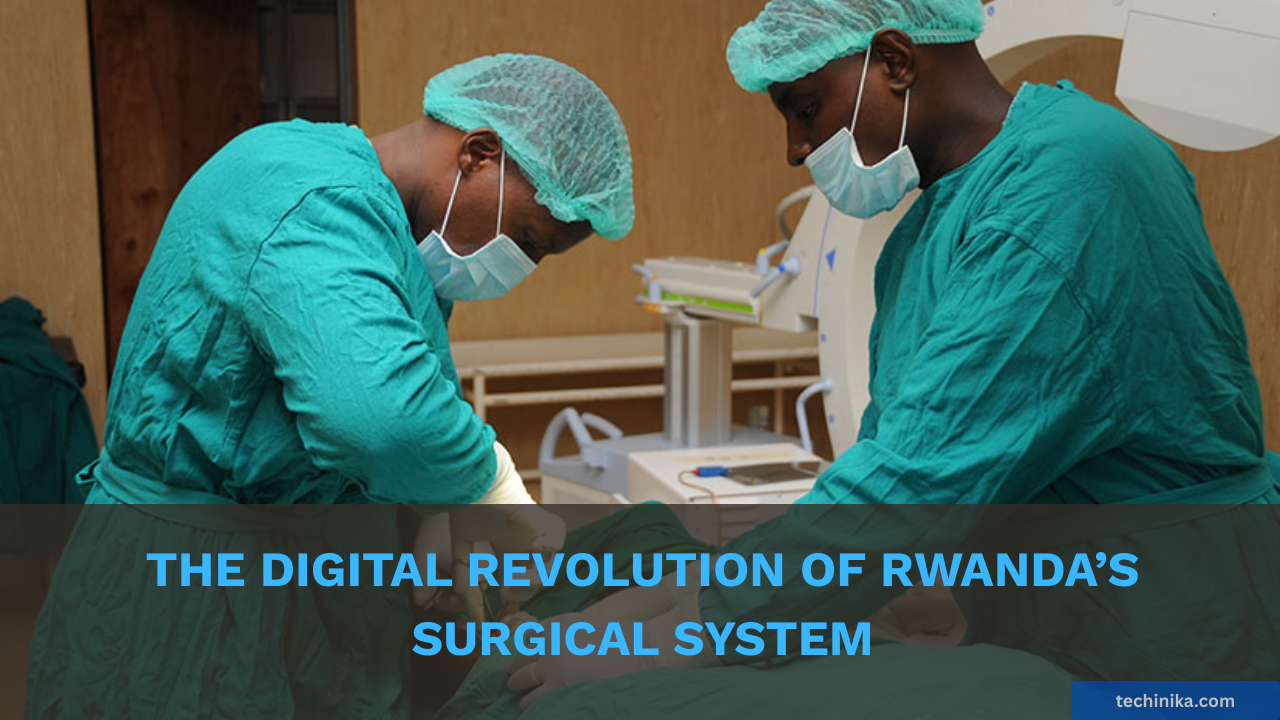
Today, Rwanda has leveraged technology, infrastructure, and workforce innovation to build a modern, tech-enabled surgical system. There are now around 170 fully trained surgeons and 20 residents in training. Many procedures that once required foreign referrals are now performed locally, reflecting Rwanda’s successful integration of advanced medical technologies and training systems.
From General Practice to Subspecialized, Tech-Enabled Surgery
In the early 2000s, surgical practice in Rwanda was largely general, with limited specialization. Today, there are about 12 surgical subspecialties, including neurosurgery, orthopaedics, gastrointestinal surgery, urology, ENT, cardiac surgery, and renal transplantation.
Modern surgical procedures now rely heavily on high-tech equipment and digital tools:
- Neurosurgery: uses microscopes and endoscopic systems for precise brain procedures.
- Cardiac surgery and kidney transplants: are performed with advanced monitoring and surgical devices at King Faisal Hospital.
- Orthopaedic teams: perform hip and knee replacements with computer-aided planning.
- Gastrointestinal surgeons: use minimally invasive techniques guided by laparoscopic cameras and simulation software.
The transition from traditional open surgery to minimally invasive, technology-driven procedures has improved patient outcomes, reduced recovery times, and lowered complications.
Tech and Simulation in Surgeon Training
A critical innovation has been simulation-based training through centres like IRCAD Africa in Masaka. Surgeons practice procedures using:
- 3D simulation software
- Dry-lab models
- Animal-based training modules
This mirrors how tech companies use virtual labs and simulation platforms to develop skills safely before going live. The approach strengthens precision, reduces errors, and ensures high standards of care.
Digital Infrastructure and Health Access
Advanced surgical care is now supported by Rwanda’s digital health financing system, including the community-based insurance scheme, Mutuelle de Santé. Patients can access high-tech procedures at a fraction of the cost compared to international care, with only a 10% out-of-pocket contribution.
The integration of digital systems, electronic medical records, and high-tech surgical tools makes Rwanda a case study in how technology can expand healthcare capacity in resource-limited settings.
Challenges and Future Tech Priorities
Despite progress, Rwanda continues to face:
- High equipment costs for advanced surgical systems
- Growing demand for tech-savvy specialists
- Limited hospital and lab infrastructure
Future priorities resemble a tech company scaling operations:
- Expanding subspecialties like robotic surgery, vascular interventions, and epilepsy surgery
- Strengthening decentralized surgical centres with digital monitoring tools
- Adopting minimally invasive and robotic-assisted techniques
Rwanda’s surgical system is a prime example of tech-driven transformation in a traditionally human-resource-limited sector. From near-total scarcity to a structured, high-tech surgical ecosystem, the country now performs complex, life-saving procedures domestically—showing how technology, training, and infrastructure innovation can reshape industries, even in low-resource environments.
If you enjoyed this article, follow us on WhatsApp for daily tech updates. If you have an idea, need to be featured or need to partner, reach out to us at editorial@techinika.com or use our contact page.
Don't let the story end here.
Share your thoughts, ask questions, and connect with the community.

Mwiza Zamda
AuthorA technology writer at Techinika with an interest in digital innovation and emerging trends in Africa.
View all articles by Mwiza Zamda →