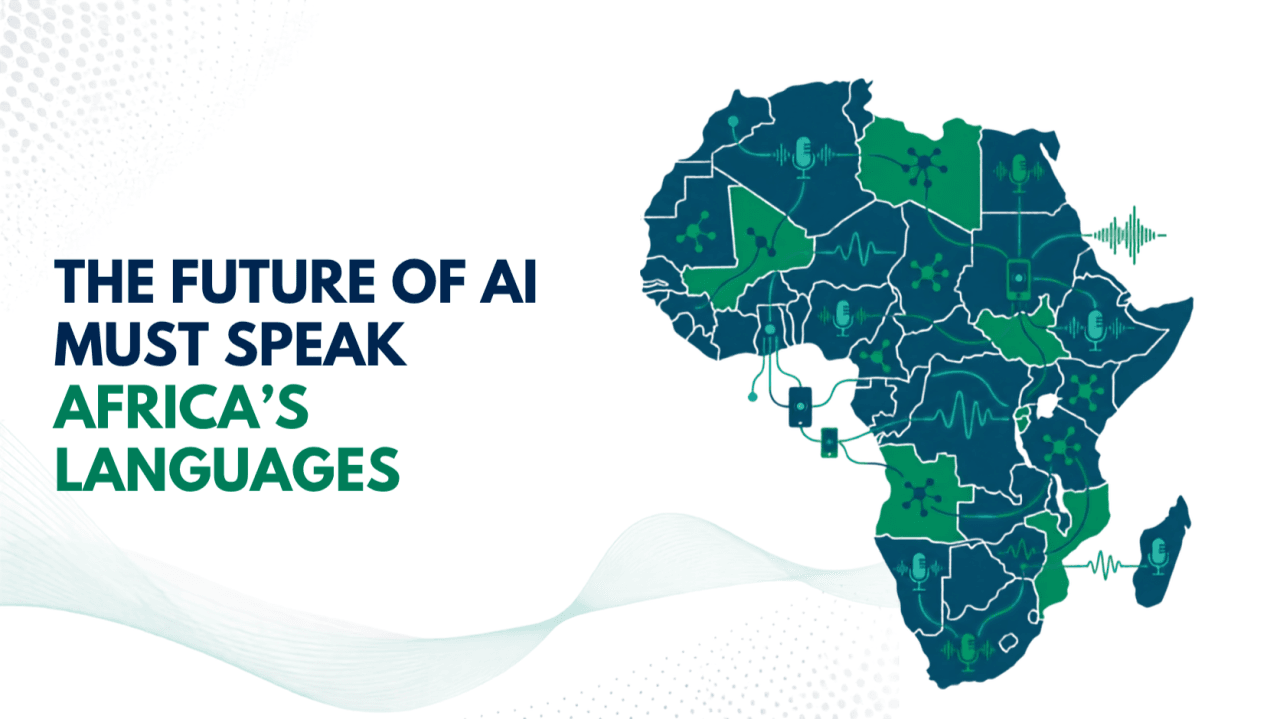
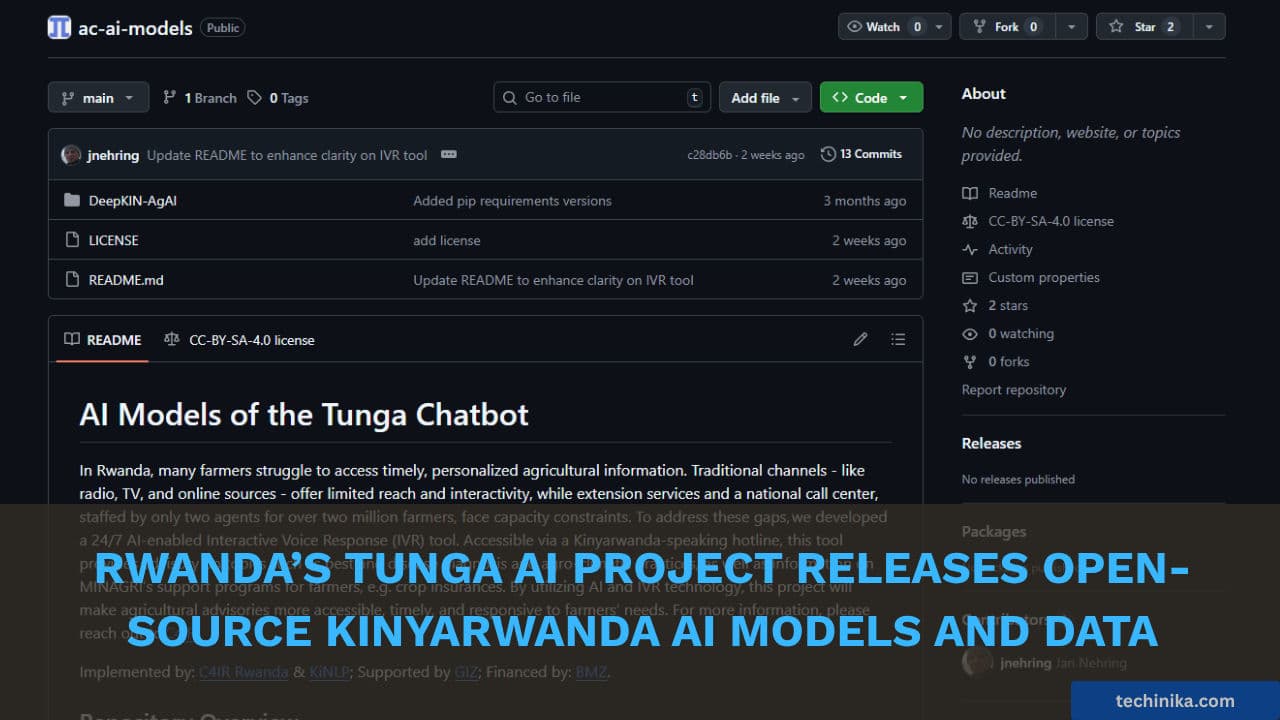
Rwanda’s Tunga AI Project Releases Open-Source Kinyarwanda AI Models and Data
AI Quick Summary
- Rwanda has released open-source AI models, datasets, and code tailored for the Kinyarwanda language, under the Tunga Agricultural Chatbot initiative.
- This collaborative project involves the Digital Transformation Center Rwanda, Rwanda Centre for the Fourth Industrial Revolution, KiNLP, and the Ministry of Agriculture & Animal Resources.
- The release includes a Text-to-Speech model, Kinyarwanda embedding model (KinyaCOLBERT Free), voice and information retrieval datasets, and KinyaBERT, a foundational language model.
- These resources aim to empower developers to create AI tools in Kinyarwanda, addressing local needs in areas like agriculture, education, and voice assistants.
- It represents a significant step for Rwanda as a leader in African AI innovation, promoting digital inclusion and AI literacy in local contexts.
Since this article's publication, Rwanda has continued to advance its AI initiatives, launching the Africa AI Scaling Hub in late 2025 with $17.5 million funding to further deploy AI solutions in sectors like health and agriculture, building on the foundation of Kinyarwanda AI development.
Kigali, Rwanda. A major milestone in Rwanda’s digital transformation was announced this week as the Tunga Agricultural Chatbot initiative released a suite of open-source AI models, datasets, and code tailored for the Kinyarwanda language.
The effort is a collaborative project involving the Digital Transformation Center Rwanda, Rwanda Centre for the Fourth Industrial Revolution, KiNLP, and the Ministry of Agriculture & Animal Resources.
What Was Released
The open-source resources enable developers, researchers, and innovators to build AI-powered tools that understand and generate Kinyarwanda language content. The release includes:
- Text-to-Speech Model: A high-quality synthetic voice model for Kinyarwanda, enhancing accessibility and interaction.
- KinyaCOLBERT Free: The first free Kinyarwanda embedding and information retrieval model, critical for building advanced chatbots and search tools.
- Voice Dataset: A collection of Kinyarwanda audio for training both Text-to-Speech (TTS) and Speech-to-Text (STT) systems.
- Information Retrieval Dataset: Used to train the KinyaCOLBERT model, improving retrieval accuracy.
- KinyaBERT: A foundational BERT-style language model designed for natural language processing tasks in Kinyarwanda.
- Source Code: All relevant code to support the models and datasets listed above, enabling developers to adapt and extend the tools.
These resources are freely accessible to the public, encouraging broader use and development of AI solutions that speak Kinyarwanda.
A Milestone for Local AI Innovation
The open-source release marks a significant step toward inclusive and context-relevant artificial intelligence in Rwanda. By making language models and training data available in Kinyarwanda, a language spoken by over 13 million people, the initiative paves the way for applications that are more aligned with local needs.
Developers can now build tools such as:
- Local language chatbots
- Voice assistants for agricultural extension services
- Educational tools with Kinyarwanda TTS
- AI-powered search and retrieval systems
This work reflects a shift toward practical digital transformation, not just adopting global technologies but adapting them for local contexts.
Why It Matters for Rwanda and Beyond
Open-source AI for African languages is still rare. By releasing these models and datasets publicly, Rwanda positions itself as a leader in African AI innovation, helping close the language gap in technology.
These tools also support the broader goals of:
- Digital inclusion
- AI literacy and capacity building
- Agricultural productivity through intelligent tools
Developers, startups, and researchers can begin using these resources immediately to build products that are relevant, accessible, and locally meaningful.
If you enjoyed this article, follow us on WhatsApp for daily tech updates. If you have an idea, need to be featured or need to partner, reach out to us at editorial@techinika.com or use our contact page.
Don't let the story end here.
Share your thoughts, ask questions, and connect with the community.

ISHIMWE Jean Claude
AuthorA technology writer at Techinika, exploring digital innovation and emerging technology trends across Africa. Dedicated to translating complex ideas into meaningful narratives.
View all articles by ISHIMWE Jean Claude →