COPA: Digitizing Rwanda’s Cooperative Economy from the Ground Up
AI Quick Summary
- COPA digitizes Rwanda's cooperative sector, replacing manual paper ledgers with a digital system for over 5 million members across 10,000 cooperatives.
- It serves as a digital operating system for Africa's membership economy, tackling issues of financial invisibility and insecure records.
- COPA's strategy involves digitizing transactions, integrating payments for historical data, translating this into credit scores, and launching a financial marketplace for members.
- The platform uses a multi-channel tech stack, including USSD for offline access, IoT for weighing, web/mobile apps, and AI for insights and fraud detection.
- COPA integrates with national identity, tax, social protection, and public service systems to formalize cooperatives and provide members access to credit and financial services.
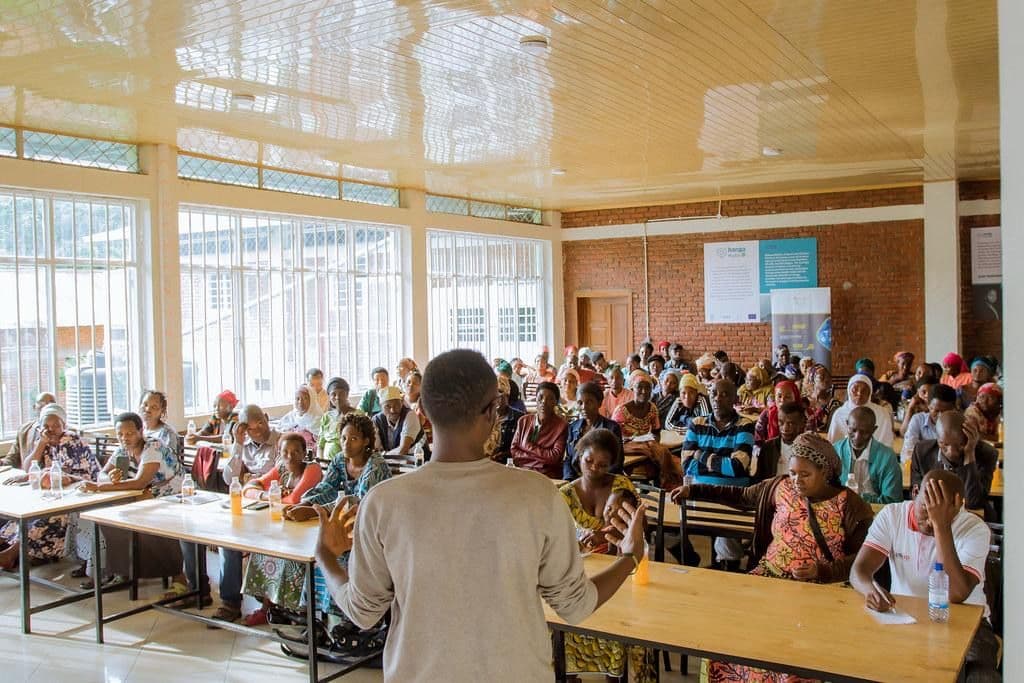
When a member steps up to a rural collection center to log the day's hard work, they are usually met with pens and paper ledgers; a manual system that has dominated Rwanda's cooperative sector for years. Across 10,000 cooperatives and over 5 million members nationwide, this reliance on paper notebooks creates severe transparency issues and a constant risk of lost records.
COPA replaces these notebooks with digital infrastructure, enabling real-time tracking of production and finances to form the foundation of a unified digital backbone for an enterprise economy that has run on paper for a century.
Who is COPA?
Founded by Muhiza Frank at Norrsken House, COPA acts as the digital operating system for Africa's membership economy, moving cooperatives from agriculture to schools and churches away from paper ledgers.
By recording transactions in a secure profile, COPA solves financial invisibility, creating official proof of income. The company achieves this through a four-stage strategy: digitizing records, integrating payments for transactional history, translating history into credit scoring, and launching a financial marketplace where lenders compete to serve members. COPA builds a financial layer allowing those once ignored by banks to use production data to access credit, loans, and services like EjoHeza.
The Technology Stack
COPA is a multi-channel infrastructure built on a modern stack to ensure security and real-time processing across any device.
USSD (*907#): The core channel for offline accessibility, allowing members to check balances and record activities without the internet.
CopaWeigh: An agricultural IoT solution using Bluetooth smart scales to push harvest weights to the cloud, eliminating entry errors.
Web OS: A management dashboard for administrators handling payroll, accounting, stock, and regulatory reporting.
Mobile App: A portable interface on Android/iOS for staff and smartphone-owning members to track production and finances.
Partners Portal: A secure interface giving lenders, federations, and government bodies access to verified data and credit profiles, eliminating fragmented integrations.
API: A developer layer exposing workflows to banks and fintechs, serving as the foundation for an open financial marketplace.
CopaAI: A conversational AI assistant querying history in Kinyarwanda or English, providing insights from USSD voice access to yield forecasting and fraud detection.
The Ecosystem Strategy
COPA acts as a central connector, integrating with national systems to turn local cooperatives into formal economic players.
Identity: Verifies members via NIDA National IDs, linking digital profiles to real individuals to build formal financial trust.
Tax Compliance: Developing RRA and EBM integrations to automate tax reporting and electronic invoicing for full regulatory compliance.
Social Protection: Links with RSSB’s EjoHeza to automate pension contributions, securing savings directly from member earnings.
Public Services: Integrates with IremboPay to streamline digital payment workflows, collections, disbursements, and government fees.
Financial Inclusion: Shares credit-readiness data with lenders, enabling banks to confidently offer credit backed by verified production records.
COPA bridges the gap between the informal economy and the formal financial world by replacing manual paperwork with a digital backbone. With data flowing and credit profiles maturing, the platform’s 2026 focus is opening a marketplace where banks and insurers compete for cooperative capital. The pilots are live, the infrastructure is built, and Rwanda's 10,000+ cooperatives are now the proving ground for continental adoption.
As COPA founder Muhiza Frank notes: ‘’Cooperatives are the most under-leveraged economic engine in Africa. We're not trying to change how they work; we're trying to make their work count in the systems that decide who gets capital, who gets services, and who gets seen.’’
If you enjoyed this article, follow us on WhatsApp for daily tech updates. If you have an idea, need to be featured or need to partner, reach out to us at editorial@techinika.com or use our contact page.
Don't let the story end here.
Share your thoughts, ask questions, and connect with the community.

Kellycie Bayingana
AuthorPassionate about the intersection of technology and storytelling. I am committed to uncovering and sharing the most compelling startup narratives from across Rwanda for Techinika.
View all articles by Kellycie Bayingana →Up Next
Hanga Pitchfest Announces Top 45 Startups for 2026 EditionBy Cishahayo Songa Achille • 5 min read